If you've opened the Uber driver app without a car lately, you've seen the Vehicle Marketplace pitch: rent from a "fleet partner," get on the road fast, and pay through your Uber earnings. Sounds clean. I drove a fleet partner car for four months in 2024 before switching to a peer-to-peer rental, so I've seen both bills.
This is the comparison I couldn't find when I was deciding. Weekly cost, what's included, what isn't, and who each option actually suits.
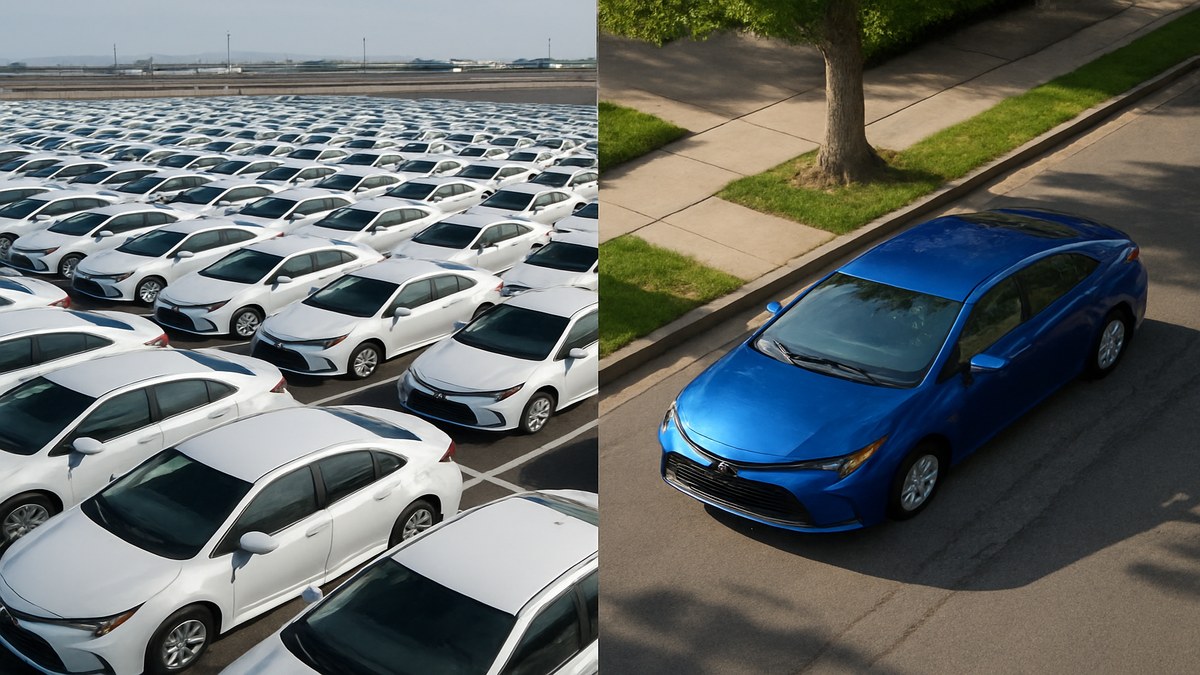
A fleet partner is a local company (sometimes a national one) that owns anywhere from 20 to 2,000 cars and rents them to drivers through Uber's marketplace. Uber doesn't own the cars. It just lists them and, in many cases, deducts your rent from your fares before you ever see the money.
The names vary by city. In some markets it's a regional rental outfit you've never heard of. In others it's a Hertz or Avis location running the program under their own brand. Either way, you're renting from a business with a counter, a contract, and a fee schedule.
Peer-to-peer platforms like RideshareRenter are the other model. Individual owners, often with one to five cars, list them and rent directly to you. No counter. The contract is between you and the owner.
I pulled the fleet partner numbers from what I actually paid plus current marketplace quotes in three cities (Atlanta, Phoenix, Chicago) in late August 2026. Peer-to-peer numbers are the midpoint of RideshareRenter listings in the same cities for similar cars.
| Cost item | Uber fleet partner (2020-2022 hybrid sedan) | RideshareRenter owner (2017-2021 hybrid sedan) |
|---|---|---|
| Base weekly rent | $265 - $310 | $220 - $270 |
| Taxes and fees | $25 - $45 (rental tax, admin fee) | Usually $0 (owner sets an all-in rate) |
| Insurance surcharge | Included in rent, or $30 - $50 add-on | Varies; owner's policy, confirm before renting |
| Deposit | $0 - $250 (often waived) | $200 - $500 (refundable) |
| Mileage cap | Unlimited on most, some 2,000/wk | 1,200 - unlimited, listed per car |
| Accident deductible | $1,000 - $2,500 | Depends on owner policy and Uber's coverage; typically $1,000 - $2,500 |
| Realistic all-in weekly | $300 - $360 | $230 - $280 |
Across a month, that's roughly $280 to $340 in savings on the peer-to-peer side. Over a year of full-time driving, $3,500 to $4,000. Real money, but it comes with trade-offs you should see before you decide.
Let me be fair to the fleet model, because I didn't hate it.
Rent deducted from earnings. You never have to come up with cash on a Monday. The fleet partner takes its cut before your payout. Great if you're bad with money. Terrible if you have a slow week, because the rent gets taken anyway and your payout shows $40.
Swap cars when one breaks. When my fleet car threw a check-engine light, I drove to the lot and drove out in a different car 90 minutes later. A single-car owner can't do that. Some multi-car owners on RideshareRenter can, and it's worth asking.
Newer cars. Fleet partners typically run 2020 or newer. Peer-to-peer listings skew a few years older. For most riders and most trips, a clean 2018 Prius is the same experience as a 2022 Prius. For Uber Comfort or Black, the model year rules matter and you'll want to check.
No haggling. The price is the price. Some people find owner negotiation stressful.
Locked to Uber. Most fleet partner contracts prohibit driving for Lyft or delivery apps in the car. Some have GPS geofencing and will flag you. Uber-only is a real handicap in cities where Lyft pays better at certain hours, and it kills the DoorDash-between-rides strategy that a lot of us use to smooth out slow afternoons.
Weekly minimums and cancellation windows. I had to give 7 days notice to return the car and got charged a full week when I gave 5. Read the return policy before you sign.
Fees that don't show up in the marketing. Cleaning fee if the car comes back with sand in it ($50 to $150). Late return fee. Fuel fee if you return below the line. Toll admin fees, where the partner charges $5 to $15 on top of each toll to process it. My worst month with a fleet car had $87 in fees I hadn't planned on.
The lot trip. Pickup and return at a physical lot, usually near the airport, usually with limited hours. If your inspection sticker expires, you go to the lot. If you have a question, you go to the lot.
Peer-to-peer isn't fee-free either. Owners can charge for excess mileage, late returns, and damage. The difference is you see those terms in the listing and you can negotiate them with a person, not a policy document.
| Your situation | Better fit | Why |
|---|---|---|
| Brand new driver, no cash for a deposit | Fleet partner | Low or no deposit, rent comes out of earnings |
| Full-time driver, 40+ hrs/week | RideshareRenter | $70+/week savings compounds; flexibility to multi-app |
| Want to run Lyft and DoorDash too | RideshareRenter | Fleet contracts usually forbid it |
| Need a car in the next 6 hours | Fleet partner | Lot is open, car is ready; owners need a day to coordinate |
| Driving Uber Comfort or Black | Depends | Fleet has newer cars; some owners list qualifying vehicles at lower rates |
| Part-time, 15-20 hrs/week | RideshareRenter | Lower rent matters more when gross is smaller; some owners offer 5-day rentals |
| Bad with weekly cash management | Fleet partner | Automatic deduction removes the temptation to spend rent money |
Four months fleet partner in Phoenix, 2024: average weekly rent with fees was $322. I averaged $1,040 gross a week driving about 42 hours, Uber only. Net after rent and gas: about $590.
Since switching to a RideshareRenter car (2019 Prius, $245 a week, unlimited miles, owner has three cars and swapped me once when the 12-volt battery died): I run Uber and Lyft and take DoorDash orders when both are dead. Gross averages $1,110 a week for the same hours. Net after rent and gas: about $740.
That's $150 a week better, roughly half from cheaper rent and half from multi-apping. Your numbers will differ. But the direction usually doesn't.
A fleet partner will answer these from a printed sheet. An owner on RideshareRenter answers them in a message thread. Either way, get the answers before you take the keys.
The Vehicle Marketplace is Uber's listing page. Fleet partners are the companies listed on it. So renting through the marketplace means renting from a fleet partner.
Yes. You add it as a vehicle in the driver app with the registration, insurance card, and inspection form, same as any other car. Uber doesn't require that you rent through their marketplace.
Most don't run a hard credit check, but many require a debit or credit card and a valid driver account in good standing. Peer-to-peer owners generally don't check credit either; they look at your driver rating and trip history.
Uber's commercial coverage applies while you're online regardless of who owns the car. Off-app, fleet partners include coverage in the rental; with a peer-to-peer car you're relying on the owner's policy. Ask the owner for their carrier and coverage type before you rent.
No. Marketplace availability depends on which partners operate locally. Smaller markets often have none, which is where peer-to-peer rentals fill the gap.
Drivers: See what local owners are charging before you commit to a fleet contract. Browse rideshare-ready cars on RideshareRenter, filter by weekly rate and mileage cap, and message owners directly.
Vehicle owners: Drivers are actively comparing your car against a $320-a-week fleet rental. Price it right and you'll have a renter fast. List your car on RideshareRenter.




Comments