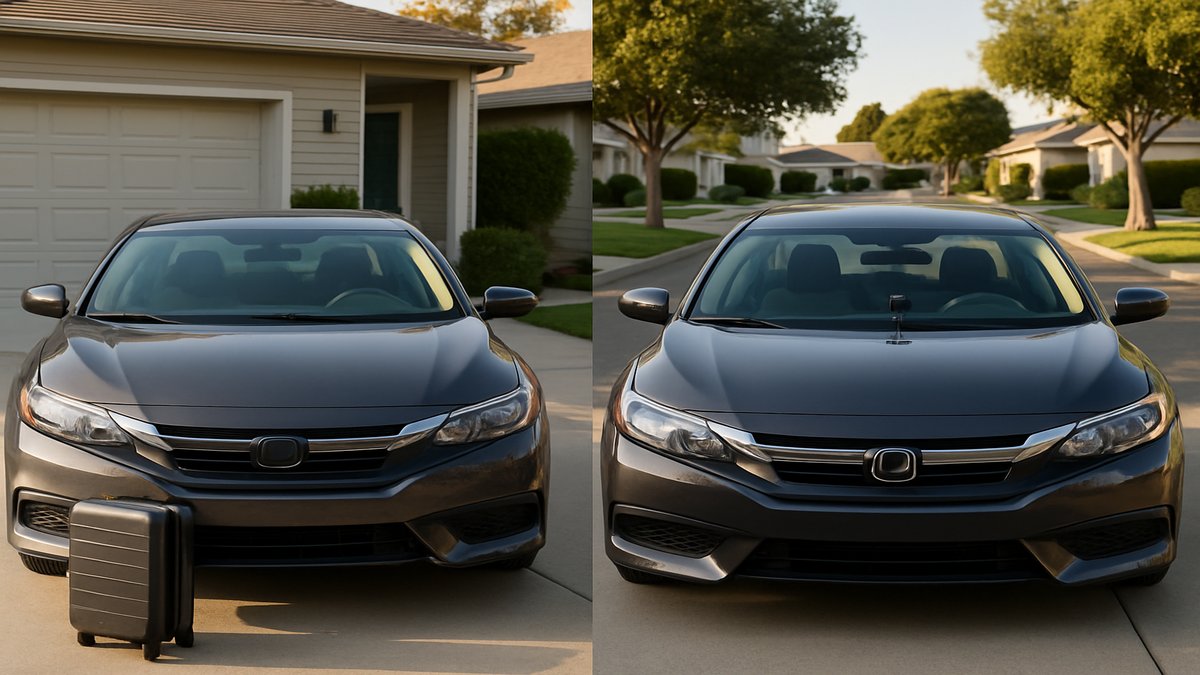
I ran the same 2021 Camry on Turo for eleven months before I moved it to RideshareRenter, and I've kept a spreadsheet the whole time because I'm that kind of person. Every comparison I've ever read between Turo and rideshare rental platforms was written from the driver's seat. Fair enough, drivers are most of the audience. But if you own the car, the question is different: which one puts more money in your account at the end of the month, and what does it cost you in headaches to get there?
Short version: on my car, in my market, RideshareRenter paid about 35% more per month with less than half the handoffs. But there are real reasons someone else's numbers could flip, and I'll get to those.
Turo is a short-term rental marketplace. Your typical guest is a traveler, a weekend road-tripper, or someone whose car is in the shop. Rentals run one to five days. Mileage is modest. The guest treats the car like a rental car, which means gently or terribly depending on the person.
RideshareRenter is a marketplace for people who need a car to earn a living in it. Your typical renter is an Uber, Lyft, or delivery driver. Rentals run a week to several months. Mileage is heavy, 1,200 to 2,000 miles a week is normal. The renter treats the car like a tool, and the good ones maintain it like one because their income stops if it breaks.
Everything else, the income, the fees, the wear, the insurance, flows from that one difference in who's behind the wheel and for how long.
Here's my Camry across a representative month on each platform. These are my actual figures rounded to the nearest $5, from a mid-size Southern market. Your city, car, and pricing will move every line.
| Line item | Turo (my numbers) | RideshareRenter (my numbers) |
|---|---|---|
| Nightly / weekly rate | $52/night | $265/week |
| Days rented in the month | 19 (about 63% occupancy) | 28 (one 4-week renter) |
| Gross rental income | $990 | $1,060 |
| Platform fee / commission | -$250 (on a 75% host plan) | -$0 to -$105 depending on listing plan |
| Trip fees, cleaning, delivery earned | +$85 | $0 |
| Mileage overage earned | $0 (guests stayed under) | +$45 |
| Cleaning and detailing out of pocket | -$60 (after 6 separate guests) | -$20 |
| Extra insurance beyond platform plan | $0 (used host protection plan) | -$95 (rideshare-rated commercial policy, monthly share) |
| Maintenance reserve at my per-mile rate | -$70 (about 1,400 miles) | -$330 (about 6,600 miles) |
| Net to me | about $695 | about $555 to $660 |
Wait. That shows Turo winning, or close to it. Yes, on paper, in a month where I got 19 rented nights out of 30.
The problem is that I didn't get 19 nights every month. My Turo occupancy across eleven months averaged 41%, not 63%. Summer and holiday months were great. February was six nights. Averaged out, my Turo net was closer to $440 a month. My RideshareRenter net has been in the $555 to $660 range every single month for the last fourteen, because a driver who needs the car to work needs it in February too.
That's the real comparison: $440 average vs roughly $600 average. Call it 35% more on the rideshare side, with much lower variance.
I don't want this to read like a sales page, so here's where the other side is stronger.
Mileage. My Turo guests put about 1,400 miles a month on the car. My rideshare renters put 6,600. That's a car that ages five years for every one on the calendar. If you're renting out a car you plan to keep and drive yourself later, Turo preserves it. Rideshare rental consumes it. Price your rate accordingly or don't do it.
Insurance simplicity. Turo's host protection plans are built into the platform and you pick a tier. It's not perfect coverage and the deductibles bite, but it's one decision. Rideshare rental insurance is a stack: the ride-hailing company's commercial policy during trips, whatever covers the app-on gap, and whatever covers physical damage to your car. Most serious RideshareRenter owners end up buying a rideshare-rated or commercial policy, and that's the $95 a month line in my table. Some carriers won't write it at all in some states.
Premium cars. A Model 3 or a convertible earns a premium on Turo from vacationers. On RideshareRenter, a driver wants a reliable hybrid sedan with good mileage. Nobody's paying extra for the sunroof.
Fun. I'll admit it. Turo felt like a hobby. Handing my car to a couple heading to the coast for the weekend is a nicer interaction than handing it to a guy who's about to drive it 14 hours a day.
Occupancy, as covered. A one-month renter is 100% occupancy with one handoff. Getting to 100% on Turo would take eight to twelve separate guests.
Handoffs. Six Turo guests in a month meant six pickups, six returns, six cleanings, six rounds of photos, and six sets of messages about where the keys are. My rideshare renter needed one handoff and one return. My time per dollar earned dropped by roughly 75%.
Renter quality is more predictable. Rideshare drivers have already passed a background check and driving record review to get on the app. That doesn't make every one of them a good renter, but it filters out a category of person that Turo can't. I've had a Turo guest return a car with a stripped lug nut and no explanation. I've never had a RideshareRenter renter do anything I couldn't explain.
Fee structure. Turo's host plans take 10% to 40% of the trip price depending on how much protection you want. RideshareRenter's model runs on listing plans rather than a percentage of every rental, so on a $1,060 month the difference is real money. Check the current plan pricing before you assume my numbers, because it changes.
Mileage income. Heavy mileage cuts both ways. If your listing caps mileage at 1,500 a week with $0.15 a mile over, a renter who drives 2,000 a week is paying you $75 extra weekly. On Turo, mileage overages are rare because trips are short.
| Your situation | Better fit | Why |
|---|---|---|
| Car you'll keep and drive later | Turo | A fifth of the miles |
| Car you bought specifically to rent out | RideshareRenter | Maximize occupancy, price in the wear |
| You live near an airport or tourist area | Turo | Occupancy could beat 60% in season |
| You live in a mid-size city with steady gig work | RideshareRenter | Demand doesn't follow tourism |
| You have limited time for handoffs | RideshareRenter | One or two per month vs six to twelve |
| Premium, sporty, or niche vehicle | Turo | Drivers want boring and efficient |
| Hybrid sedan or midsize SUV, 2015 or newer | RideshareRenter | This is exactly what drivers rent |
| You want one platform-managed insurance decision | Turo | Rideshare coverage takes more setup |
Yes, and some owners do. The usual pattern is listing the car on RideshareRenter for weekly or monthly rentals and filling any gap between renters with short Turo trips. It works if you're organized. It fails if you double-book, and both platforms will penalize you for cancelling on a confirmed renter.
The bigger issue is insurance. Your Turo protection plan covers Turo trips. It does not cover a rideshare renter. Your rideshare policy may exclude non-commercial short-term rentals. Before running both, get it in writing from your carrier that the car is covered in both uses, because "I assumed" is not a claims strategy.
If you have a spare hybrid sedan and you want the most predictable monthly check with the least babysitting, put it on RideshareRenter and price in the wear honestly. Budget $0.05 a mile for maintenance on a Camry or Prius class car, more on a domestic SUV.
If you have a car you love, or one that photographs well, or you live somewhere tourists fly into, Turo will likely earn you more per mile and less per month, and you'll enjoy it more.
If you're not sure, run the car on Turo for three months and track occupancy. If you're under 50%, move it. That's what I did.
On a reliable midsize sedan in a mid-size city, rideshare rental usually pays more per month because occupancy runs near 100% with weekly and monthly renters. Turo can pay more per day and per mile, but average occupancy for most hosts lands well under 60%, which drags the monthly total down.
Plan on 1,200 to 2,000 miles a week. Full-time drivers in busy markets can exceed that. Set a mileage cap and per-mile overage rate on your listing so the heavy drivers pay for the extra wear.
No. Turo prohibits using its vehicles for commercial rideshare, and its protection plans don't cover that use. If you want to rent to drivers, you need a platform and an insurance setup built for it.
Most serious owners carry a rideshare-rated or commercial auto policy that covers the vehicle while a renter drives it, on top of the ride-hailing company's commercial liability during trips and any platform protection. Costs vary widely by state and carrier. Get quotes before you list, not after.
You can, as long as you never double-book and your insurance covers both uses. Confirm with your carrier in writing. Many owners use RideshareRenter as the primary and fill gaps with Turo.
Hybrid sedans (Camry Hybrid, Prius, Accord Hybrid), midsize SUVs for UberXL, and anything 2015 or newer with four doors, working A/C, and a clean title. Fuel economy sells more than features.
Vehicle owners: Run your car's numbers, then list it on RideshareRenter with a weekly rate, a mileage cap, and an overage rate. Owners who state their terms clearly get better renters.
Drivers: If you're tired of paying rental-counter prices for a car to work in, browse owner-listed rideshare cars on RideshareRenter and deal directly with someone who wants a long-term renter.




Comments