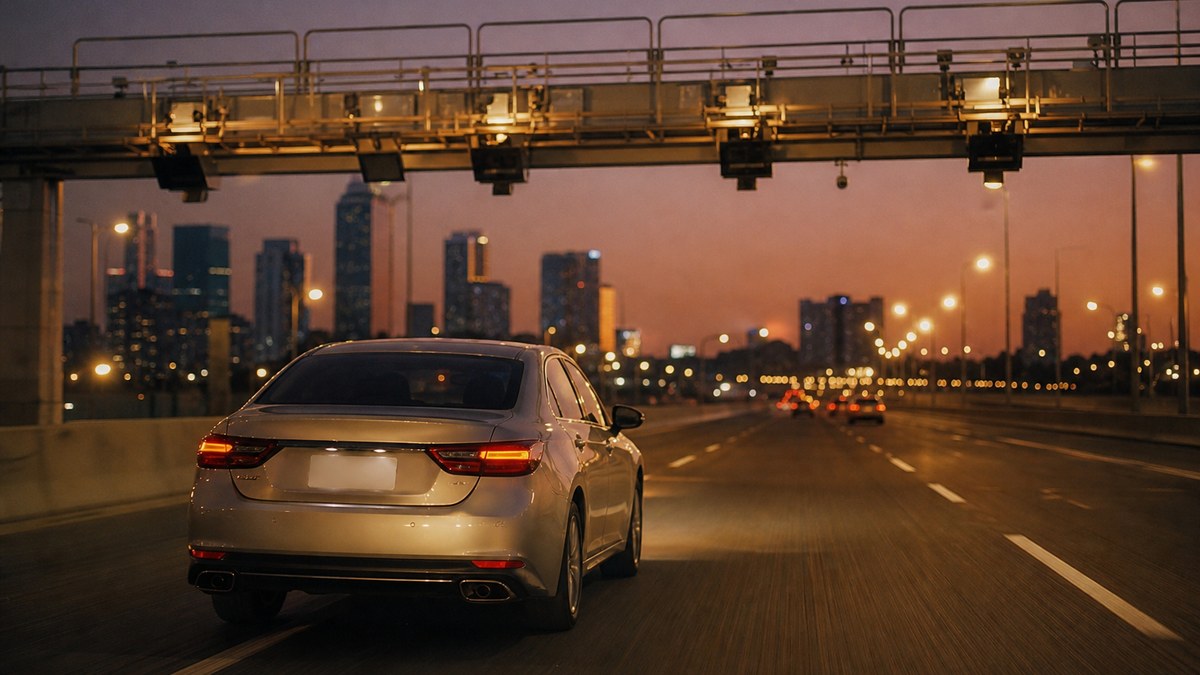
You budget $280 a week for the car. You budget gas. Maybe you budget a car wash. Then a $2.30 toll shows up on your statement as $9.25, you get a parking ticket you never saw, and suddenly the math you did in your head on signup day is wrong by fifty bucks.
None of this is exotic. Tolls, citations, and the occasional tow are ordinary costs of driving for Uber and Lyft in a car you don't own. They're just the costs nobody puts in the ad. So here's the honest accounting, with the fee structures written down, and what changes when you rent from a person on RideshareRenter instead of a rental counter.
Traditional rental companies bundle tolls into a program with a daily convenience fee. That fee gets charged for every day you touch a toll road, whether you hit one gantry or twenty.
Published 2026 program terms look roughly like this:
| Company | Toll program fee | Cap |
|---|---|---|
| Avis | ~$6.95 per toll day | ~$34.95 per rental |
| Budget | $6.95 per toll day | $34.95 per rental period |
| Enterprise (TollPass) | ~$3.95–$4.95 per toll day | ~$34.65 |
| Sixt (if you don't opt in) | ~$15.99 admin fee per usage day | ~$99 |
Read that Sixt line again. That's the punishment tier for not enrolling, and it's the one that catches drivers who assumed they'd just get billed the toll.
Now put a rideshare schedule against it. A tourist rents for four days and hits the cap once. You're driving six or seven days a week, every week. On a $6.95-per-toll-day structure with a $34.95 cap, a full month of toll-road driving runs about $140 in fees alone, on top of the actual tolls. If your market has tolled bridges or a tolled airport approach, you can't avoid it by planning routes.
On RideshareRenter you're renting from an individual owner, and there's no corporate toll program sitting between you and the toll authority. Which cuts both ways, and you should know both sides:
The single best move, in any market with tolls, is to bring your own transponder and mount it yourself. It costs almost nothing and it takes the whole category off the table.
Camera tickets, parking citations, and red-light violations get mailed to whoever owns the plate. That's the rental company, or on RideshareRenter, the owner. They identify you, they forward the liability, and they charge for the paperwork.
Rental-industry administrative fees for handling a citation typically run $30 to $50 per violation. Budget's published terms describe a fee of the lesser of $25 or 10% of the amount incurred, up to $50 per violation where law allows. So a $75 parking ticket becomes $105 to $125.
Individual owners don't always charge that. Some do, and honestly, they've earned it. Getting a notice in the mail for a car you weren't driving is genuinely annoying. The thing that matters for you is knowing the number in advance instead of discovering it.
Two habits that keep this cheap:
This is the one that actually hurts. A tow plus storage in a big metro can run $250 to $600 by the time you get the car back, and the storage clock ticks daily. The three ways rideshare drivers get towed:
That last one is worth a sentence of paranoia. Before you take any car, look at the registration sticker and look at the insurance card. On RideshareRenter, ask the owner to confirm both are current for the full length of your rental. It's a thirty-second question that prevents a very bad Tuesday.
And if the car does get impounded: in most jurisdictions the lot will only release a vehicle to the registered owner or someone with written authorization. You can't just show up with a rental agreement and a credit card. Call the owner first, before you go anywhere near the lot.
Here's what a month can look like for a full-time driver in a toll-heavy market, using round figures. Treat these as illustrative, not a quote. Your market will differ.
| Line item | Corporate rental | RideshareRenter (owner rental) |
|---|---|---|
| Weekly rate x 4.3 | ~$1,118 (at a $260/wk average) | Varies by listing; often below the corporate average |
| Actual tolls | ~$120 | ~$95 (own transponder, resident rate) |
| Toll program fees | ~$140 | $0 |
| One parking ticket + admin | $75 + $40 | $75 + owner's fee (often $0 to $25) |
| Fee overhead total | ~$180 | ~$0 to $25 |
That $180 isn't a rounding error. That's roughly seven hours of driving you did for the privilege of paying somebody's administrative department.
It would be dishonest to write the above and not say this part. Renting from an individual owner means:
The trade is straightforward: you're giving up a call center and getting back the fee stack. For a lot of drivers that math is obviously worth it. For some it isn't. Decide with your eyes open.
The registered owner gets the bill, and the rental agreement passes the cost to you. That's true at Hertz and it's true on RideshareRenter. The difference is the fee that rides along on top of it.
Generally yes, and you usually should. Mount it correctly and make sure the car isn't also enrolled in a rental toll program, because a double-read can bill you twice. Confirm with the owner that the vehicle isn't running an active transponder of its own.
An officer-issued ticket goes to you directly, since you were driving and they took your license. A camera ticket goes to the plate, meaning the owner, who then forwards it to you along with any administrative fee in the agreement. Pay it fast either way.
A single parking ticket, no. Moving violations feed into your driving record, and both platforms re-run background checks periodically. Enough moving violations in a rolling window will put your account at risk regardless of who owns the car.
Usually the owner holds the deposit until outstanding citations clear, which can take a few weeks because cities are slow. Ask up front how the owner handles the timing so you're not surprised by a deposit that sits for a month.
You do, if the tow was caused by how you parked or by citations you incurred. The owner does, if the tow was caused by expired registration or lapsed insurance on the vehicle. This is exactly why you check both before you drive off.
Drivers: browse listings on RideshareRenter and ask every owner the same three questions before you commit: is there a transponder in the car, what's your fee for handling a citation, and are registration and insurance current through my rental dates. Owners who answer those clearly are the ones worth renting from. Find a car on RideshareRenter.
Vehicle owners: the owners who get repeat renters are the ones whose agreements are boring and specific. Spell out your toll handling, your citation admin fee, and your deposit release timeline in the listing itself. It filters out the drivers who'd have been a problem and it earns trust from the ones who won't. List your car on RideshareRenter.




Comments