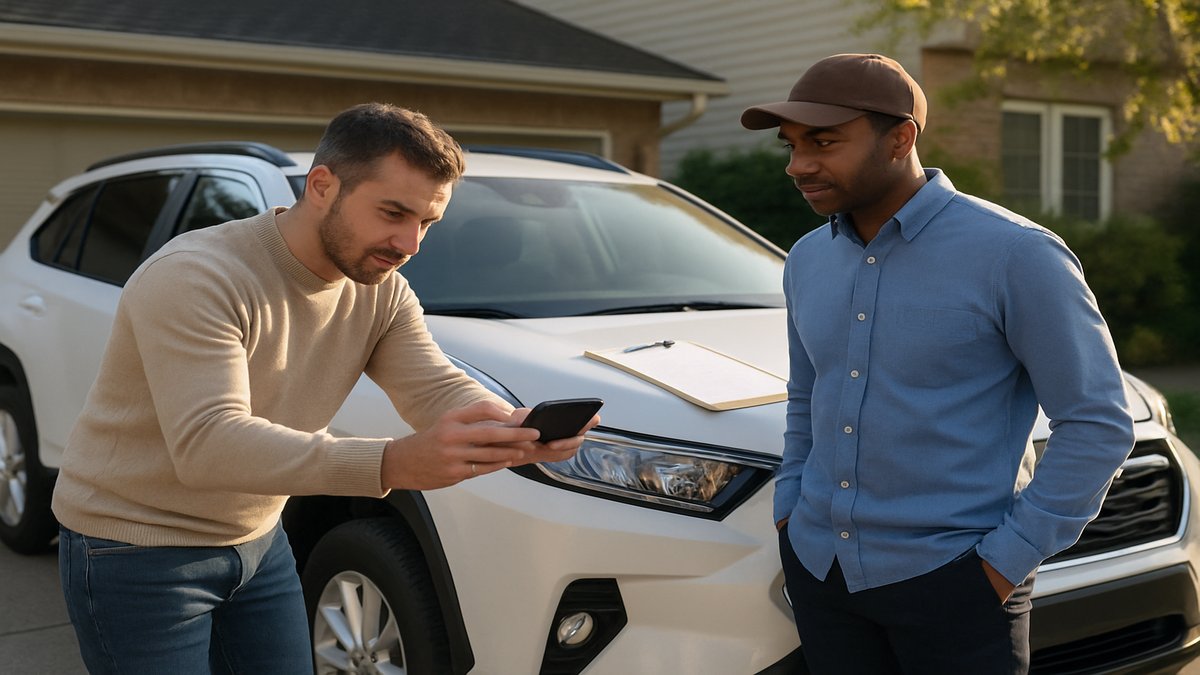
The first car I ever rented out came back with a crease in the rear quarter panel that I was sure hadn't been there. The renter was just as sure it had. I had two blurry photos of the driver's side from the day I handed over the keys, neither of which showed the rear passenger corner. The body shop quoted $1,140. I ate it.
That was four years ago. I've handed off cars to rideshare drivers something like 60 times since, and I haven't lost a damage dispute in three years. Not because renters got more honest. Because I got better at the 15 minutes before the keys change hands.
This is the process. It's boring. That's why it works.
Every damage disagreement comes down to one question: what did the car look like when the renter took it? If you can answer that with timestamped evidence, you win. If you can't, you're negotiating from memory against someone who has every reason to remember differently.
Return inspections feel like the important moment because that's when you find the damage. But the return only tells you the car is damaged now. Pickup is what proves it wasn't damaged before. Owners skip the pickup walkaround because they're in a hurry, the renter's in a hurry, it's raining, and the car "looks fine." Then they spend three weeks arguing over a $900 bumper.
Do this in the same order every time. Your renter watching you do it thoroughly is itself a deterrent.
Wash the car first if you can. Dirt hides scratches and gives renters an easy "it was already there under the mud."
Shoot in this sequence so nothing gets skipped: front straight on, front driver corner at 45 degrees, driver side full, rear driver corner, rear straight on, rear passenger corner, passenger side full, front passenger corner. That's eight. Then get close on each wheel and rim (four more), each bumper corner low to the ground (four more), the windshield with the sun behind you so chips show, the roof from a step stool or your phone raised above your head, and the hood.
Move inside: driver's seat, rear seat, dash, headliner, cargo area, and the inside of each door panel. Rideshare cars take interior abuse that personal cars never see. Rear seat stains and door panel scuffs are the most common return disputes after bumpers.
Make sure your phone has location and timestamp metadata turned on. Those two data points end more arguments than anything else.
Narrate it. "September 8, handing off the Camry to Marcus, existing scratch on the rear bumper passenger side about two inches, small chip on windshield lower left, everything else clean." Video catches things photos miss and it's much harder to argue that a narrated clip was staged.
One photo of the instrument cluster with the car on gets you odometer, fuel level, and any warning lights in a single shot. Write the odometer number into the rental agreement by hand as well. If your listing has a mileage cap (mine is 2,000 a week), this photo is the whole basis for the overage charge.
Stick a penny in each tire and photograph it. A renter who runs your tires down from 7/32 to 3/32 in a month has cost you $500 to $800 in rubber, and without a starting reading you can't prove it. Check pressures while you're down there. Under-inflated tires on a car doing 400 miles a day are a blowout waiting to happen, and that's your problem too.
Look at the physical license and match the face. Take a photo of the license next to the person's face if your platform allows it. Then check that the name on the license matches the name on the rideshare account they showed you when they applied. Account sharing is real, and if someone other than the approved driver crashes your car, you may find out the coverage doesn't apply.
Both of you sign the condition report. Then, before the renter pulls out of your driveway, upload the full photo set to the RideshareRenter message thread or email it to the renter directly. The point is a third-party timestamp that shows the renter received the photos before they drove a single mile. Text messages work but are easier to lose.
Same sequence, same order, same lighting if you can manage it. Renters sometimes push to return at 10 p.m. Say no unless you have a well-lit spot. I've had renters try three times to hand a car back in the dark, and every single time there was something on it.
Shoot the identical 24-plus photos. Compare corner by corner against the pickup set on your phone right there, with the renter present. Point out anything new immediately. A renter who's still standing in your driveway is far more likely to acknowledge a fresh scuff than one who's already home and gets a text two days later.
Check the odometer against your cap and photograph it. Check fuel. Start the car and look for new warning lights. Pop the hood and glance at the oil if it's been more than two weeks. Look under the car for anything hanging loose or dripping. Run the A/C. Test every window and lock.
Then look at the things renters hope you won't: the spare tire and jack (they go missing), the floor mats (they get swapped for worse ones), the cabin air filter (vape residue is unmistakable), and the underside of the rear seat cushion.
| Evidence | Weight in a dispute | Why |
|---|---|---|
| Timestamped, geotagged pickup photos sent to renter before departure | Very strong | Proves condition and proves the renter knew it |
| Narrated walkaround video | Very strong | Hard to fake, captures angles photos miss |
| Signed condition report with odometer written in | Strong | Creates a mutual record |
| Photos taken but never shared until dispute | Moderate | Renter can claim they never saw them or they were taken later |
| Photos taken days after return | Weak | No proof damage occurred during rental period |
| "I remember it was clean" | Useless | You already know why |
Real numbers from my own cars, because vague claims don't help anyone decide whether 15 minutes is worth it.
A cracked passenger mirror housing: $215 at the dealer. Renter initially said it was like that at pickup. The pickup photo of the passenger side showed an intact mirror with a timestamp 19 days earlier. Paid in full within a day.
A 2,400-mile overage on a 2,000-a-week cap over a three-week rental. At my stated $0.15 per mile that's $360. Renter disputed the starting odometer until I sent the dash photo. Paid.
A rear seat with what I'll politely call a beverage stain across the whole bench. Detailing quote was $180. My pickup interior photos showed a spotless seat. Renter paid the $180 and I kept the deposit process clean.
Total over three years of doing it right: somewhere around $3,100 recovered that I would have lost with my old two-blurry-photos routine. Against 15 minutes per handoff, roughly 60 handoffs, that's about $200 an hour for the effort.
Documentation wins disputes over cosmetic damage, mileage, and cleanliness. It does not turn a bad rental into a good one.
If your renter totals the car in an at-fault accident during an Uber trip, the outcome is set by whatever insurance stack applies (Uber's commercial policy, your rideshare-specific or commercial policy, and any platform protection plan). Your walkaround photos are irrelevant to that. If your renter disappears with the car, photos don't bring it back. That's a police report and a GPS tracker conversation, and you should have both before you rent to anyone.
Mechanical wear is also hard to pin on one renter. A transmission that fails at 140,000 miles after six different drivers isn't anyone's fault in a way you can bill. Price it into your rate. On a car doing 1,500 to 2,000 miles a week, I set aside roughly $60 a week for maintenance and it's about right.
And if a renter simply refuses to pay for documented damage, what you've got is the deposit and the platform's dispute process. Beyond that you're in small claims territory, which is a real option for amounts under a few thousand dollars, but it takes time you'd rather spend renting the car.
At least 24 exterior and interior shots covering all four corners, all four wheels, the glass, roof, and interior surfaces, plus a dash photo showing odometer and fuel. A short narrated video on top of that is the strongest single piece of evidence you can create.
Yes. A signed condition report with the odometer and existing damage listed by hand is much harder to contest than a message thread. Keep a printed copy in the glovebox and send a photo of the signed version to the renter before they leave.
Push back. Photos under streetlights hide scratches, and you'll pay for that later. Meet at a gas station or grocery store lot with good overhead lighting if daytime truly isn't possible.
Only if your listing and rental agreement state the cap and the per-mile rate before the rental starts, and only if you have a starting odometer reading the renter acknowledged. Typical overage rates on RideshareRenter listings run $0.10 to $0.25 per mile.
Tires, brakes, and small interior wear are the cost of doing business and should be in your weekly rate, not billed to the renter. Bill for things a careful driver would have avoided: body damage, stains, missing equipment, curbed rims.
No. It protects you on cosmetic damage, mileage, and cleanliness disputes. Accidents and theft are handled by the insurance and protection plan that applies to your car, and you should confirm what that stack looks like before your first rental.
Vehicle owners: Print the checklist, put it in the glovebox, and use it on every handoff without exception. Then list your car on RideshareRenter with your mileage cap and overage rate stated clearly in the listing so there's nothing to argue about later.
Drivers: An owner who runs a thorough handoff is an owner who won't blame you for damage you didn't cause. Take your own photos too, and find rideshare-ready cars on RideshareRenter from owners who put their terms in writing.




Comments