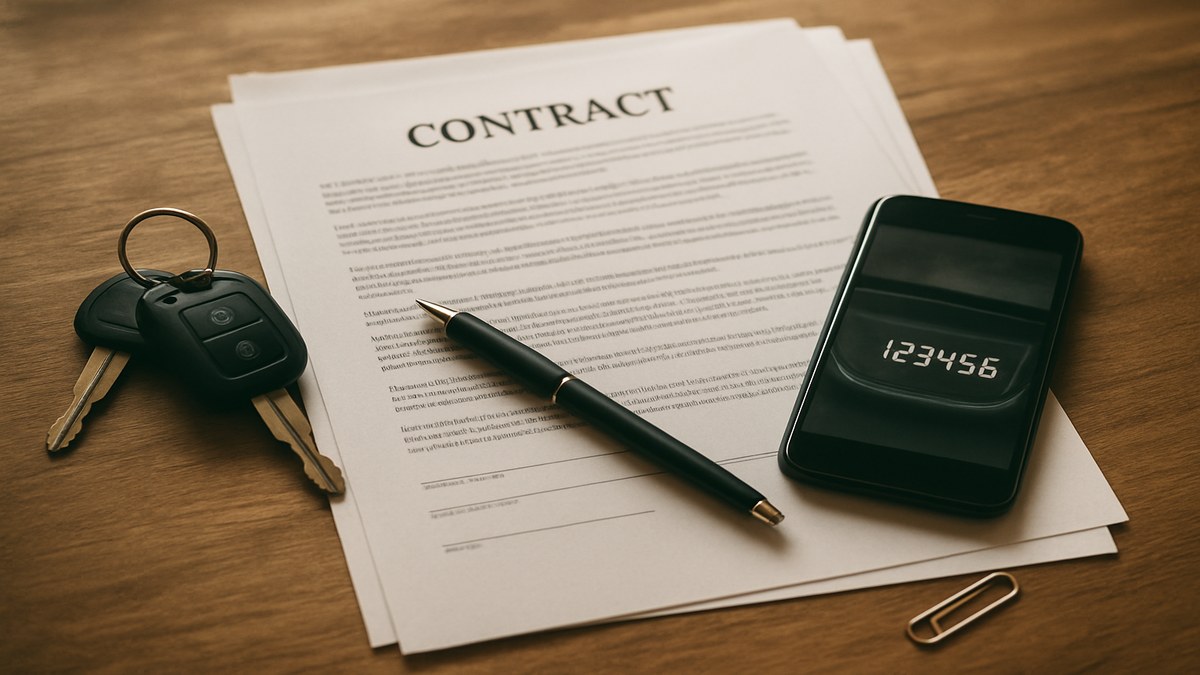
Most owners on RideshareRenter handle their first rental on a handshake and a text thread. It works right up until it doesn't — and when it doesn't, the text thread is the only evidence you have.
The renter says the bumper was already scraped. You say it wasn't. Neither of you has a dated photo. Now you're eating a $900 body shop bill and arguing with someone who's still driving your car.
A written rental agreement doesn't make you a lawyer. It makes you someone who wrote down what you both agreed to, before either of you had a reason to remember it differently.
Names, addresses, driver's license numbers, and phone numbers for both parties. The vehicle's year, make, model, VIN, plate, and exact odometer reading at handoff. The start date, the end date, and what happens if there is no end date.
Sounds obvious. It's skipped constantly, and it's the section that matters most if you ever need to report a vehicle as unreturned. "I rented it to a guy named Marcus" is not a police report.
Vague money language is where disputes are born. Nail down:
That last one deserves its own sentence. Tolls and tickets follow the plate, which means they follow you. Your agreement needs to say the renter is responsible for any citation or toll incurred during their rental period, and that you may deduct it from the deposit. Otherwise you're mailing checks to the city for someone else's parking habits.
Here's where owners talk themselves into a bad deal. Unlimited miles is a great listing headline. It's also how a car picks up 1,800 miles a week and hits 100,000 in a year.
Do the arithmetic on your own vehicle. A driver running full-time can put 1,200–1,800 miles a week on your car. At 1,500/week, that's 78,000 miles a year. Depreciation and maintenance don't care that the rent showed up on time.
Three ways to write it:
| Structure | Good for | Risk |
|---|---|---|
| Hard cap (e.g. 1,000 mi/week, $0.20–$0.30 per mile over) | Protecting a newer or financed car | Scares off full-time drivers, who are your best renters |
| Generous cap (e.g. 1,500 mi/week + overage) | Most owners, most cars | Requires you to actually track the odometer |
| Unlimited | Older, high-mileage cars you're intentionally running into the ground | You are financing someone else's mileage with your asset |
Whatever you pick, the agreement should require an odometer photo at handoff and at return. No photo, no argument to have.
This is the part where I'd rather under-promise than hand you a confident answer that's wrong in your state.
Rideshare insurance works in periods. Period 1 is app on, no ride accepted — platform coverage here is usually thin and contingent. Periods 2 and 3, en route and passenger onboard, carry the platform's commercial policy. A personal auto policy typically excludes commercial use entirely, and a personal policy on a car you're renting out to someone else is a coverage question you need a licensed agent to answer, not a blog post.
What the agreement needs to state:
Call your insurance agent before you rent the car out. Not after. A commercial or rideshare-endorsed policy costs more than your personal policy, and that cost belongs in your pricing. Owners who skip this step and get in an accident discover their coverage was void the entire time.
The cheapest insurance you'll ever buy is your phone camera.
At handoff, photograph every panel, both bumpers, all four wheels, the roof, the windshield, the odometer, the fuel gauge, the seats, the trunk, and every existing scratch and ding in close-up. Timestamp them. Send them to the renter in the same thread and get a reply confirming they agree. Repeat the identical sequence at return.
Attach a condition checklist to the agreement and have both parties sign it. When a body shop dispute happens, the person with dated photos wins. It is that simple.
A signed agreement does not make a bad renter pay you. It makes it possible to collect from a bad renter, through a claim, through small claims court, through a deposit deduction that survives a challenge. That's a meaningful difference and it's worth being clear about.
Screening still matters more. An agreement is the floor, not the strategy.
Not necessarily, but you should have a local attorney review it once before you use it, especially the insurance, deposit, and repossession sections. Those three are state-specific and getting them wrong is expensive. A one-time review is cheap compared to one bad outcome.
As a starting skeleton, sure. But a generic template won't reflect your state's rules on security deposits, late fees, or vehicle recovery, and it won't reflect how rideshare insurance periods actually work. Use it as a draft and get it reviewed.
Common practice is one to two weeks of rent, or enough to cover a typical insurance deductible. Higher deposits protect you but shrink your applicant pool, many drivers come to RideshareRenter specifically because they can't front $1,500. Check whether your state regulates deposits on vehicle rentals.
Your agreement should define this as immediate default and specify the recovery process. Do not attempt a self-help repossession without knowing your state's law, in some states that's a crime, even though it's your car. Consult an attorney, and document every missed payment in writing from day one.
Charge for them, and say so in writing. They follow your plate, so you'll be the one contacted. Build in the right to deduct them from the deposit, and keep the deposit until enough time has passed for citations to arrive, that can be weeks.
RideshareRenter connects owners and drivers; the rental terms are between you and your renter. That's a feature, you set terms that fit your car and your risk tolerance, but it means the agreement is genuinely your responsibility. Don't outsource it to hope.
Vehicle owners: Write the agreement before you write the listing. List your car on RideshareRenter and put your terms, mileage, deposit, insurance requirements, right in the listing. Clear terms attract serious renters and repel the ones who were going to be a problem.
Drivers: If an owner hands you keys with no written agreement, that's a red flag for you too, you have no protection either. Find owners on RideshareRenter who put their terms in writing up front.
This article is general information, not legal advice. Vehicle rental, security deposit, and repossession laws vary by state. Have a licensed attorney in your state review your agreement, and speak with a licensed insurance agent before renting out a vehicle.




Comments