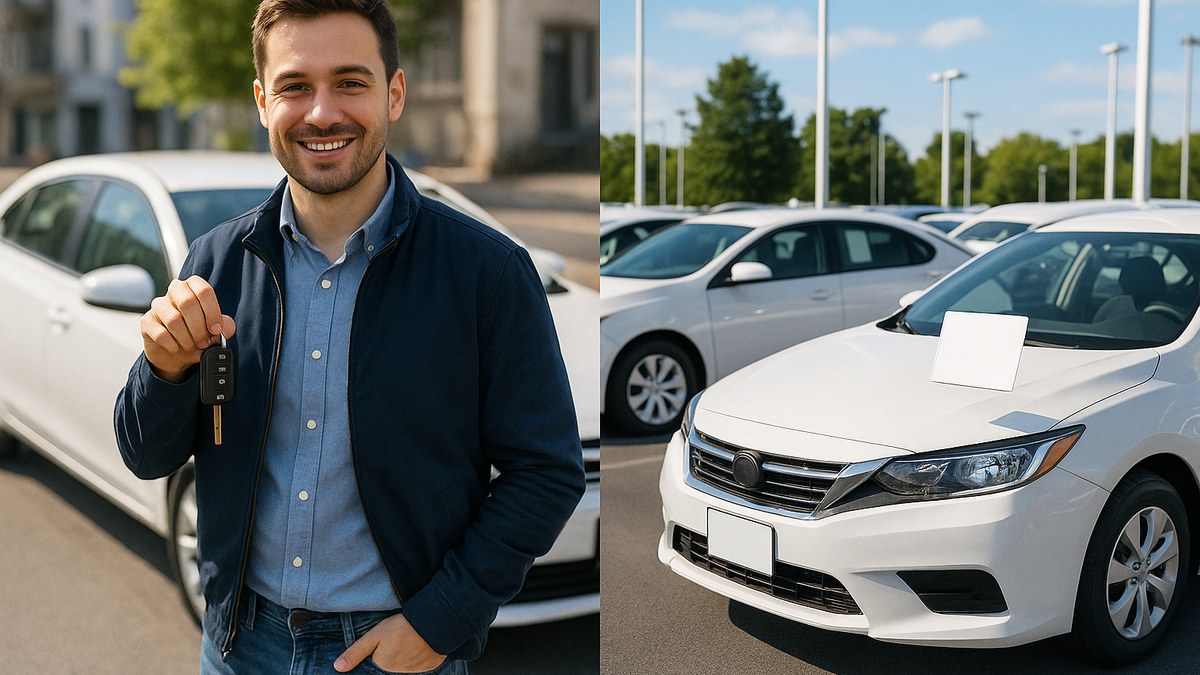
Three years ago I financed a Camry to drive Uber full time. Eighteen months in, a guy ran a red light in Midtown, the car got totaled, and I spent six weeks fighting with two insurance companies while my car payment kept coming due. When I got back on the road, I rented instead. I've done it both ways, so here's the actual math — not the version either a dealership or a rental platform wants you to see.
Say you finance a used 2022 Camry at around $23,000. With average used-car rates for fair credit sitting near 11-13% APR, you're looking at roughly $470/month over 60 months. But the payment is the small part. Rideshare endorsement or a proper rideshare insurance policy runs $250-400/month in most states, because personal policies exclude commercial driving and getting caught in a gap can void a claim. Add maintenance — oil changes every 5,000 miles when you're doing 1,000 miles a week, brakes twice as often as a commuter, tires every 8-10 months.
Here's a realistic monthly picture for a financed car driven full time:
| Expense | Financing (monthly) | Renting on RideshareRenter (monthly) |
|---|---|---|
| Payment / rental | $470 | $1,000–$1,400 ($250–$350/wk) |
| Rideshare insurance | $250–$400 | Usually included |
| Maintenance & tires | $150–$250 | Usually included |
| Depreciation (real cost) | $300–$400 | $0 |
| True total | $1,170–$1,520 | $1,000–$1,400 |
That depreciation line is the one nobody counts. A car doing 50,000 miles a year sheds value fast. You feel it the day you sell or the day it gets totaled and the payout doesn't cover the loan.
I'm not going to pretend renting always comes out ahead. It doesn't. Financing wins if you drive part time — under about 25 hours a week, the fixed rental cost eats too much of your earnings. It wins if you keep the car five-plus years and drive it into the ground; total cost per mile drops every year after payoff. And it wins if you'd own a car anyway for family use, because then Uber miles are marginal cost, not the whole cost.
Financing also builds an asset. A rented car never becomes yours. If you rent for four years straight, you've spent $50,000+ and own nothing. That's real.
Renting wins on risk, mostly. No 60-month commitment when Uber cuts rates in your market. No depreciation on a car you're beating up. No $1,800 surprise transmission bill in a month you were already short. When my rental needed brakes last spring, I messaged the owner, swapped cars for a day, and paid nothing.
It also wins on speed. Financing takes a credit check, a down payment ($2,000-4,000 typically), and often a week of shopping. On RideshareRenter, drivers regularly go from application to driving in 24-48 hours, and many owners don't run credit checks at all — they care about your driver rating and your license history. If your credit took a hit, that difference is everything.
And there's the totaled-car scenario I lived through. When a rental gets wrecked, you deal with the incident, then walk away or get another car. When your financed car gets wrecked, you can end up owing the difference between loan balance and payout. Gap insurance covers some of that, but it's one more monthly cost the dealership math leaves out.
Full-time drivers (40+ hours) gross $1,400-1,900/week in most major markets right now. At $300/week rental, you're giving up roughly 18% of gross to the car, but insurance and maintenance are handled. A financed car takes a smaller visible bite, around $270/week all-in on the numbers above — but you're carrying the depreciation, breakdown risk, and the loan whether you drive or not.
My rule after doing both: rent if you're new, part-committed, credit-challenged, or in a market you might leave. Finance if you're certain you'll drive full time for three-plus years, have the down payment without draining your emergency fund, and can absorb a big repair bill.
Your lender mostly won't care, but your insurer will. Driving rideshare on a personal policy can get claims denied and policies cancelled. You need a rideshare endorsement or commercial coverage, and that's $250+/month in most states.
Most listings include commercial or rideshare-appropriate coverage in the weekly rate — check each listing, because terms vary by owner and state. That's usually the single biggest line item renting removes.
Used-car loans under 10% APR generally want a 670+. Many RideshareRenter owners don't run credit checks; they screen on license, driving record, and platform ratings instead.
Usually not, honestly. If you drive 15 hours a week, a $300/week rental can eat half your gross. Part-timers do better on a paid-off personal car with a rideshare endorsement.
With a rental, you return the car at the end of your term. With a loan, you still owe $400+/month on a high-mileage car that's worth less than the balance. That asymmetry is the strongest argument for renting while you decide if this work is for you.
Drivers: Browse rideshare-ready rentals near you on RideshareRenter — weekly rates, insurance details, and no-credit-check options listed upfront.
Car owners: Got a car that could be earning instead of depreciating in your driveway? List it on RideshareRenter and put it to work with vetted rideshare drivers.




Comments