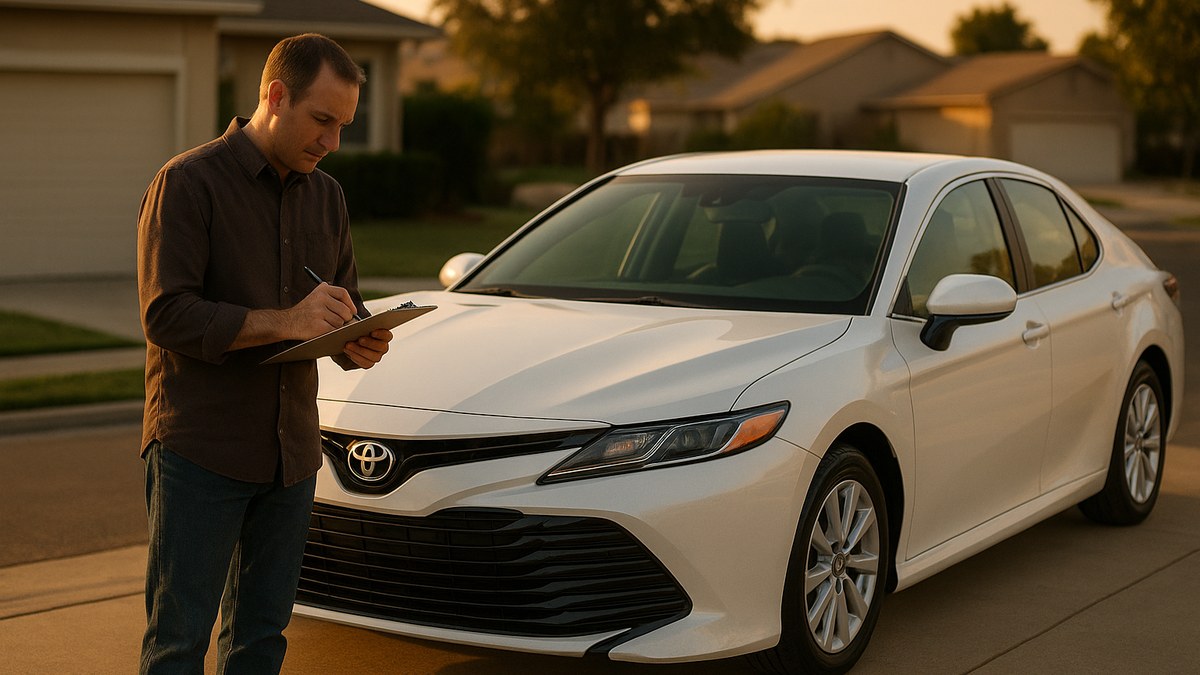
The first car I put on RideshareRenter was a 2019 Camry I'd stopped driving after switching to a hybrid. It's earned me roughly $1,050 a month since, and the driver who rents it treats it better than I did. But my first two months were a mess, and every mistake I made is one I now watch new owners repeat on the platform every week.
If you're thinking about renting your car to rideshare drivers, here are the seven mistakes that cost first-time owners real money, and what to do instead.
New owners do this constantly. Their loan payment is $480 a month, so they price the rental at $150 a week and feel clever about the margin. Meanwhile every comparable Camry in their metro is listed at $250 a week, and they've left $400 a month on the table.
Your payment is irrelevant to a renter. The market rate is set by what full-time drivers earn and what your competition charges. Before you list, search your own city on RideshareRenter like a driver would, filter to your vehicle class, and price within $20 of the middle. You can move down later if there's no interest. Moving up on an existing renter is a much harder conversation.
The driver who eventually dinged my rear bumper was polite, punctual, and had a great story. What he also had, I learned afterward, was two at-fault accidents in eighteen months. I never pulled his motor vehicle record because the conversation felt like enough.
Pull the MVR every time. It costs a few dollars in most states and takes minutes. My personal cutoffs now: no DUI ever on record, no more than one at-fault accident in three years, no more than two moving violations in three years. Drivers with clean records don't mind the ask — the ones who push back are telling you something.
This is the mistake that can actually ruin you, so I'll be blunt about it. Your personal auto policy almost certainly excludes commercial use. If your renter is driving Uber passengers in your car and your insurer finds out, a claim can be denied — and depending on the policy and state, coverage can be dropped entirely.
The coverage picture during rideshare driving is also genuinely layered: Uber and Lyft's contingent coverage applies during app-on periods in different amounts depending on whether the driver is waiting, en route, or carrying a passenger, and it was never designed to protect the car owner's asset during off-app hours. What fills the gaps varies — commercial rental policies, rideshare-rental endorsements, and owner-arranged coverage all exist at different price points.
I'm not going to pretend one paragraph settles this, because it doesn't. Read RideshareRenter's Insurance Risk and Disclosure page before you list, and talk to an agent who's handled rideshare rentals before. Owners who skip this step are fine right up until the day they very much aren't.
"We agreed on $250 a week and he seems solid" is not an agreement, it's a memory. When the renter returns the car with 4,100 new miles and you thought you'd discussed a mileage expectation, the text thread won't save you.
Use a real rental agreement — RideshareRenter provides a Driver Rental Agreement framework. Whatever you use, it should cover: weekly rate and payment day, deposit and what it covers, mileage expectations, who pays for which maintenance, fuel and cleaning condition on return, smoking policy, and what ends the rental. Ten minutes of paperwork prevents 90% of owner-renter disputes I've seen on the forums.
A full-time rideshare driver puts 800 to 1,200 miles a week on a car. That's oil changes every five to six weeks, tires roughly twice a year, brakes more often than you've ever replaced brakes. First-time owners price these at zero and then feel robbed when reality shows up.
Here's a rough monthly picture for a Camry-class sedan doing 4,000 miles a month:
| Item | Monthly reserve |
|---|---|
| Oil changes (synthetic, ~every 5,000 mi) | $55 |
| Tires ($700 set / ~40k miles) | $70 |
| Brakes, filters, wipers, fluids | $45 |
| Depreciation-related wear reserve | $100+ |
Call it $250 to $300 a month against roughly $1,000 in rental income. Still a solid return on an asset that was sitting in your driveway — but only if you actually reserve for it. Owners who spend the whole check are financing their renter's business with their own transmission.
A rideshare rental comes back with door dings, coffee smells, and 50,000 new miles a year. That's not renter abuse — that's the business. If watching a stranger put wear on the car would keep you up at night, or if you'd be stranded when the car's rented, this isn't the right car to list. The best rideshare rentals are reliable, boring, paid-off-or-close sedans and hybrids the owner thinks of as an asset, not a family member.
An empty week feels expensive, so new owners grab the first message they get. Then the mediocre renter pays late twice, and now the car is earning nothing AND stuck in a bad rental. A vacant week costs you $250. A bad three-month renter costs you far more, in payments chased and condition lost.
Wait for the applicant with the clean MVR, the active driver profile with a strong rating, and the direct communication style. On RideshareRenter you'll typically hear from several drivers in a metro market — screening hard at the start is the highest-leverage hour you'll spend.
Depends on market and vehicle, but economy sedans and hybrids in active metros typically gross in the range of $800 to $1,200 a month on RideshareRenter. Net of maintenance reserves, most owners keep $550 to $900. A newer hybrid in a big market does better; an aging sedan in a small market does worse.
Camrys, Corollas, Priuses, Civics, Elantras, and their hybrid variants — cars that qualify for UberX, sip gas, and don't scare drivers with repair risk. Luxury cars rent slower and take more wear damage than the premium justifies, with the exception of Uber Black-eligible vehicles in the handful of markets with real Black demand.
The renter, always. Fuel and tolls are operating costs of their business. Your agreement should state the car comes back at the same fuel level it left at.
Tickets follow the plate, which means they find you. Your agreement should make the renter financially responsible, and your deposit is the backstop. This is one more reason a written agreement beats a handshake.
Many owners do, but read your loan agreement — some lenders restrict commercial use — and the insurance implications from Mistake 3 double over here, since the lender requires you to keep valid coverage. Get real answers for your specific situation before listing.
Every fleet owner I know on the platform started with exactly one car and a list of mistakes. The difference between the ones running eight cars now and the ones who quit is that the first group treated the first rental as tuition. Skip the seven lessons above and you've skipped most of the tuition.
Vehicle owners: Ready to put an idle car to work? List it on RideshareRenter — you set the price, the screening rules, and the terms.
Drivers: Looking for a well-maintained car from an owner who actually cares about it? Browse local listings on RideshareRenter.




Comments