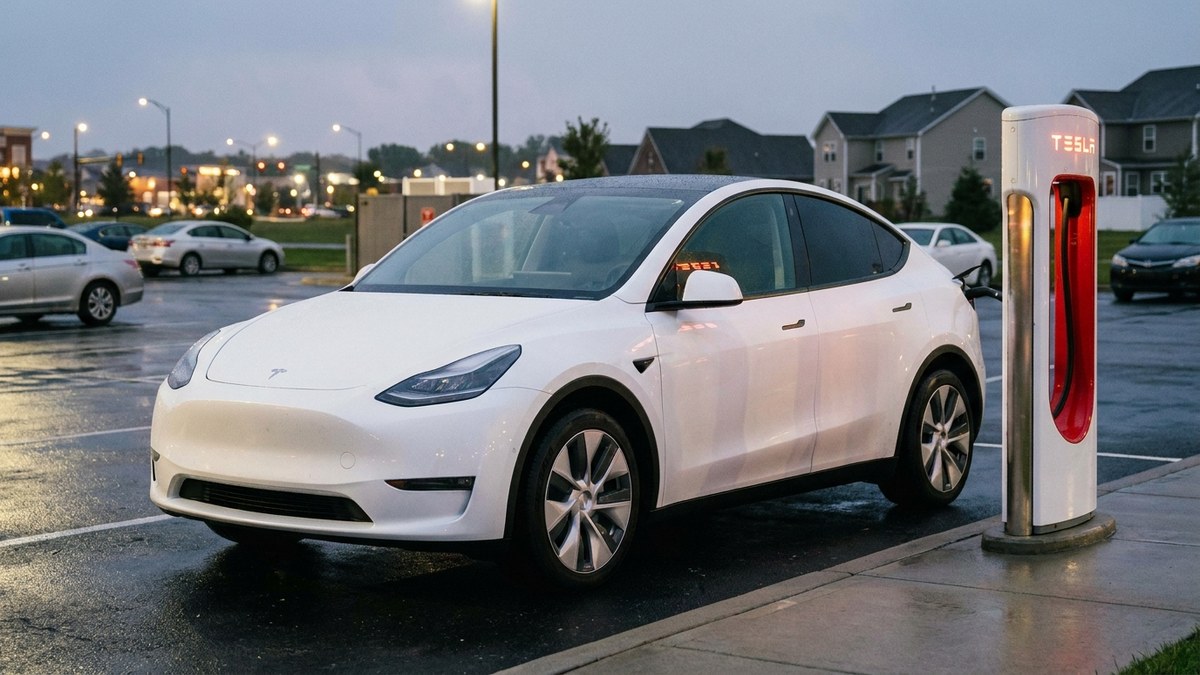
My Model Y has been on RideshareRenter for fourteen months. I bought it in March 2025, drove it for Uber Comfort Electric for four months, then switched to renting it out full-time because the owner math worked better than the driver math. Here's what it actually grosses, what it actually nets, and the parts of Model Y ownership that surprise rideshare owners.
2022-2024 Model Y Long Range rentals on RideshareRenter sit between $349 and $429/week in most top-25 cities. Performance trims push $449. Demand is strong because Uber Comfort Electric pays an extra $0.18-$0.32/mile depending on the city, and drivers know it.
My listing is a 2024 Long Range in pearl white at $389/week, 1,200 mile cap, $1,000 deductible. I keep it slightly under market because I want the car booked 50+ weeks a year, not 40.
Past 12 months on my Model Y, fully transparent:
| Line | 12-month total | Monthly avg |
|---|---|---|
| Weeks rented | 49 | — |
| Gross rental income | $19,061 | $1,588 |
| Mileage overage fees collected | $1,240 | $103 |
| RideshareRenter service fee | −$1,615 | −$135 |
| Net to me before expenses | $18,686 | $1,557 |
49 weeks rented out of 52. The three unbooked weeks were a planned maintenance week, a week I took the car back for a road trip, and one gap between drivers.
| Expense | 12-month | Monthly |
|---|---|---|
| Commercial rideshare insurance policy | $3,640 | $303 |
| Tires (replaced 4, full set) | $1,490 | $124 |
| Tesla service visits + alignment | $580 | $48 |
| Detail / interior cleaning (8 visits) | $640 | $53 |
| Registration, plate, misc | $310 | $26 |
| Two windshield chip repairs | $220 | $18 |
| Total expenses | $6,880 | $573 |
Net cash flow: $18,686 − $6,880 = $11,806/year, or about $984/month. That's before depreciation, which is the elephant.
I bought my Model Y at $44,200 (2024 Long Range, after federal credit). Twelve months later, KBB instant offer was $32,800. That's $11,400 of depreciation. Mileage on the car: 41,000 (about 28,000 from renters, 13,000 from my own use and delivery).
That depreciation almost equals my net cash flow. If you're not honest about that, you'll be the owner who thinks they're making $12k a year and actually broke even.
The honest take: my Model Y is paying for itself, the insurance, the tires, and putting maybe $300-$500/month of real wealth-building income in my pocket once you account for depreciation. Year two will be better because the steepest depreciation is behind it.
Three reasons. First, Supercharger access. Drivers don't need to figure out charging — they just plug in. That makes the car easier to rent and harder to abuse. Second, Uber Comfort Electric demand. The car books almost every week because drivers want the higher-paying tier. Third, Tesla's parts and service network. A Bolt is cheaper but parts availability is brutal compared to a Tesla.
I tried listing a friend's Bolt EUV last year. It rented for $279/week but sat unbooked 14 weeks out of 30. Drivers want Model Ys. So that's what I'd buy.
Curb rash on the wheels. Every Model Y I've rented or known is going to get scuffed wheels within six months. I include a flat $40 wheel-cleanup fee in my listing now.
Tires. Performance trim eats tires in 22,000 miles. Long Range gets 28,000-32,000. Budget two full sets if you're renting it 50 weeks a year. Drivers don't rotate. They just drive.
Interior wear. The white seats are a mistake on a rental Model Y. Get black. I learned this on someone else's listing. Crumbs and spilled coffee show on white in two weeks. Black hides everything.
One claim, fourteen months. Small bumper scrape at a Whole Foods lot. Renter paid the $1,000 deductible from their deposit and the platform handled the rest. Took three weeks to get the car back from the body shop, which was a vacancy cost of about $1,100. Not nothing.
If your monthly payment plus insurance is under $1,100, the math works in most top-25 cities. Above that, you're racing depreciation. I paid cash for mine because I'd done the math on the financed version and it was tight. With current rates north of 7%, financing a Model Y for rideshare is closer to break-even than I'd want.
Lease? Forget it. Mileage caps on a lease will destroy you. A renter putting 22,000 miles a year on a 12,000-mile lease costs you $0.25-$0.40 per mile at lease-end. That's $3,000-$4,000 in penalties. Math doesn't work.
I screen renters hard. Three years of rideshare history minimum, 4.85 rating or higher, no claims on RideshareRenter. About 35% of applicants get in. Sounds picky. It's the reason I've had one small claim in fourteen months.
I require a $400 deposit. I include charging from a public Supercharger pricing schedule — renters reimburse if they use my home wall connector (which I don't really allow because it's not always available).
I do an in-person handoff for every new renter. Walk them through the regen, the Phantom Drain when sitting, how to find Superchargers in their city. Twenty minutes upfront saves me a panicked text at 2 a.m.
Cash flow after expenses, $850-$1,150/month in most top-25 markets. After honest depreciation accounting, $300-$550/month of real income. Higher in markets with strong Uber Comfort Electric demand (LA, SF, Seattle, Denver). Lower in markets without the EV bump.
$1,000 is standard. I tried $500 and got more wear-and-tear claims because renters were less careful. The higher deductible filters for careful drivers. Don't go above $1,500 — you'll lose bookings.
Yes. A personal auto policy excludes commercial peer-to-peer rentals. RideshareRenter has platform coverage during the rental, but for the gap times and for full peace of mind, I carry a commercial rideshare-rental policy. Mine is $303/month for a Model Y in my market.
A clean Long Range listing in a top-25 city books inside 48 hours of going live, assuming the price is in the $349-$399 range. Pricing higher than $429 cuts your booking rate noticeably.
Regen saves brakes — I've replaced brake pads zero times in 41,000 miles. Tires get eaten faster because of the torque. Net I'm spending less on brakes than a Camry but more on tires.
Yes, and they're $30-$60/week cheaper to rent. Slightly lower demand from drivers, slightly lower depreciation. Total income works out similar.
A Model Y on RideshareRenter is a real income asset if you bought it right, you screen renters, and you account for depreciation. It's not passive. I spend 2-4 hours a week on messaging, cleanings, swaps, and occasional repairs. But it's the best ROI of any side hustle I've run that doesn't involve me being the one driving.
Owners: If you have a Model Y you're underusing, list it on RideshareRenter. The platform handles the matching and the insurance during rental.
Drivers: If you want to drive Uber Comfort Electric without owning a Tesla, search Model Y listings in your city on RideshareRenter. Weekly rates run $349-$429 and you'll earn the EV bump on every ride.




Comments