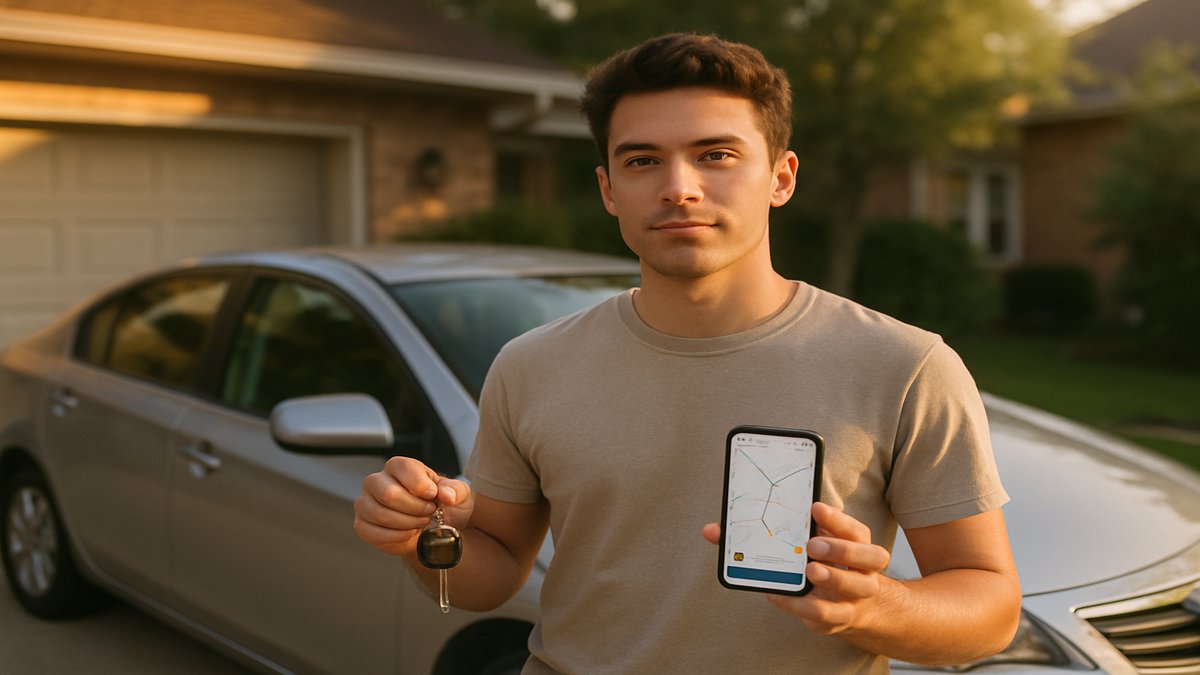
I started driving Uber at 22 with a borrowed car and a lot of confidence. The confidence lasted until the borrowed car went back to its owner and I walked into a rental counter at the airport. The guy behind the desk looked at my license, looked at me, and said the words every young driver hears eventually: "We can't rent to you for rideshare use, and even if we could, there's a young driver surcharge."
That was the day I learned the age math of this business. Uber will onboard you at 21. Most of the car supply won't rent to you until 25. The gap between those two numbers is where a lot of would-be drivers give up. You don't have to.
There are two separate gates here, and people mix them up constantly.
The first gate is the app. Uber's minimum driver age in most U.S. cities is 21, with some markets requiring 25 and a few requiring more years of licensed driving experience if you're under 23. Lyft runs a similar setup: 21 in most places, 25 in a handful of cities. Neither company publishes one clean national number because it varies by city and state, so check the requirements page for your specific market before you do anything else. Don't assume.
The second gate is the car. This is the one that bites. Traditional rental companies set their own minimum ages independent of what Uber allows, and in the U.S. that floor is almost always 25 for anything beyond a basic economy car. Drivers aged 21 to 24 can sometimes rent from a major counter for personal use, but you'll pay a "young renter fee" of roughly $25 to $35 per day on top of the base rate, and most of those contracts prohibit commercial use anyway. Driving for Uber in a car whose contract forbids commercial use isn't a gray area. It's a breach, and it can void the coverage you think you have.
So the real question for a 22-year-old isn't "can I drive Uber." It's "who will put me in a car."
Here's the honest lay of the land as of 2026.
Programs like Hertz through Uber and Lyft Express Drive have historically followed the same 25-and-up rule as the parent rental company, or set a floor in the 21 to 25 range that shifts by market. If you're 21 to 24 and want to try this route, call the specific location. Don't trust the web page. Local branches interpret the rules differently, and a 23-year-old in Dallas can get a different answer than a 23-year-old in Denver.
This is where most young drivers I know ended up, and it's where I ended up. On RideshareRenter, the car belongs to an individual owner or a small fleet operator, not a corporation with a nationwide underwriting policy. The owner sets their own minimum age. Plenty of owners set it at 25 because their insurer prefers it. Plenty of others set it at 21, because a 22-year-old who drives 50 hours a week and pays on time is a better renter than a 40-year-old who drives 12.
The practical upside: you're negotiating with a person. You can send a message that says "I'm 23, here's my Uber rating, here's my driving record, here's how many hours a week I plan to drive." That conversation doesn't exist at a rental counter.
The practical downside: fewer listings will accept you, so your choice of vehicle narrows. In a mid-size market you might see 15 rideshare-ready cars and only 5 or 6 that accept drivers under 25. You'll want to be flexible on make and model.
Cheapest option by far. Also the one most likely to blow up. If you drive a family member's car for Uber without adding rideshare coverage to their personal policy, a claim during a trip can get denied and their policy can get cancelled. I've watched it happen to a friend's mom. If you go this route, get a rideshare endorsement on the policy first. They run about $15 to $30 a month with most carriers.
Let me put the options side by side using the kind of pricing I see in mid-size U.S. markets. Your city will vary, but the shape of the comparison holds.
| Option | Weekly cost (age 21-24) | Mileage | Commercial use allowed? |
|---|---|---|---|
| Major rental counter, economy car | $280 base + $175-$245 young renter fee = $455-$525 | Usually unlimited | Usually no |
| Uber/Lyft partner program (where age permits) | $260-$380 + deposit | Unlimited, rideshare only | Yes, rideshare only |
| RideshareRenter (owner sets terms) | $200-$350, no age surcharge | Set per listing, often 1,500-2,500/wk | Yes, that's the point |
| Family car + rideshare endorsement | $4-$8 (endorsement only) | Whatever the family tolerates | Yes, with endorsement |
That young renter fee is the whole story. At $25 to $35 a day, you're handing over $175 to $245 a week for the privilege of being 23. Over a year that's $9,000 to $12,700 in surcharges alone. A peer-to-peer owner doesn't charge that because they're not pricing you off an actuarial table. They're pricing you off your record and how you come across.
This gets complicated and I'm not going to pretend otherwise.
When you're on a trip with a passenger, Uber and Lyft carry commercial liability coverage. That part is the same for a 22-year-old and a 45-year-old. The messy parts are the gaps: the time you're logged in but haven't accepted a ride, and physical damage to the car itself.
With a peer-to-peer rental, the coverage on the car usually comes from one of three places. Some owners carry a commercial or rideshare-specific policy that covers renters, and they price the rental to reflect that. Some rely on the platform's protection plan, which often has a deductible in the $1,000 to $2,500 range that the renter is responsible for. And some owners, frankly, are underinsured and haven't thought it through.
Your job before you sign anything: ask the owner three direct questions. What policy covers this car while I'm driving it? What's my deductible if I damage it? What happens during the app-on, no-passenger period? If the owner can't answer those cleanly, move on to the next listing. A cheap weekly rate means nothing if a $4,000 fender bender comes out of your pocket.
One more thing about age. Some insurers charge the owner more to cover a driver under 25. A good owner will tell you that up front and may price your rental $15 to $30 a week higher to cover it. That's fair. What isn't fair is an owner who takes your money and never adds you to anything.
You're competing against older drivers with longer records. Here's how I closed the gap.
Lead with your driving record. Pull your MVR from the state DMV (usually $5 to $15) and attach it to your first message. A clean three-year record from a 23-year-old carries more weight than you'd think.
Show your app history if you have any. Screenshots of a 4.9 rating and a few hundred completed trips settle most of an owner's nerves.
Offer a longer commitment. An owner choosing between a 22-year-old asking for one week and a 22-year-old asking for six weeks will pick the six-week renter almost every time. Longer rentals mean fewer handoffs and less risk for them.
Be specific about your schedule. "I drive Thursday through Sunday, 5 p.m. to 2 a.m., mostly airport and downtown" sounds like a professional. "I'll drive whenever" sounds like a gamble.
Put down a real deposit without being asked. If the listing wants $300 and you offer $400, you've just told the owner you have skin in the game.
I'd be lying if I said this was easy at 22.
Fewer listings accept you, so you'll spend more time messaging and more time waiting. In smaller markets you may only have two or three real options, and if those owners are booked, you're stuck for a week.
Your margins are thinner. A $280-a-week car plus gas at roughly $80 to $120 a week means you need to clear $400 before you've made a dollar. At $18 to $25 an hour net in a typical mid-size market, that's 16 to 22 hours a week just to break even. Part-time driving under 25 is a hard way to make money. Full-time, 40-plus hours, it works.
And you carry more of the blame if something goes wrong. Fair or not, a 22-year-old in an accident gets more scrutiny from adjusters, owners, and sometimes cops. Drive like everyone assumes you're reckless, because some of them do.
In most U.S. cities, yes, provided you meet the licensed-driving-experience requirement, which is usually one year (three years if you're under 23 in some markets). A few cities set the floor at 25. Check Uber's requirements page for your specific city before renting anything.
Because rental companies write their own rules based on their own insurers, not Uber's. Most set a 25-year-old minimum for anything other than a basic economy car, charge young renter fees below that, and prohibit commercial use in the standard contract regardless of age.
Each vehicle owner sets their own minimum age on their listing. Many accept drivers 21 and up. Filter for listings that state their age policy, and if it isn't stated, ask before you apply.
Sometimes. If the owner's insurer charges more to cover younger drivers, expect a rate $15 to $30 a week above what an older driver would pay. That's still far below the $175 to $245 weekly young renter fee at a traditional counter.
Only if their personal auto policy has a rideshare endorsement added, and only if you're listed as a driver on it. Without that, a claim during a trip can be denied and the policy can be cancelled. Endorsements typically run $15 to $30 a month.
You can't drive Uber or Lyft passengers yet anywhere in the U.S. Delivery apps like DoorDash and Uber Eats accept drivers at 18 or 19 depending on the platform, and some RideshareRenter owners rent to delivery drivers. That's your on-ramp until 21.
Drivers: If you're 21 to 24 and ready to start, browse rideshare-ready cars on RideshareRenter, filter by your city, and message owners with your record and your schedule. Skip the young renter fee entirely.
Vehicle owners: The under-25 market is underserved and full of full-time drivers who'll rent for months at a time. If your insurance allows it, list your car on RideshareRenter and state your minimum age clearly. You'll get inquiries other owners are turning away.




Comments