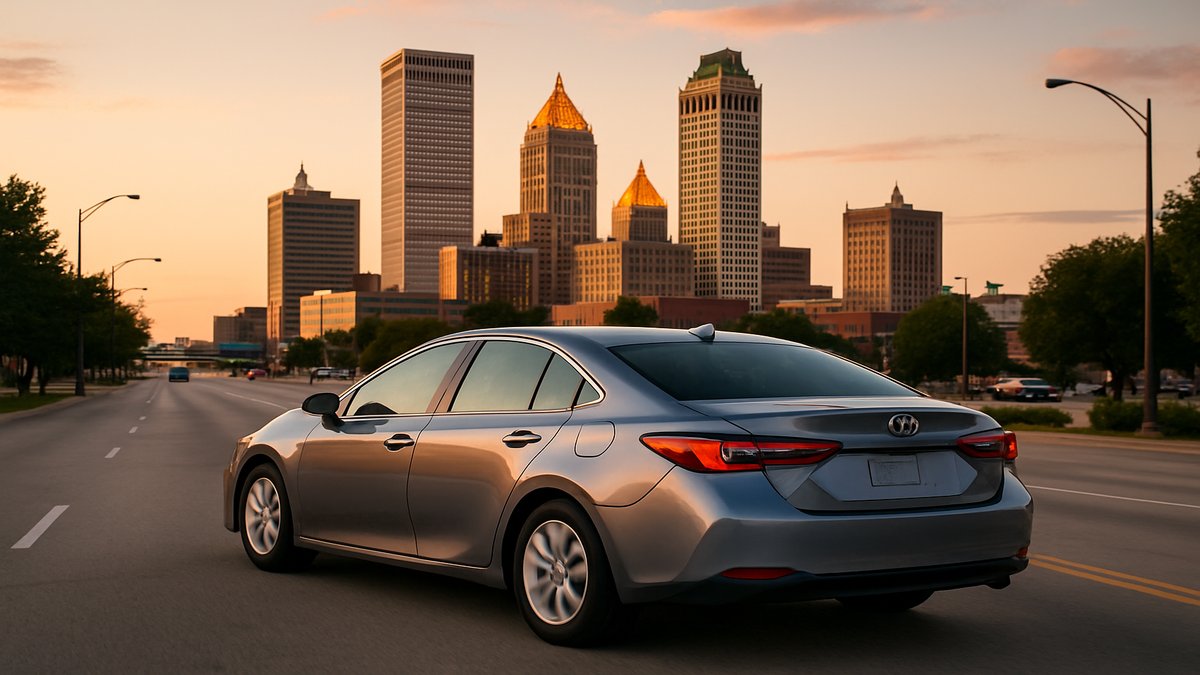
Tulsa isn't a city people think of when they think about rideshare. It's not Dallas, it's not Austin. But I've driven here on and off for two years, and the math works better than you'd expect, mostly because everything that costs money in a big market costs less here and the airport queue moves faster than it has any right to.
This guide is for drivers who need a car to get started, or who are tired of putting Uber miles on their own. It covers what a rideshare rental runs in Tulsa, where the trips are, and what a real week looks like after the rental and gas come out.
Tulsa is a smaller rideshare rental market than Oklahoma City, which means fewer listings but also less competition among renters. Here's what I see across the options that exist here.
| Option | Typical weekly cost | Deposit | Mileage | Notes |
|---|---|---|---|---|
| RideshareRenter (owner-listed) | $185-$300 | $200-$500, set by owner | Per listing, often 1,500-2,000/wk | Hybrids at the top of the range, older sedans at the bottom |
| Uber partner rental (Hertz) | $260-$370 plus taxes | Usually $200-$500 | Unlimited, rideshare only | Availability in Tulsa comes and goes; check the app |
| Lyft Express Drive | Varies, often $250-$380 | Varies | Unlimited | Limited or no availability in Tulsa most of the time |
| Standard rental counter | $300-$450 | Card hold | Unlimited | Most contracts prohibit rideshare use |
The owner-listed range is wide because the cars vary. A 2016 Corolla with 130,000 miles and a 2022 Camry Hybrid aren't the same product, and owners on RideshareRenter price accordingly. In Tulsa, the hybrid premium is usually $40 to $70 a week, which pays for itself if you're driving full time (more on gas below).
Oklahoma's requirements are on the lenient end. For Uber in Tulsa, the car generally needs to be a 4-door model year 2011 or newer (this shifts, so verify in the app), with working windows and A/C, no cosmetic damage, no commercial branding, and a clean title. Lyft is similar, typically 2011 or newer with a 5-seat minimum. Any rideshare-ready listing on RideshareRenter should already clear both, but confirm the model year before you commit.
Oklahoma requires an annual vehicle inspection for rideshare use, which you'll do through the app's inspection partners. A rental owner should have this done already. Ask for the inspection form before you take the car so you're not stuck doing it on your dime.
A/C isn't optional here. Tulsa summers push past 100, and a rider who gets into a car with weak A/C in August will rate you accordingly. Test it at pickup, in the sun, before you sign.
Tulsa is spread out and car-dependent. Trips are longer than you'd get in a dense downtown, which is good for the fare and bad for your dead miles. Here's the pattern I've settled into.
Tulsa International (TUL). The airport queue is small enough that it actually moves. On a weekday morning I've cleared the queue in 15 to 30 minutes, which would be a dream in a big market. Peak inbound waves land in the late afternoon and around 10 p.m. Airport to downtown is about 10 miles and runs $18 to $26 depending on surge, and airport to south Tulsa or Broken Arrow can hit $30 to $40. Stage in the designated rideshare lot; the airport enforces it.
Downtown and the Arts District. Friday and Saturday nights from 9 p.m. to 2 a.m. are the money hours. Bars along the Blue Dome District and the Arts District empty out in waves, and short hops to midtown apartments stack up. Expect $8 to $14 trips with surge on top when there's a show at the BOK Center or Cain's Ballroom.
BOK Center events. Concerts and Oilers hockey nights produce a 45-minute surge window at the end. Position on the east side of downtown, not in the traffic mess directly outside.
Cherry Street, Brookside, and Utica Square. Weekend brunch and dinner runs. Shorter trips but steady, and the riders tip better than average.
Broken Arrow, Jenks, Bixby, Owasso. Suburban commute trips in the 6 to 8 a.m. window, longer fares in the $15 to $25 range, but you'll often deadhead back. I take these when they come and don't chase them.
University of Tulsa and Oral Roberts. Small campuses, but Thursday and Friday nights in the fall bring a reliable bump.
Here's what a 45-hour week looked like for me in a rented hybrid sedan this past spring. Your results will vary with the car, the season, and how well you work the airport.
| Line | Amount |
|---|---|
| Gross fares plus tips (45 hours, about 115 trips) | $1,180 |
| Weekly rental (2020 Camry Hybrid, RideshareRenter) | -$265 |
| Gas (roughly 1,150 miles at 45 mpg, $2.85/gal) | -$73 |
| Airport parking, car wash, misc | -$22 |
| Net before taxes | $820 |
| Net per hour | about $18.20 |
Same week in a non-hybrid sedan at 28 mpg would cost about $117 in gas, and the rental would've been roughly $50 cheaper. The hybrid wins by $6 a week at 1,150 miles and by more the harder you drive. Not a huge gap, but it grows.
The honest downside: Tulsa gross is lower than big markets. A driver in Dallas might gross $1,500 in the same 45 hours. But that driver's rental is $80 to $150 a week more, gas is dearer, and the airport queue eats two hours a day. The net-per-hour gap between Tulsa and a big Texas market is smaller than the gross suggests.
The Creek Turnpike and other tolls hit your account through PikePass or PlatePay. Make sure you and the owner agree up front who's paying tolls and how they're tracked. On a rental, the bill lands on the owner's plate first.
Spring storms are real. Hail season runs April through June, and a rental car with fresh hail dents is a dispute waiting to happen. Take photos at pickup, and if you can park under cover during a warning, do it.
The 1,500-mile weekly cap that some owners set is tight in Tulsa because trips are long. If you're driving full time, look for 2,000 or unlimited, or negotiate the overage rate before you sign. At $0.15 a mile, going 400 miles over is $60, which erases the savings on the cheaper listing.
Demand drops hard midweek. Tuesday and Wednesday afternoons can be dead. Use those hours for delivery apps if your rental allows it, or take them off.
Owner-listed cars on RideshareRenter run roughly $185 to $300 a week in Tulsa depending on the car, with hybrids at the top of the range. Uber's partner rentals typically land between $260 and $370 when available.
Uber's partner rental availability in Tulsa is inconsistent. Check the Vehicle Marketplace section of the driver app for current options, and compare against owner-listed cars on RideshareRenter before committing.
Generally a 4-door vehicle, model year 2011 or newer, with working A/C and windows, no cosmetic damage, and a passing annual inspection. Requirements shift, so confirm the current year cutoff in the driver app.
Yes, more than in most cities. The queue is small and moves fast, and airport fares to south Tulsa and Broken Arrow are among the best trips in the market. Stage in the designated rideshare lot.
A 45-hour week in a rented hybrid netted me around $820 before taxes. That's a living for some people and not for others. Part-time at 15 to 20 hours in a rental is hard to make work here because the fixed rental cost eats most of the gross.
Not strictly, but the turnpikes are useful for airport and suburban trips, and PlatePay charges more than PikePass. Settle toll responsibility with your car's owner before the first week.
Drivers: Browse rideshare-ready cars in Tulsa on RideshareRenter, message owners about mileage caps and toll handling, and aim for a hybrid if you're driving more than 30 hours a week.
Vehicle owners in Tulsa: This market has more drivers looking than cars listed. List your car on RideshareRenter with a clear weekly rate, mileage cap, and toll policy, and you'll hear from full-time drivers who want a month or more.




Comments