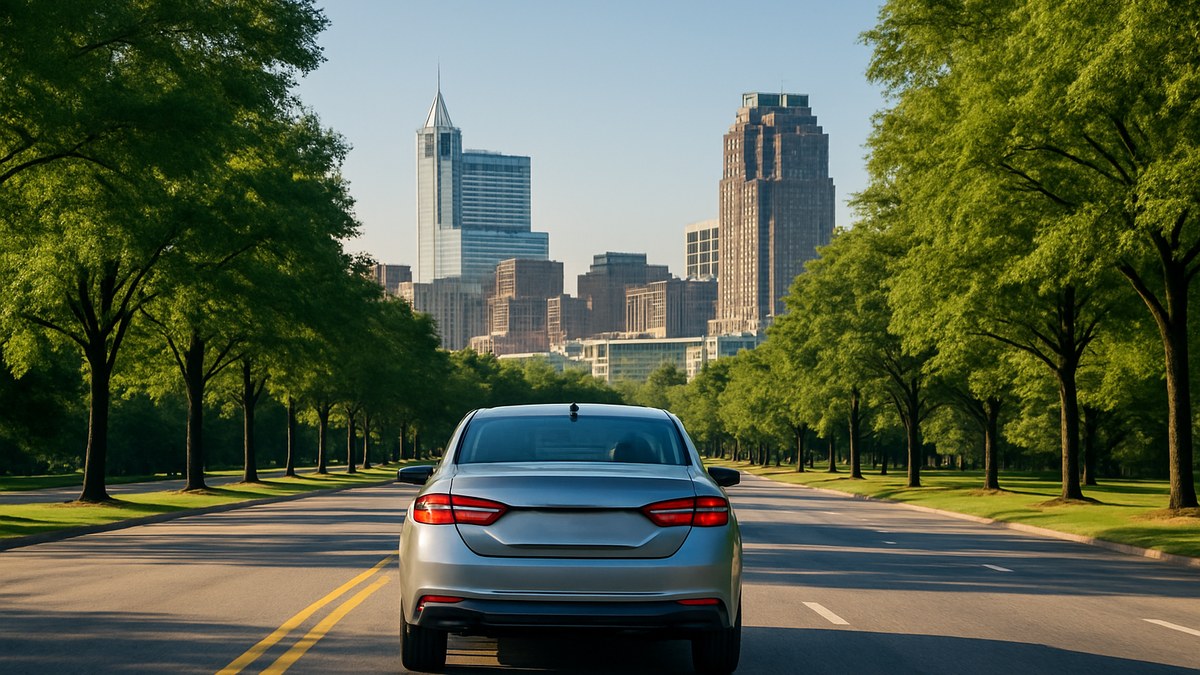
Raleigh isn't one market. It's three — Raleigh, Durham, and Chapel Hill — stitched together by I-40 with an airport in the middle, and the drivers who earn here treat the Triangle as a triangle instead of parking in one city and waiting. That geography lesson is worth more than any surge map, so let's start there and work down to the rental math.
RDU airport sits nearly dead center between Raleigh and Durham, which makes it the natural pivot point of every shift. A downtown Raleigh drop at RDU puts you 20 minutes from downtown Durham, 25 from Chapel Hill, and 15 from the massive office parks of Research Triangle Park. You're never stranded after an airport run the way you are in single-core cities — there's always a second demand center within a short deadhead.
The demand centers each have a personality. Raleigh's Glenwood South and Fayetteville Street run on state government workers, NC State students, and a bar scene that peaks Thursday through Saturday. Durham runs on Duke, the medical center, and a dense downtown restaurant district. Chapel Hill is nearly pure UNC — quiet in summer, relentless on basketball nights. RTP generates weekday morning and evening commuter trips plus a steady trickle of corporate airport runs, which are the best fares in the market.
On RideshareRenter, Triangle listings for UberX-ready sedans and hybrids typically run about $210 to $290 a week, with deposits set owner-by-owner — commonly $200 to $400 refundable, sometimes waived for drivers with established profiles. Most owner listings here allow delivery apps alongside Uber and Lyft, which you'll want for the summer lull (more on that below).
| Option | Weekly cost (typical, all-in) | Multi-app allowed? |
|---|---|---|
| RideshareRenter (local owner) | ~$210–$290 | Usually yes — set by owner |
| Corporate rideshare program | ~$270–$400 with fees | Varies, often restricted |
| Financing a used car | $120–$180 payment + insurance + repairs | Yes, but you carry all risk |
Full-time drivers here typically gross somewhere in the $950 to $1,350 range over 40 to 50 hours during the academic year, with airport-heavy strategies at the top end. Net of a $250 rental and roughly $60 to $90 in gas, take-home lands around $600 to $1,000 before taxes for a strong full-time week.
The honest caveat: the Triangle breathes with the university calendar. May graduation week is a goldmine. Mid-June through July sags noticeably when 80,000+ students leave — that's when the multi-app freedom earns its keep, because DoorDash volume in the sprawling suburbs holds up better than passenger demand. August move-in turns the faucet back on hard.
RDU rideshare pickups stage from a dedicated lot with a FIFO queue feeding both terminals. What the successful airport drivers here know:
Triangle surge is scheduled, not random. Duke and UNC basketball nights light up Durham and Chapel Hill respectively — post-game bar traffic in both towns runs for two hours after the horn. NC State football Saturdays fill Carter-Finley's lots and then empty them into rideshare. The Carolina Hurricanes at Lenovo Center draw from the whole metro, and the arena shares a parking situation with the fairgrounds, so playoff nights get frantic. Add Dreamville Festival in the spring and the State Fair in October — fair week is quietly one of the best ten-day stretches of the driving year here.
North Carolina is a straightforward state for rideshare: no city-level TNC permit in any Triangle municipality, platform-level insurance handles the TNC minimums, and standard platform rules apply — valid license, background check, four-door vehicle meeting the platforms' age rules for this market. If you're coming from a stricter market like New York or Philadelphia, there's refreshingly little paperwork. The one thing to stay on top of is North Carolina's annual safety inspection, which the vehicle owner handles on a rental — one more line item that stays off your plate when you rent instead of own.
Drivers relocating for this market ask where to base. East Raleigh and Knightdale keep rent manageable with quick downtown access. Durham south of downtown puts you between Duke and RTP. Cary is pricier but sits on top of both RDU and RTP demand — worth it if airport runs are your main strategy. Anywhere along the I-40 corridor works; the market punishes drivers based in the far northern suburbs who burn 25 unpaid minutes reaching demand.
Start in Raleigh — bigger core, more consistent non-university demand — but learn the Durham bar close and the Duke hospital shift-change rhythm within your first month. The drivers who work only one corner of the Triangle leave a third of the market on the table.
Most owners on RideshareRenter screen on your license, driving record, and first week's payment rather than a credit pull. Individual owners set their own requirements, so read the listing and ask.
Expect passenger gross to drop maybe 15 to 25 percent from academic-year norms in June and July, depending on how student-dependent your zones are. Airport and RTP corporate demand hold steady, and delivery fills gaps. Plan the light months; don't let them surprise you.
Just the staging lot and the app queue — no separate airport permit for TNC drivers. Follow the geofence rules; RDU enforcement does flag drivers who camp at the terminal curb.
A hybrid sedan. Triangle driving is highway-heavy — I-40, I-440, I-540 loops all day — and distances between demand centers make fuel economy the biggest controllable cost. A Camry Hybrid or Prius rental typically saves $25 to $40 a week in gas versus a comparable SUV here.
Drivers: See what Raleigh-Durham owners are listing right now at RideshareRenter.com — weekly terms, most with no credit check, delivery apps welcome.
Vehicle owners: The Triangle adds tech workers and students every single year, and plenty of them want to drive without buying. List your car on RideshareRenter and put it to work.




Comments