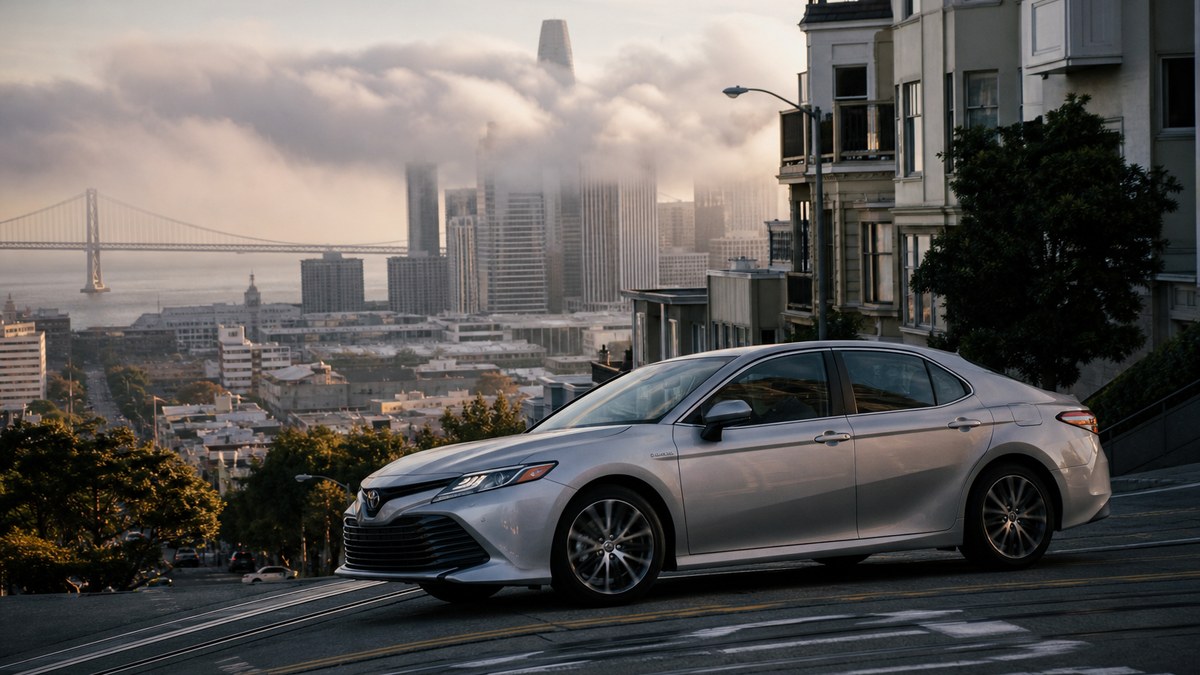
San Francisco is the most expensive place in America to keep a car you barely park. Garage rents, street-cleaning tickets, break-ins, insurance premiums that would fund a small country. A lot of Bay Area drivers do the math on buying a vehicle for Uber and quietly walk away from it.
Renting is how many of them work instead. RideshareRenter connects you with Bay Area vehicle owners who already have a qualifying car and would rather it earn money than depreciate in a driveway in Daly City.
San Francisco is a mature, heavily regulated TNC market, and the requirements are stricter than in most cities. Before you rent anything, confirm the vehicle clears these:
The airport is where a serious chunk of Bay Area rideshare money is, and it's also where drivers get turned away over paperwork.
SFO requires an airport placard displayed beneath your front trade dress. To get one, the vehicle has to pass a vehicle inspection, and then be re-inspected annually or every 50,000 miles. SFO uses a light blue placard specifically. Oakland (OAK) has its own placard requirement too.
Here's the part that matters for a rental: the placard belongs to the vehicle, not to you. If you rent a car that has never been inspected and placarded, you can't legally pick up at SFO until that gets sorted, and the inspection is the owner's job to arrange. So the single most important question to ask a Bay Area owner on RideshareRenter is: does this car have a current SFO placard, and can you show me a photo of it?
An SF rental without an SFO placard is worth meaningfully less to you than one with. Price it that way in your head.
One more operational rule people forget: on airport property the driver app has to stay open. Don't go offline until you've cleared the airport geofence.
San Francisco has high fares and high costs. Both are true and neither cancels the other out. Rough planning figures, not guarantees:
| Line item | Weekly, full-time (~50 hrs) |
|---|---|
| Rental | Set by the owner and varies widely by listing. Compare several before booking. |
| Fuel or charging | SF gas prices run well above the national average. An EV or hybrid changes this line materially. |
| Bridge tolls | Real money if you work the East Bay. Bring your own FasTrak. |
| Parking and citations | The line item that ruins weeks. Street cleaning and loading zones are enforced aggressively. |
The honest read on San Francisco: fares per trip are among the highest in the country, but so is every cost, the traffic is genuinely bad, and parking enforcement is relentless. Drivers who do well here are disciplined about where they idle and religious about the airport queue. Drivers who treat it like a suburban market get eaten alive by tickets.
Bay Area fuel prices make vehicle choice a bigger earnings lever in San Francisco than in almost any other US market. A hybrid getting 45+ mpg against a V6 sedan getting 22 mpg is a difference of real dollars every single shift, compounding over a 1,000-mile week.
If you're browsing RideshareRenter listings for the Bay Area, filter for hybrids and EVs first and treat everything else as a fallback. The weekly rate on the efficient car can be higher and still leave you ahead.
The EV caveat, stated honestly: public charging in San Francisco is neither fast nor free, and a charging session is unpaid time. An EV only wins if the owner's listing includes home-charging access or you have a realistic charging plan. Otherwise a hybrid is the safer bet.
That last one matters more in San Francisco than anywhere else in the country. Overnight parking is a genuine cost and a genuine hassle, and an owner who has an answer for it is worth paying a premium to rent from.
Yes. Uber and Lyft both allow rentals in San Francisco as long as the vehicle meets the city's requirements and you're properly authorized to drive it. The vehicle requirements are what disqualify people, not the fact that it's a rental.
The placard is tied to the vehicle and requires a vehicle inspection, so it's the owner's to obtain, not yours. Confirm it exists and is current before you rent, because without it you're locked out of the airport.
It depends on whether you'd otherwise be buying, insuring and parking a car in San Francisco, which is brutally expensive. For drivers who don't already own a qualifying vehicle, renting usually pencils out better than buying one specifically to drive rideshare here. For drivers who already have a paid-off qualifying car, renting rarely makes sense.
OAK has its own placard requirement, same inspection logic. San Jose (SJC) has its own rules as well. If you plan to work multiple Bay Area airports, ask the owner which placards the car actually carries, because it's common for a car to have one and not the others.
Individual owners on RideshareRenter set their own approval criteria, and many care more about your rideshare account standing and driving record than your credit score. It varies listing to listing, so ask.
Run it yourself with the actual listing rate rather than trusting a number from a blog. Take the weekly rate, add realistic fuel and tolls, divide by your honest hourly net after Uber's cut, and be conservative. If the answer is more hours than you're willing to work, the rental is wrong, not you.
Drivers: if you're in the Bay Area and don't own a qualifying car, browse San Francisco listings on RideshareRenter and lead with the SFO placard question. It'll narrow the field fast and it'll tell you which owners actually understand this market. Find a car in San Francisco.
Vehicle owners: a Bay Area car with a current SFO placard, a FasTrak in the windshield and a hybrid powertrain is close to the perfect listing on this platform, and there aren't enough of them. If that's your car sitting in a driveway, it could be earning. List your car on RideshareRenter.




Comments