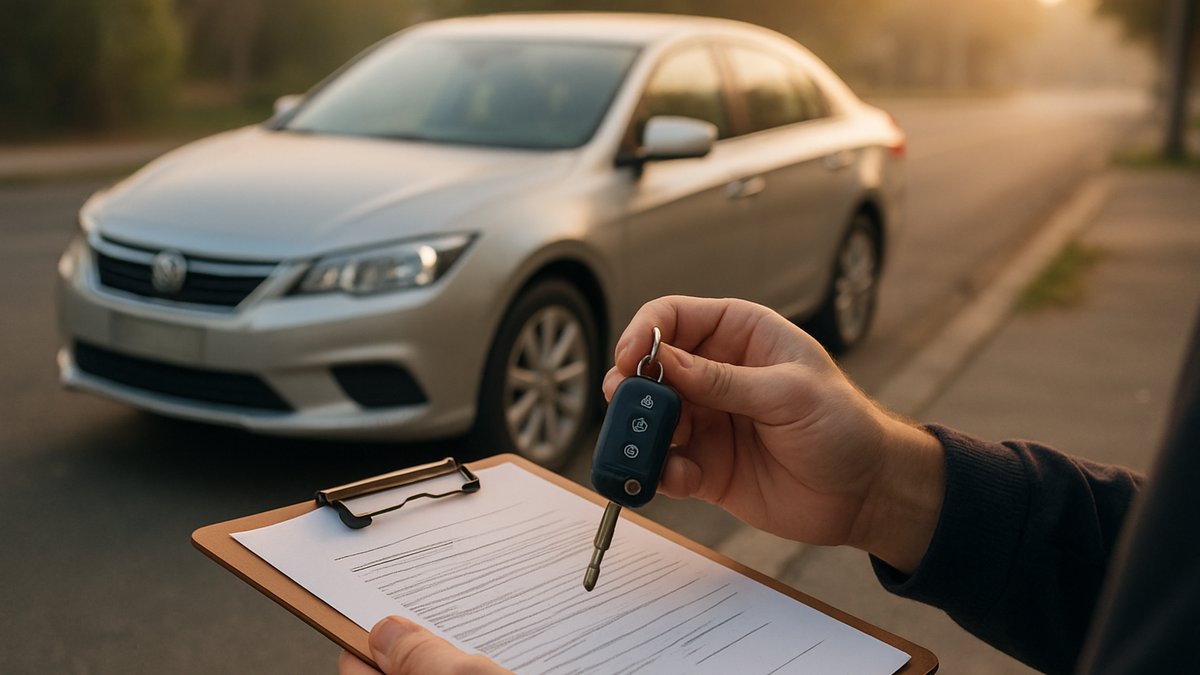
My credit score was 540 when I started driving. A repo from 2019, two collections, the whole mess. I still got a car and was on the road for Uber within four days. So when people ask me if bad credit kills your shot at renting a rideshare car, the answer is no. But you should understand what "no credit check" actually means, because it doesn't mean nobody's checking anything.
Traditional rental companies like Hertz and Avis run your credit when you don't have a major credit card. Get flagged, and you're looking at a $200-500 deposit or a flat denial. That system was built for vacation renters, not working drivers.
Peer-to-peer rideshare rentals work differently. On RideshareRenter, you're renting from an individual car owner, not a corporation with an underwriting department. Most owners never pull your credit. What they care about is simpler: will you pay the weekly rate on time, and will you take care of the car?
Here's what actually gets checked instead:
No credit check doesn't mean no money down. Budget for this before you apply:
| Cost | Typical Range | Notes |
|---|---|---|
| First week's rent | $220–$400 | Varies by car and market |
| Refundable deposit | $0–$500 | Many owners on RideshareRenter ask $200–$300; some skip it for verified drivers |
| Fuel to start | $40–$60 | You return it how you got it |
So realistically, you need $300 to $800 in hand to start. That stings when you're broke, I know. But compare it to a subprime car loan: $2,000 down, $450 a month at 21% interest on a car that'll eat rideshare miles for four years. The rental math wins if you're not sure driving is your long-term thing.
Put yourself in the owner's seat for a second. Their risk isn't that you have old collections. Their risk is a late weekly payment or a damaged car. Both of those are covered better by other tools: weekly prepayment (you pay before you drive, not after), deposits, GPS tracking on most fleet cars, and the rental platform's payment system holding funds.
A driver who shows up with an active Uber account, a clean recent record, and first week's payment in hand is a better bet than someone with an 800 score who's never driven a gig shift. Owners on RideshareRenter figured that out a long time ago.
Three years of doing this, and here's what I'd tell my past self:
Get your Uber or Lyft account approved first. Do the background check on their end before you message owners. "Already approved, just need a car" is the strongest opening line there is.
Have your documents ready. License photo, proof of your rideshare approval, and a phone number you actually answer. Owners move on fast when someone's slow to respond.
Be upfront about your situation. If your credit's rough, say nothing about it unless asked, but if an owner asks, don't dance around it. "I had a rough 2023, but I've got first week plus deposit ready today" closes deals.
Start with a cheaper car. Your first rental isn't forever. Take the $240/week Corolla, build a payment history with the owner, then upgrade. Owners talk to each other, and drivers with a clean payment record get first crack at the better cars.
I'm not going to pretend this is free money. Renting costs more per month than owning a paid-off car, full stop. At $280/week you're spending about $1,200/month on the car before gas. If you're only driving 15 hours a week, that math is ugly and you should probably not rent at all.
Rentals make sense when you're driving 35+ hours a week, when your own car doesn't qualify for the platforms, or when you can't get financed at a sane interest rate. They don't make sense as a casual side-hustle vehicle.
Also, insurance is layered and you need to actually understand it. The owner's policy or the platform's coverage handles the rental period, and Uber and Lyft carry liability coverage while you're on an active trip, but the gaps between app-off and app-on periods are where drivers get burned. Ask the owner exactly what's covered when the app is off. If they can't answer clearly, find a different car.
Corporate programs sometimes do a soft pull. Peer-to-peer owners on RideshareRenter generally don't. What they check is your license, driving record, and rideshare account status.
No. You need a valid license the day you pick up the car, and Uber and Lyft require it anyway. Get reinstated first.
Plan on $300–$800: first week's rent plus whatever deposit the owner asks. Some owners waive deposits for drivers with verified rideshare accounts.
Usually not directly, since most owners don't report to bureaus. But the income does. Drivers I know have used six months of steady Uber earnings to qualify for financing they couldn't touch before.
Read your agreement, but typically: a grace period of a day or two, then the owner can end the rental and reclaim the car. Late payments also torch your reputation with local owners. If money's tight one week, message the owner before the due date, not after.
Yes. Plenty of RideshareRenter cars are rented for DoorDash, Uber Eats, and Instacart. Requirements are the same or looser, since delivery platforms have older vehicle age limits.
Drivers: Browse cars near you on RideshareRenter — no hard credit pull, message owners directly, and be driving this week.
Own a car that's sitting? List it on RideshareRenter and put it to work with vetted gig drivers who pay weekly.




Comments