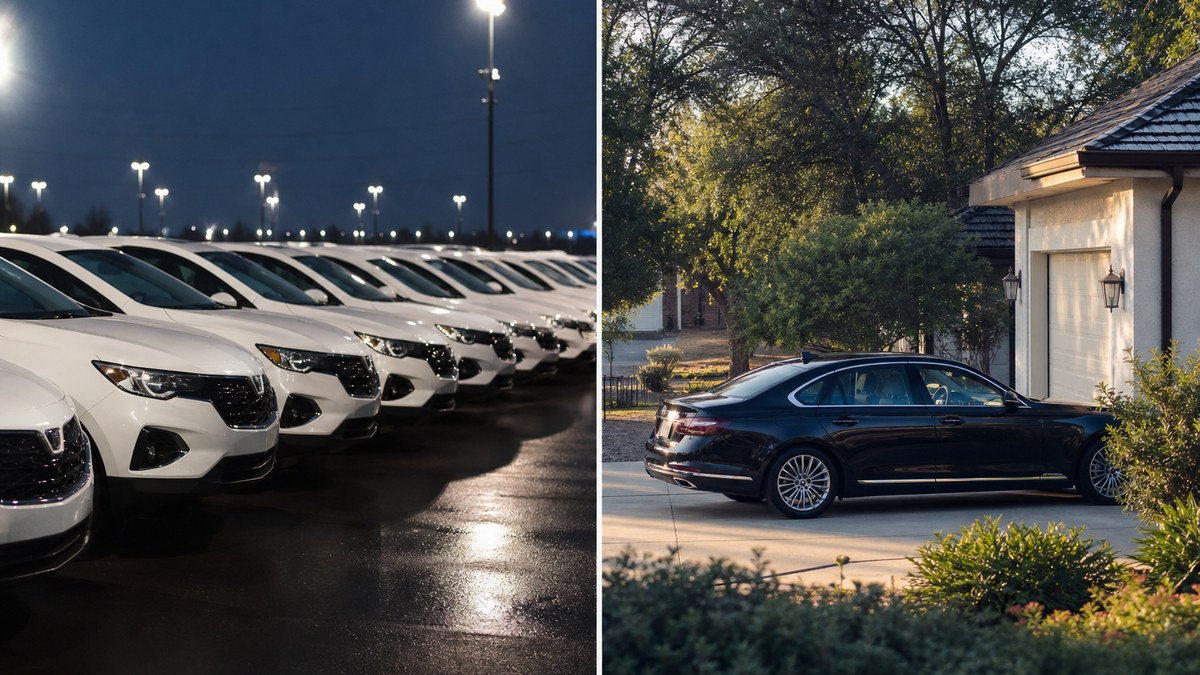
Most comparison posts pit one brand against another. Hertz against Avis. Kyte against Getaround. That's the wrong axis. The real fork in the road is whether you rent from a company or from a person, because almost everything that matters downstream flows from that one choice.
Corporate rideshare rentals run around $260 per week on average through Uber's rental program, with Hertz advertising rates starting near $214 and landing closer to $250 after introductory weeks. Peer-to-peer listings on RideshareRenter cluster in a similar band. So price is not the differentiator people assume it is. What's different is everything around the price.
| Rental company (Hertz, Avis, Enterprise) | Individual owner (RideshareRenter) | |
|---|---|---|
| Typical weekly rate | ~$214 to $280, fairly uniform | Wide spread; set per listing by the owner |
| Mileage | Usually unlimited on rideshare programs | Varies. Some unlimited, many capped. Read it. |
| Insurance | Bundled, non-negotiable, priced in | Depends on the owner's setup. Ask specifically. |
| Maintenance | Included, handled at their shop | Owner's responsibility, but on their schedule |
| Toll and citation fees | $4 to $16 per toll day, $30 to $50 per citation | Often none, but owner-dependent |
| Credit check | Usually yes | Often no; the owner decides |
| Deposit | Standardized, held on card | Negotiable in some cases |
| Car swap if it breaks | Generally available same-day | Not guaranteed. This is the real risk. |
| Support at 2am | A call center exists | You're texting a human who may be asleep |
| Vehicle choice | "Compact or similar." You get what you get. | You see the exact car before you book |
Downtime. That's the whole answer, and it's a good one.
If a rental company's car dies on you Thursday morning, you drive to a branch and leave in another car. Your week keeps earning. If an individual owner's car dies on you Thursday morning, you're waiting on that owner, that owner's mechanic, and that owner's cash flow. A three-day repair on a car you needed to gross $900 that week is not a small thing. It's the difference between making rent and not.
Corporate rentals also remove decisions. Insurance is handled, maintenance is handled, and you never have to evaluate whether a stranger's oil-change habits are real. There's genuine value in not having to think.
Fees, flexibility, and the car itself.
The fee stack on a corporate rental is the quiet killer. Toll convenience fees, citation administrative fees, and airport surcharges add up to something like $150 to $200 a month for a full-time driver in a toll market. That money buys you nothing. It's pure overhead. Renting from an owner mostly eliminates it.
Then there's the car. A rental counter gives you "compact or similar," which might be a base-trim sedan with 60,000 hard miles and a suspension that's been abused by people who don't own it. On RideshareRenter you're looking at photos of the specific vehicle, you can see the mileage, and you can ask the owner what they've replaced and when. Drivers who care about fuel economy or want a specific hybrid usually can't get it from a counter and can get it from an owner.
Approval is the other one. Rental companies run credit. Owners frequently don't, and for a driver rebuilding after a rough couple of years, that's not a minor convenience. It's the entire difference between working and not working.
Ask yourself: can I survive three days without the car?
If you have savings, a second gig, or a spouse's income covering the floor, the peer-to-peer route is usually the better economic deal and the downtime risk is survivable. If you are driving to make this month's rent and a single lost week ends you, pay the premium for a company that can hand you a replacement key the same afternoon. That's not a knock on RideshareRenter. That's honest risk management, and any owner on the platform would tell you the same.
The middle path a lot of experienced drivers land on: rent from an owner, but only from one who has a second vehicle listed, or who has visible reviews mentioning how they handled a breakdown. Downtime risk isn't uniform across listings. It's an owner-quality question, and owner quality is something you can actually check.
On the sticker, not always. On the total, usually. The weekly rates overlap heavily, but the corporate fee stack of tolls, citations and airport surcharges adds real money that peer-to-peer rentals mostly don't carry. Run your own numbers with tolls included, not just the weekly rate.
They care that the vehicle meets the platform's requirements for your city and that you're properly authorized to drive it. Both platforms accept rentals. What they won't accept is a car that fails the year or condition requirements for your market, whoever owns it.
This is the core risk, and the honest answer is that it depends entirely on the owner. Good owners pause billing during downtime, communicate a repair timeline, and some keep a backup vehicle. Ask an owner directly how they've handled it before, and treat a vague answer as information.
From most rental companies, credit is part of the screen. From individual owners on RideshareRenter, it frequently isn't. Owners typically care more about your driver rating, your Uber or Lyft account standing, and your deposit than your FICO score.
A new driver doesn't yet know their weekly mileage, their real earnings, or whether they'll stick with it. A short peer-to-peer rental with clear terms lets you find that out for a few hundred dollars instead of committing to a program. Just don't sign a long minimum term before you know your own numbers.
Drivers: if you've been comparing Hertz to Avis to Kyte, you've been comparing three versions of the same product. Look at the other category before you decide. Browse cars on RideshareRenter and compare the actual total cost, fees included, against the counter quote you were about to accept.
Vehicle owners: the gap above is your opportunity. Drivers leave corporate rentals over fees and over getting a car they didn't choose. If your listing shows the exact vehicle, states the mileage policy in plain numbers, and explains what happens if the car goes into the shop, you win those drivers. List your car on RideshareRenter.




Comments