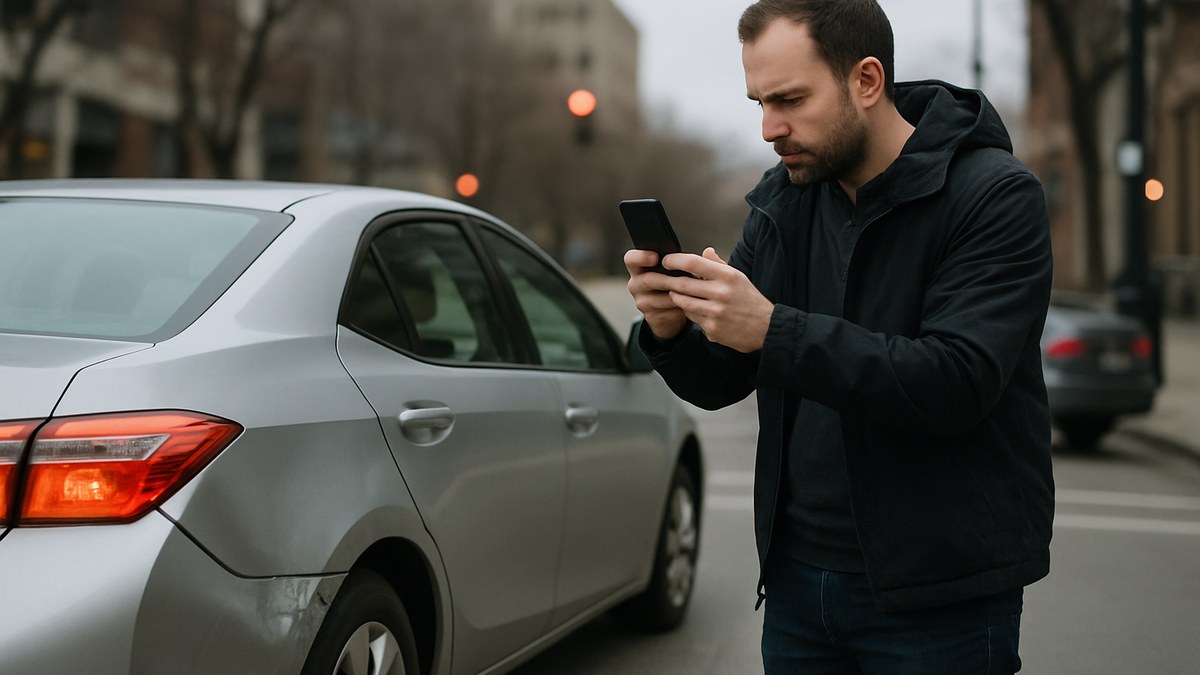
Nobody plans for this one. You're three weeks into a rental, pulling decent money, and somebody runs a red light on a Tuesday afternoon with a passenger in your back seat. Now you've got a bent fender, a rental you don't own, an owner texting you, and two insurance companies that each think the other one should pay.
I've been through it once myself and walked two other drivers through theirs. Here's how it actually plays out, step by step, so you're not learning this at the side of the road.
A rented rideshare car has more insurance layers than a car you own, and which layer pays depends entirely on what you were doing when the crash happened. This is the part most drivers get wrong.
There are usually three layers:
The dangerous gap is Period 1 — app on, no ride accepted. Uber's contingent liability there is typically 50/100/25, and there's no collision coverage from the platform at all. If you crash while waiting for a ping, the vehicle's own policy is what stands between you and paying for the car out of pocket. Ask the owner about Period 1 before you book. It's a two-minute question that can save you a five-figure problem.
When platform collision coverage applies (Periods 2 and 3), Uber's deductible is $2,500. Lyft's is also $2,500. That comes out of your pocket or gets worked out between you and the vehicle owner depending on what your rental agreement says.
Read that again if you skimmed it. A fender bender during an active trip can cost you $2,500 even when everything goes right and coverage kicks in cleanly.
Here's a realistic worst-week scenario for a full-time renter:
| Cost | Amount |
|---|---|
| Deductible (at-fault, Period 3) | $2,500 |
| Lost driving income, 10 days off the road | $1,000–$1,800 |
| Rental payment still owed (check your agreement) | $0–$350 |
| Rideshare-standard replacement rental to keep working | $200–$350/week |
If the other driver was at fault and has insurance, most of this comes back to you eventually. Eventually is the key word. Subrogation takes weeks, sometimes months. Plan your cash like the money's gone, and treat it as good news when it comes back.
Do these in order. Skipping steps is what turns a bad day into a bad month.
Honest answer: this is negotiated, and it's the roughest edge of a rental accident. While the car sits in a body shop for two weeks, the owner isn't earning on it. Some rental agreements make the renter responsible for downtime at the daily rate if the renter was at fault. Others eat it or claim it against the at-fault party's insurance.
Before you book, look at what the agreement says about downtime and loss of use. If it's silent, ask. An owner with a clear, written policy on accidents is a better owner to rent from, full stop — it means they've thought it through, and you won't be inventing terms together during the worst week of your rental.
Figure a week minimum, and two to three weeks if there's a supplement (the shop finds more damage after teardown, which happens constantly). Body shops in most metros are still quoting 10–15 business days for moderate collision work in 2026.
Your income doesn't have to stop that whole time. This is one place where renting through a marketplace works in your favor: you can book a second car from a different owner while the first one's in the shop. Drivers who own their car and crash it don't have that option without paying retail rental rates that aren't approved for rideshare anyway.
One accident, reported properly, almost never ends your driving career. Platforms review crashes, and you might be briefly waitlisted while they do, usually a few days. What gets drivers deactivated is a pattern — multiple incidents in a short window — or failing to report a crash that a passenger later reports for you. That second one is the career killer. Always report first.
On the rental side, RideshareRenter owners can see how a rental ended. A handled-well accident with photos, a police report, and fast communication reads very differently to the next owner than an abandoned booking.
Their liability insurance should pay for the car's repairs and, if you were on an active trip, the platform's uninsured/underinsured coverage backs you up if they're uninsured. You'll still coordinate the claim with the vehicle's owner since it's their car, and expect the payout to take weeks.
Depends on your rental agreement. Some owners pause billing when the car's undriveable, some don't, and at-fault versus not-at-fault usually matters. Read the agreement before you book and ask if it isn't spelled out.
Uber's contingent collision deductible is $2,500, and Lyft's is the same. It applies in Periods 2 and 3 when the platform's collision coverage is active.
Then it's a plain car accident and the vehicle's own policy is the only one in play. Whether personal-use driving is even permitted, and what's covered when you do it, is set by the listing terms, so know them before you run personal errands in the car.
Yes, if you get another approved vehicle on your account. Renting a replacement through RideshareRenter and swapping the vehicle in the app takes most drivers a day or two.
There's no central premium on you like with personal insurance, but individual owners set their own screening standards, and some ask about accident history. One well-documented, well-handled incident rarely costs you a booking.
A crash in a rented rideshare car is a paperwork problem and a cash-flow problem, not a career-ending one — if you know the coverage periods, report fast, and have the deductible covered. The drivers who get hurt financially are the ones who never read the listing's insurance terms and find out what Period 1 means at the worst possible moment.
Driving and need a car that's already insured for rideshare? Browse rideshare-ready rentals on RideshareRenter — check the insurance details on each listing before you book.
Own a car and want it earning instead of parked? List your vehicle on RideshareRenter and set your own insurance requirements, deductible terms, and screening standards.




Comments