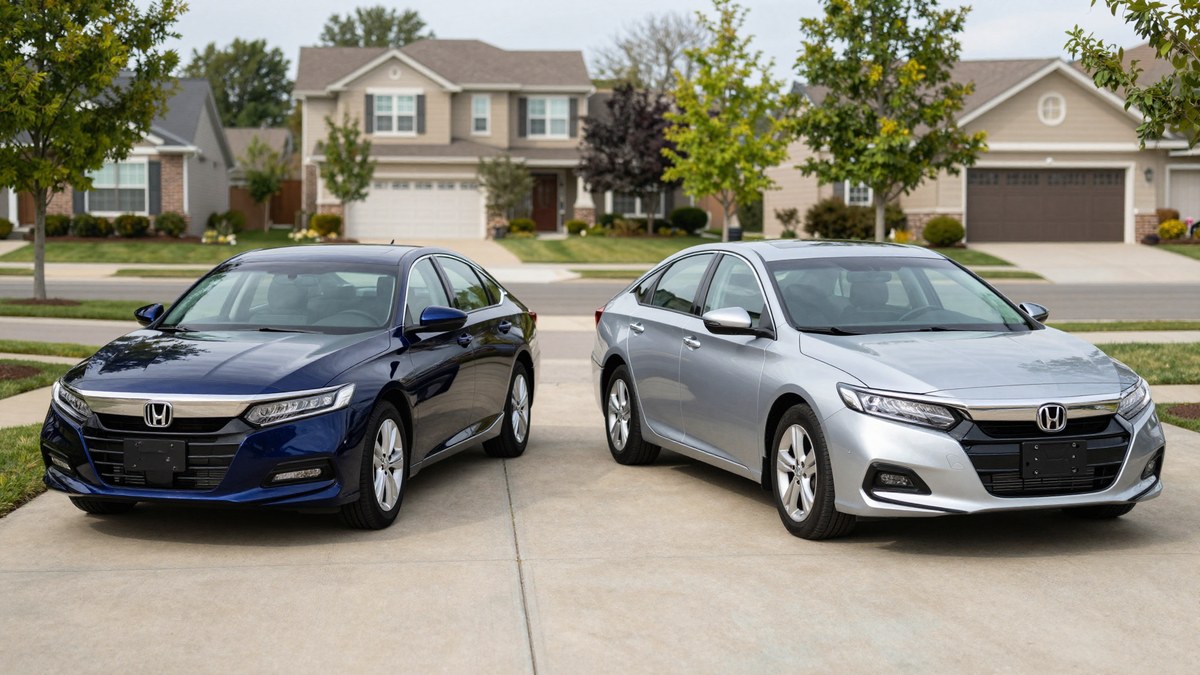
Spent the last two years tracking every dollar for two separate phases. Phase 1: I bought a 2021 Honda Accord with 38,000 miles for $19,800 and drove Uber on it for 14 months. Phase 2: I sold the Accord, paid off the loan balance, and rented Camrys and Priuses from RideshareRenter for the next 10 months. Same city. Roughly same hours.
The full numbers are below. The short version: ownership wins on paper if you drive 50+ hours a week and keep the car 3+ years. Renting wins almost everywhere else. The catch is that "wins on paper" assumes nothing goes wrong, which is not how this work goes.
| Cost Category | Buying a Used 2021 Accord | Renting Through RideshareRenter |
|---|---|---|
| Initial down payment | $4,000 | $0 |
| Monthly payment / weekly rental | $312/mo (60-mo loan @ 7.9%) | $355/wk avg |
| Annualized payment cost | $3,744 | $18,460 |
| Rideshare insurance (full coverage) | $312/mo | Included |
| Maintenance (oil, brakes, tires, etc.) | ~$1,850/yr | Included |
| Major repairs (alternator, brakes, AC) | $2,200 over 24 mo | $0 (owner pays) |
| Depreciation (year 1) | ~$3,800 | $0 |
| Depreciation (year 2) | ~$2,900 | $0 |
| Registration, smog, fees | $480 | $0 |
| Downtime during repairs (lost earnings) | $1,400 over 24 mo | ~$300 (swap rentals) |
| Total 24-month cost | $26,116 | $36,920 |
| Net per week (driving 45 hrs) | $980 | $740 |
On the surface: buying saves about $10,800 over two years and nets you $240 more per week. End of article, right?
Not quite.
That $26,116 ownership cost assumes my Accord didn't throw a transmission, didn't get rear-ended, didn't need a new battery + alternator the same month I had to pay quarterly taxes. It assumes I had $4,000 cash for the down payment without borrowing it. It assumes my credit was good enough for 7.9%, and many new Uber drivers are quoted 11-14% if they qualify at all.
Real life, in my 14-month ownership phase:
I had 9 days of zero-income downtime spread across those events. At $980/week net, that's $1,260 in lost earnings on top of repair costs.
The 24-month projection doesn't show the cash-flow shock of writing a $2,400 check in a month when I'd planned for $312. That single month wiped out two months of savings.
Renting wins when any of these are true for you:
Buying wins when all of these are true:
If you check every box, ownership is the right move and the math is real. Skip even one box and the calculator says "rent."
Here's what I did in months 15-24 that I wish I'd done from day one. I rented a Prius from a RideshareRenter owner at $325/week. Net earnings dropped to about $740/week. But:
That last one mattered more than I expected. With the Accord I was paying $312/mo whether I drove or not. With the rental, I returned it during a vacation and paid $0.
Real net difference between owning the Accord and renting the Prius once I included downtime, repairs, and gas savings: about $130/week in the Accord's favor. For a much higher stress load.
Honest answer for most drivers reading this:
If I were starting Uber today, I'd rent on RideshareRenter for the first 9 months minimum. Use the time to learn:
Then if all of that points to "this is my career for a while," shop for a used Camry or Accord with 30-50k miles, paid in cash if possible, and run the numbers again with real data instead of projections.
The drivers who lose money in this business aren't the ones who picked rent or buy "wrong." They're the ones who picked one without doing the math.
Is renting on RideshareRenter cheaper than buying long-term?
No. Over 24+ months, ownership is cheaper if everything goes well. The question is what your downside risk looks like, and whether the cash and credit math works.
What's the cheapest weekly rental on RideshareRenter for Uber drivers?
Entry hybrids (Prius, older Corolla Hybrid) start around $245-$285/week in most markets. Premium and SUVs run $385-$550/week.
Can I switch from owning to renting if I total my car?
Yes, and it's common. Many drivers come to RideshareRenter after a total-loss accident while waiting for insurance to settle, then stay because the math works.
Will buying a car hurt my Uber rating compared to renting?
No. Riders don't know and don't care. They care that the car is clean and the AC works.
Does rideshare driving void my new car warranty?
Depends on the manufacturer. Toyota and Honda generally cover commercial use; Ford and Chevy have stricter terms. Read your warranty before financing a car for Uber.
What's the break-even mileage for owning vs renting?
In my numbers, ownership pulls ahead at roughly 38,000 miles/year of rideshare-only driving. Under that, renting is competitive once you account for downtime and surprise repairs.
The dollar-for-dollar comparison favors ownership for full-time long-haul drivers with cash and credit. Real-world risk and cash flow favor renting for almost everyone else, especially anyone in their first 12 months. Don't let car dealers or YouTube gurus push you into a 7-year loan for a job you've been doing for 3 weeks.
Want to test rideshare driving without committing to a $20k purchase? Browse vehicles on RideshareRenter — weekly all-in rentals starting around $245 with insurance and roadside included.
Have a paid-off car you're not using full-time? List it on RideshareRenter — many owners cover their car's full annual costs renting just 3-4 days a week to vetted Uber drivers.




Comments