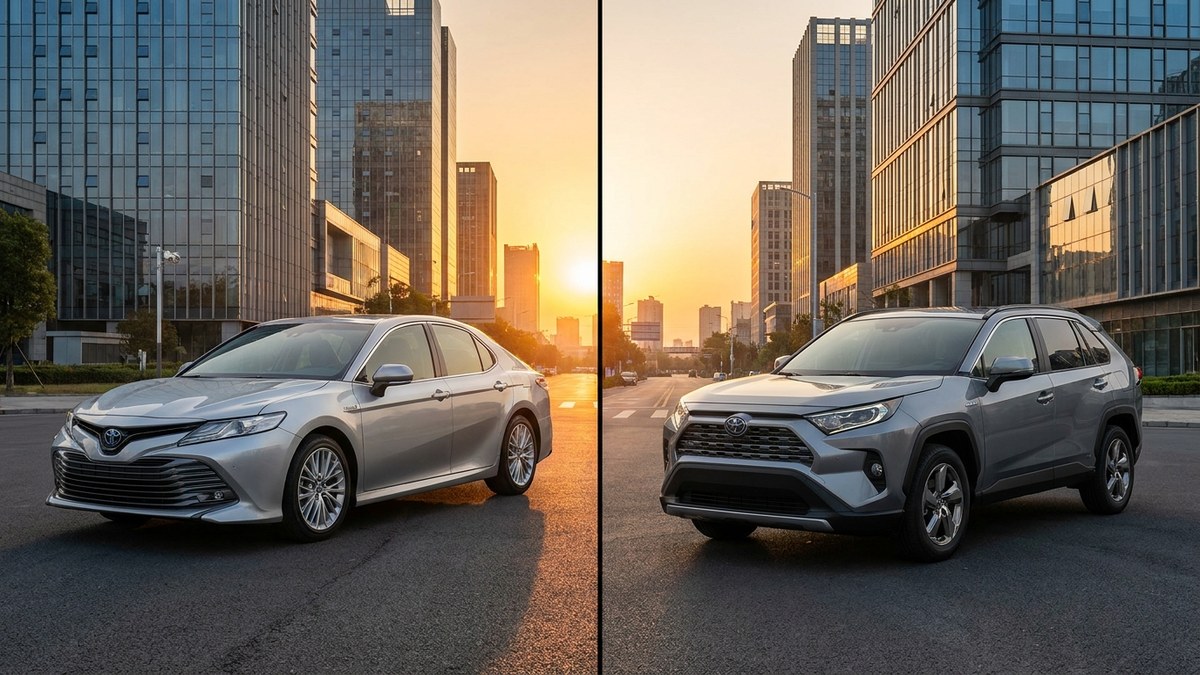
A driver in my market group asked me last week if he should swap his Camry rental for a RAV4. He'd seen a YouTube video saying SUVs make 40% more on Uber. The video left out gas, depreciation, and the fact that XL requests are about 6% of total demand in most cities.
I've actually driven both for full weeks in 2026. Same city, same hours, same apps. Here's the math nobody runs honestly.
The pitch goes like this: "SUVs unlock UberXL and Uber Comfort, which pay 1.5-1.7x normal rates. You'll make more per ride." Technically true. But the question isn't pay per ride. It's pay per hour, after costs.
Here's what nobody mentions: most of your trips will still be regular UberX even with an SUV. Riders don't pay for XL unless they need it. So you get a slight bump on a small percentage of rides while paying more for gas, rental, and tolls on every single ride.
Same Dallas market, same 45-hour weeks, two consecutive weeks. Week one: 2023 Camry Hybrid at $265/week. Week two: 2022 RAV4 at $315/week. I worked the same shifts, same airport runs, same Friday-Saturday nights.
| Metric | Camry Hybrid Week | RAV4 Week |
|---|---|---|
| Total trips | 118 | 104 |
| Gross from Uber + Lyft | $1,287 | $1,392 |
| XL / Comfort rides included | 3 | 14 |
| Weekly rental cost | $265 | $315 |
| Gas (40 mpg vs 24 mpg) | $71 | $148 |
| Tolls + parking + car wash | $42 | $58 |
| Net to me | $909 | $871 |
The SUV grossed more, yes. By $105. But it cost $130 more to operate. So I actually made $38 less for the same hours. And my hands hurt more from the bigger steering wheel by Sunday.
I don't want to make this a sedan stan piece. There are real situations where an SUV is the right call.
Airports with families. If your market is heavy with family travelers — Orlando, Vegas Strip, Phoenix Sky Harbor — XL demand jumps. In Orlando I've seen drivers run 18-22% XL share. At that rate the SUV math flips.
Tall riders / tall drivers. If you're 6'2" and the Camry has you doing yoga every shift, the comfort matters more than $40/week. Don't underrate this. Burnout is a real cost.
Multi-app heavy on delivery. If you're running Instacart and Costco runs alongside Uber, the cargo space pays for itself in delivery batches you couldn't take in a sedan.
Cold winter markets with snow. Minneapolis, Buffalo, Denver in January. AWD on an SUV stops you from canceling rides because you can't get up a hill. Cancellation hits your acceptance rate and your bank account.
For most drivers in most cities, the math says sedan. Here's the cleaner breakdown:
| Situation | Better Choice |
|---|---|
| Mostly UberX/regular Lyft in a flat metro | Hybrid sedan |
| Sun Belt city, no snow, mostly singles/couples | Hybrid sedan |
| Trying to maximize hourly net | Hybrid sedan |
| Part-timer doing 20-30 hours | Sedan (lower weekly rental) |
| Heavy airport + family + group rides | SUV |
| Multi-apping with delivery | SUV or wagon |
| Snow markets, AWD needed | SUV or AWD sedan |
If you take one thing from this, it's that a 2020+ Camry Hybrid or Sonata Hybrid is the boring right answer for most rideshare drivers. The math just works:
SUVs are louder, thirstier, and more expensive to rent. They earn you slightly more on a small percentage of rides. The math says boring wins.
If your gut says XL is your move, do this test first. Drive a sedan for two full weeks. Track every XL request that pops up. Multiply that count by 4 and that's roughly what you'd capture in a month with an SUV.
If that number times the average XL fare bump covers the extra rental + gas + maintenance, switch. If it doesn't, you've saved yourself a bad decision.
I know vehicle owners read these too. Quick answer: sedans rent faster and have less downtime. SUVs charge more per week but sit empty more often because the driver pool that can profitably run an SUV is smaller.
If you're trying to decide what to list on RideshareRenter, a clean hybrid sedan is the rental-day-occupancy champion. SUVs make sense in cold markets and high-tourism cities.
Q: Doesn't Uber Comfort require a sedan, not an SUV?
Comfort accepts both. The requirement is the car class, year, and rider rating, not body style. Most newer Camrys, Accords, and RAV4s qualify in most markets.
Q: What about the Tesla Model Y for rideshare?
A Model Y is technically an SUV but operates closer to a sedan on cost because electricity is cheaper than gas. If you've got home charging access (or your owner does), the Model Y is a serious contender. Without home charging it's worse than a hybrid sedan.
Q: How much more do you spend on maintenance with an SUV?
Not much if you're renting — that's the owner's problem. If you own, expect 15-25% higher tire and brake costs. Heavier cars eat consumables faster.
Q: Are 3-row SUVs worth it for XL only?
Almost never. Pure XL-only strategy doesn't have enough volume. You need to do regular UberX rides in a 3-row SUV between XL requests, and gas kills you.
Q: What if I'm in a city with bad public transit and lots of bigger groups?
Detroit, Memphis, San Antonio, parts of Houston — bigger group rides happen more often. An SUV starts to make sense once you cross about 12% XL share consistently.
Q: Should I switch mid-week if I have a slow Monday in a sedan?
No. The switch costs you a deposit and time. Decide weekly. Track your numbers for a full month before changing categories.
If you're a driver: Rent the hybrid sedan unless your specific market and schedule clearly justify an SUV. Use RideshareRenter's filters to sort by mpg and weekly cost. Browse hybrid sedans on RideshareRenter →
If you're a vehicle owner: A 2020+ Camry Hybrid or Sonata Hybrid is the highest-occupancy listing type on the platform. SUVs work in specific markets. Match your car to the demand. List your car on RideshareRenter →




Comments