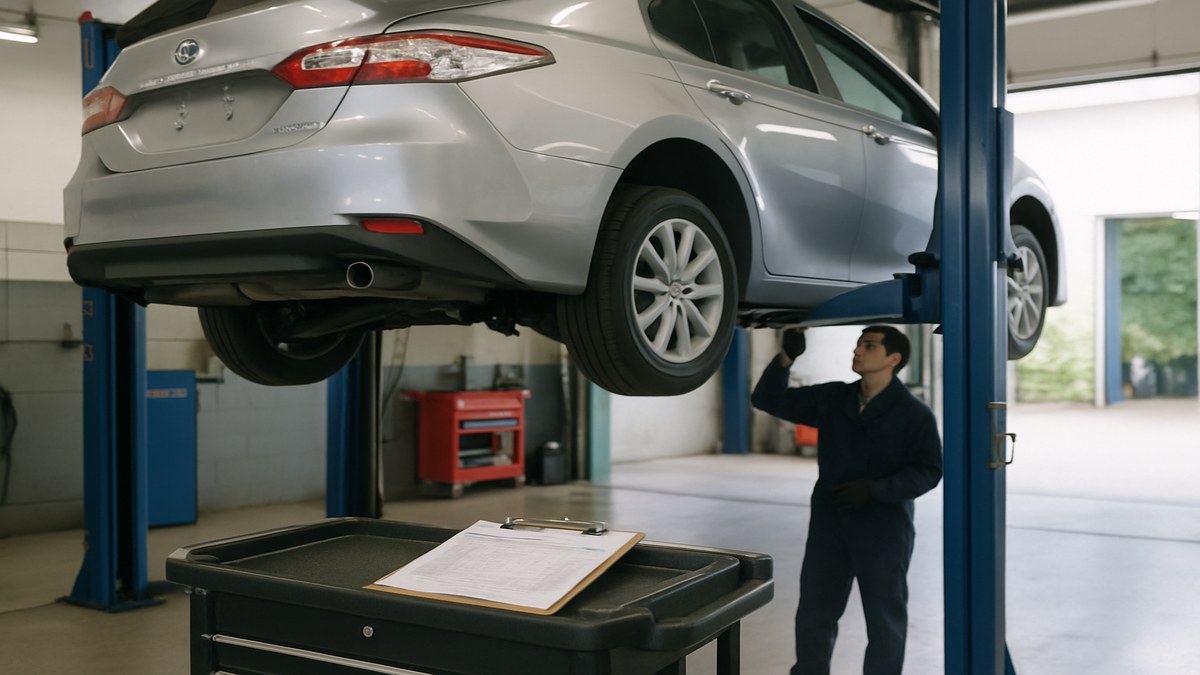
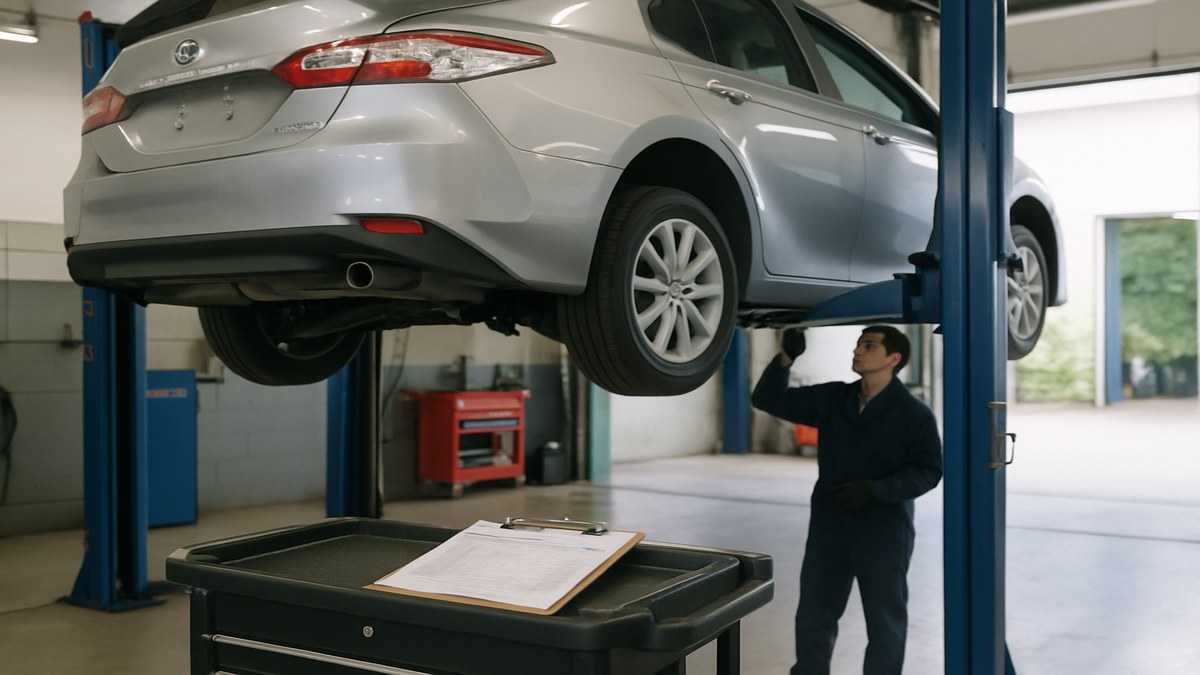
I listed my first car â a 2019 Toyota Camry Hybrid with 38,000 miles â on RideshareRenter in April 2025. Thirteen months later, the car has 91,000 miles on it, three different drivers have run it, and I've kept every receipt. Here's the year that doesn't show up in the "earn $1,500/month passive income" pitches.
Spoiler: I still cleared $9,700 net. But maintenance ate more than I expected.
One car. One owner. Thirteen months of rideshare-rental wear. All figures in USD, including parts and labor at an independent shop I trust.
| Service | Frequency | Cost per event | 12-month total |
|---|---|---|---|
| Oil change (synthetic blend) | Every 5,000 mi | $58 | $696 (12 changes) |
| Tire rotation | Every other oil change | $25 | $150 |
| Tire replacement (set of 4) | Once at 65k miles | $612 | $612 |
| Brake pads (front) | Once | $285 | $285 |
| Brake pads (rear) | Not yet â pushed to next year | â | $0 |
| Cabin and engine air filter | Twice | $45 | $90 |
| Wiper blades | Twice | $28 | $56 |
| Battery (12V) | Once (preventive) | $195 | $195 |
| Cooling system flush | Once | $155 | $155 |
| Alignment | Once after tires | $95 | $95 |
| Deep clean / detail | 4x (between drivers) | $165 | $660 |
| Floor mats (replacement) | Once | $78 | $78 |
| Unexpected: AC recharge | Once | $210 | $210 |
| Unexpected: Headlight bulb + housing condensation fix | Once | $185 | $185 |
| Unexpected: 12V cigarette outlet replacement (driver melted it) | Once | $95 | $95 |
| Total | $3,562 |
Three thousand five hundred sixty-two dollars. On a hybrid Camry with no major mechanical issues. In a year.
The maintenance budget the listing calculator suggested was $1,800. I more than doubled it.
Not because anything went wrong. The car never broke down. No transmission, no engine, no hybrid battery drama. The Camry was good to me. Rideshare driving just chews through cars at a different rate than personal driving.
40,000 miles in 13 months. That's 4x what most personal cars see. Brake pads, tires, oil â they all hit their service intervals on rideshare time, not calendar time.
And then the small stuff adds up. Air fresheners. Floor mats. The driver who plugged a phone charger into the wrong outlet and melted it.
To make the math useful, here's what the same car generated in the same year:
| Gross rental income (13 months) | $17,420 |
| RideshareRenter platform fee | -$1,742 |
| Insurance (commercial / rideshare-period) | -$2,180 |
| Maintenance (above) | -$3,562 |
| Registration + emissions | -$210 |
| Subtotal | $9,726 |
| Depreciation (not cash, but real) | -$2,800 |
| True net | $6,926 |
If you ignore depreciation, I cleared $9,726. If you count it, $6,926. Either way, it's real money â but it's not "passive."
I spent roughly 5-7 hours a month on the car. Inspections between drivers, scheduling oil changes, photographing the interior for the listing, dealing with the AC recharge appointment. Not nothing.
Three things made my numbers higher than they had to be:
I switched drivers too often. Four turnovers in 13 months meant four deep cleans at $165. If a driver runs the car for 4-6 months instead of 2-3, you cut that line in half.
I didn't catch the AC slowly losing refrigerant. By the time the driver complained, the compressor had been running harder for weeks. A check earlier might have caught it for $95 instead of $210.
I cheaped out on the original tires. The car came with mid-tier tires that hit the wear bars at 28,000 miles. I replaced with a better set the second time and they're projected to last 50,000+. Penny-wise, pound-foolish.
Push for longer rental terms. Owners who let drivers commit to 90+ days pay less in turnover cleaning, build more trust, and get better feedback on small issues before they become big ones. RideshareRenter has a long-term rental category â I'm using it now.
Schedule oil changes proactively. Don't wait for the driver to mention the dash light. Build a calendar reminder at 5,000-mile intervals based on the platform's mileage updates.
Inspect the car every 30 days. Doesn't matter if you trust the driver. A 15-minute walk-around catches AC issues, tire wear, weird sounds. Better to spend $0 catching it early than $200 fixing it late.
Set aside 25% of gross for maintenance, not 15%. The platform's quick math underestimated my real costs by a lot. If you list a car for $310/week, plan to keep $80 of that in a maintenance fund. Don't spend it. When the timing belt or 12V battery surprises you, that money is already there.
Honest answer: yes, with caveats.
A paid-off, reliable Camry Hybrid or Prius rented through RideshareRenter pulls $7,000-$10,000 net per year per car. For roughly 60-80 hours of work spread across the year, that's not a bad return.
A financed car? Different calculation. If you owe $14,000 on a 2022 Camry, your monthly note ($310-$360) eats most of your rideshare-rental income. The math works at scale (two or three cars, one note) but it's tight on one car with a loan.
A luxury car or sports model? Don't. Sedans and hybrids are what the rideshare market wants. A Mustang or 4Runner sits unrented while the Prius next door clears $1,200 monthly.
Based on my own logs, $2,800-$4,000 annually for a hybrid sedan running rideshare full-time. Older cars or higher-mileage models trend higher. Budget 25% of gross income for maintenance and you won't be surprised.
You need rideshare-period or commercial coverage that responds while a renter drives for Uber or Lyft. RideshareRenter's listing options explain what's required â your personal auto policy alone almost never covers the rideshare gap.
Brakes and tires. Both wear roughly 4x faster than personal use. Plan for tires every 30,000-45,000 miles depending on quality and a brake job at 50,000-60,000 miles.
Long-term rentals (90+ days) reduce turnover wear. Clear listing rules about cleaning and refueling cut deep-clean costs. Inspect the car between rentals â a 15-minute walk-around is the best preventive tool you have.
No. Handle oil changes yourself or specify the shop and reimburse. You want consistent records, the right oil weight for the hybrid system, and a stamp on the service history when you resell. Letting drivers DIY this opens you up to skipped intervals and warranty issues.
Not really. 5-10 hours a month for one car is realistic. Multiply by however many cars you list. It's lower-effort than running a fleet yourself, but it's not the "set it and forget it" some marketing makes it sound.
Vehicle owners: If you've got a paid-off hybrid sedan and want to see real numbers from your local market, post a listing on RideshareRenter. The platform shows you what comparable cars are renting for in your city, and you can adjust your rate before you go live.
Drivers: The owners who keep cars maintained like the one in this article are who you want to rent from. Filter for verified owners and 4.8+ star ratings on RideshareRenter. The premium for a well-maintained car pays for itself in fewer breakdowns and better tips.




Comments