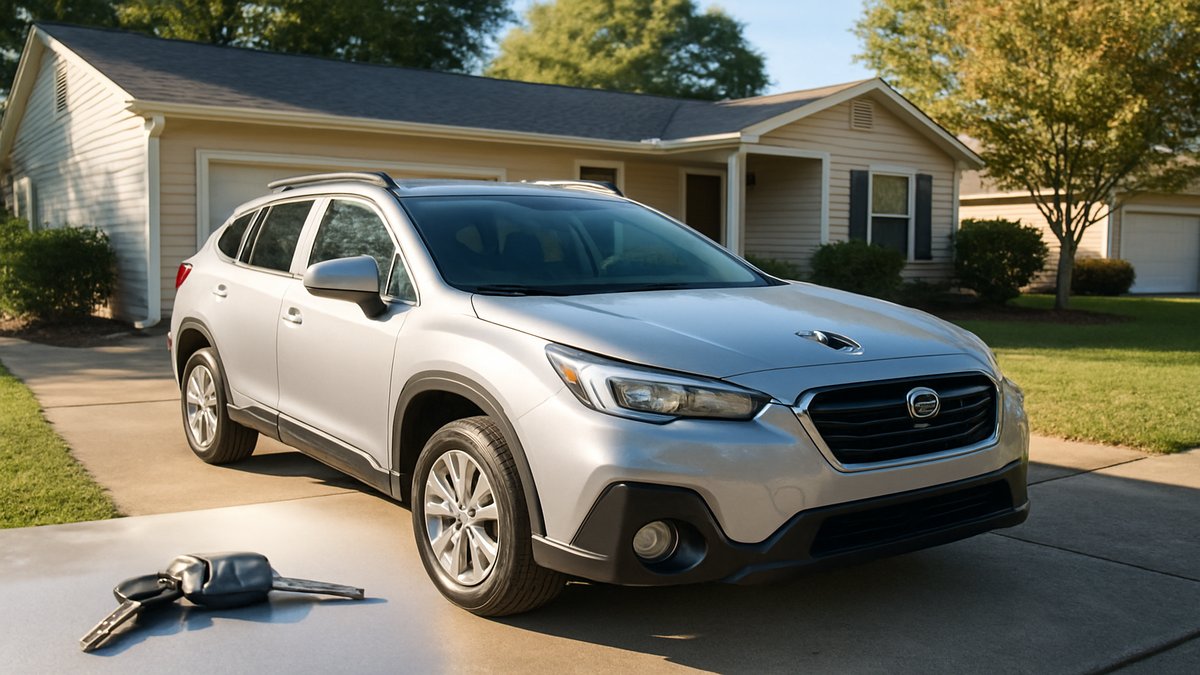
People ask me this constantly. Friends, neighbors, the guy at the dealership. They've got a second car sitting in the driveway and they want to know if listing it on RideshareRenter actually pays. So here's the answer, with numbers, from someone who's done it.
A reliable midsize sedan or compact SUV in a top-30 US rideshare market typically nets the owner $1,400–$2,200 per month after platform fees, maintenance reserve, and depreciation accounting. The car has to be 2018 or newer (Uber requirement in most cities), four-door, and pass an inspection.
That's net. Gross weekly rents on RideshareRenter run $260–$540 depending on the vehicle, but you don't keep all of that.
I run two listings on RideshareRenter myself and I traded notes with two other owners last quarter. Here's what the books looked like, full year 2025.
| Vehicle | Gross weekly rent | Weeks rented | Annual gross | Maintenance + tires | Insurance delta | Net owner income |
|---|---|---|---|---|---|---|
| 2020 Toyota Corolla, 78k mi | $295 | 44 | $12,980 | $1,650 | $720 | $9,420 |
| 2021 Toyota RAV4 hybrid, 52k mi | $420 | 46 | $19,320 | $2,200 | $940 | $14,800 |
| 2019 Honda Accord, 91k mi | $310 | 41 | $12,710 | $2,800 | $720 | $8,790 |
Couple things to notice. The RAV4 hybrid did the best because it spent more weeks rented (renters love good fuel economy) and the maintenance was light. The older Accord cost more in maintenance because at 91k miles things start failing — alternator, brake rotors, tire pressure sensors.
Weeks rented is the metric most new owners underestimate. Nobody runs at 52 weeks. You'll lose weeks to:
Forty-four weeks out of 52 is realistic and good. Anyone telling you 50 weeks is selling you something.
Here's where I'll be honest. Renting your car to rideshare drivers is more passive than driving Uber yourself, but it's not Vanguard-index-fund passive. You'll need to:
Respond to renter messages within a few hours. RideshareRenter ranks responsive owners higher.
Handle the handoff. Inspection, fuel level, photos, paperwork. Plan 30–45 minutes per renter swap.
Coordinate maintenance. Renters will tell you when something's wrong. You schedule it, you pay for it.
Deal with the occasional ticket or toll dispute. Usually 15 minutes of email per incident.
Realistically, a single car runs about 3–5 hours of your time per month on average. A fleet of three eats more like 10–15 hours a month because something's always happening with one of them.
Walk-up demand on RideshareRenter sorts roughly like this in 2026:
| Demand level | Vehicle types |
|---|---|
| High (rents in 3–7 days of listing) | Toyota Camry hybrid, Toyota Prius, RAV4 hybrid, Tesla Model 3, Honda Accord hybrid, Honda CR-V hybrid |
| Medium (1–2 weeks) | Standard Camry, Accord, Corolla, Civic, Mazda3, Mazda CX-5 |
| Slow (3+ weeks or seasonal) | Older trucks, full-size SUVs, anything 2017 or older, base trims with cloth seats and no Bluetooth |
Hybrid fuel economy is the single biggest factor in how fast a car rents. Drivers do the math. A Prius driver clears $200 a week more than a base sedan driver in most markets, and they know it. They'll pay $30 more in weekly rent to get the hybrid.
Cargo space matters for UberXL drivers and DoorDash hybrid drivers. A RAV4 or Highlander rents at a premium for this reason.
A car you rent to rideshare drivers will rack up 25,000–45,000 miles a year. That's 2–3x normal use. So your depreciation accelerates.
Here's the honest accounting. A 2020 Camry with 30k miles, sold privately today, is worth around $19,500. Same car with 75k miles is worth around $15,500. So that extra 45,000 miles cost you about $4,000 in resale value over the year.
If you grossed $14,000 on rentals that year and your operating costs were $2,500, your real take-home (income minus depreciation) is around $7,500.
Still not bad. But it's not the $14,000 number some platforms quote.
The trick most experienced owners use: rent a car that's already past its steepest depreciation curve. A 2019 or 2020 vehicle bought used at $15k loses less in absolute dollars than a brand-new $35k car would. Your percentage depreciation is similar, but the dollar loss is half.
I've had two real problems in three years of owning rental cars on RideshareRenter:
One renter rear-ended someone at low speed. Insurance handled it. I lost 11 days of rental income while the car was in the shop. That's about $470 in lost income, plus my $500 deductible. Annoying but absorbable.
One renter stopped paying mid-week, didn't return the car for four extra days. RideshareRenter's resolution team got the car back and I was made whole on the rent, but it was four days of stress.
Things I worry about that haven't happened: serious accident with injuries, vehicle damage from a renter who hides it, a long mechanical claim. I keep a $1,500 cushion in a separate account for any single car. That's worked.
For one car, the math works if:
For a fleet of 2–5 cars, the math gets more interesting because your time-per-car drops as you systematize. The owners I know running 3+ cars are clearing $50k–$80k a year net on RideshareRenter, but they're treating it like a real small business — accounting software, separate phone line for renters, a relationship with a local mechanic.
Past five cars, you're a fleet operator and that's a different gig with different licensing requirements depending on your state.
Do I need commercial insurance to list my car on RideshareRenter? Coverage for the rental period runs through the platform's program. You keep your personal auto policy for when you're driving the car yourself. Some states have specific commercial-use endorsements you'll want to ask your agent about — particularly New York, California, and Washington.
What if my renter gets a parking ticket or toll violation? Tickets are the renter's responsibility. Tolls run through the rental agreement. RideshareRenter's process for disputing or charging back to renters is straightforward but you have to document the timing.
Can I rent out a car I'm still paying off? Technically yes, but check your loan terms. Some lenders prohibit commercial use. Most don't notice or care if you're under a personal-use loan. Ask your insurance agent before listing — that's the bigger risk.
How fast does a car typically get its first booking on RideshareRenter? Hybrids and Teslas: 3–7 days. Standard sedans in good condition: 1–2 weeks. Trucks and older cars: variable, 2–6 weeks. Strong listing photos and a clear weekly rate make the biggest difference.
Do I have to drop off the car or does the renter pick it up? Most owners arrange in-person handoff at the home address. Some larger fleet owners run an office or a designated lot. RideshareRenter supports both models.
What's the minimum rental period I have to allow? You set it. Most owners require 7-day minimums for ride share use because shorter rentals churn too much and produce more wear. Some daily-rental listings exist but they're harder to keep occupied.
If you're an owner who's been thinking about this, list the car on RideshareRenter. Decent photos, honest mileage, clear weekly rate. The platform handles renter screening, insurance during the rental period, and payment.
If you're a driver looking to skip the buy-vs-rent debate, browse RideshareRenter for hybrids in your metro and start with a one-week rental to test the gig before you commit longer.




Comments