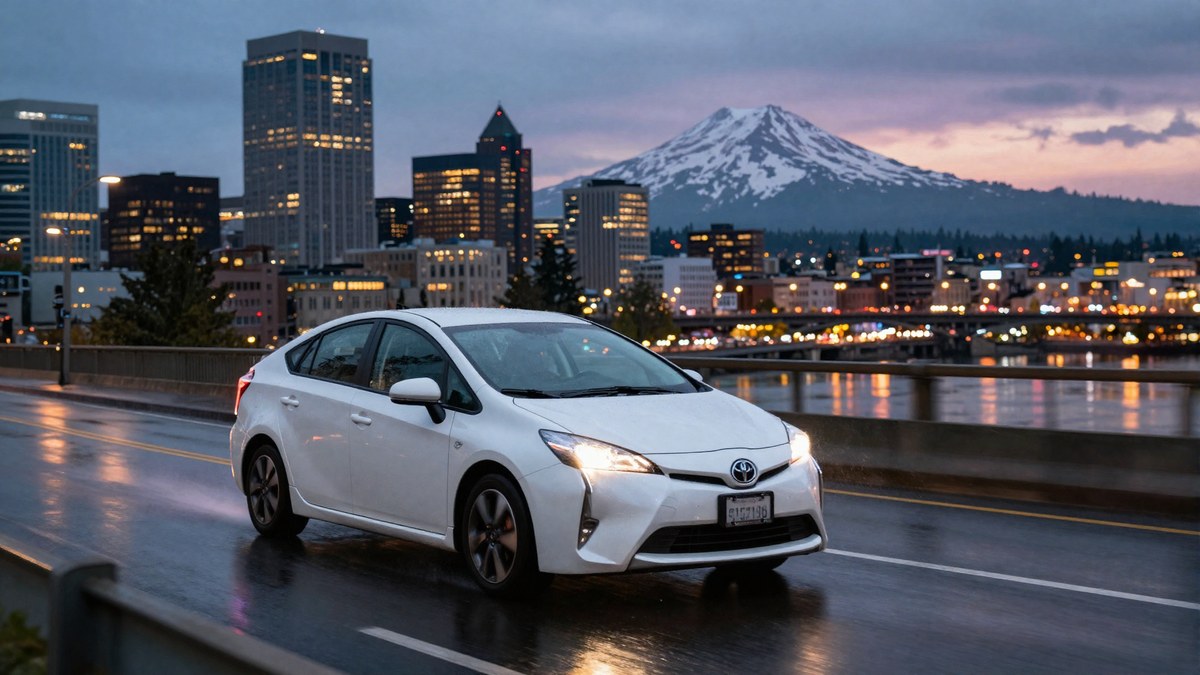
Portland is a strange rideshare market in the best possible way. Smaller than Seattle, weirder than Sacramento, with a downtown that empties earlier than most cities its size — and an airport that's one of the most efficient TNC operations in the country. I've driven PDX runs since 2023 and the math still works in 2026, especially if you set up your week right. Here's what renting for Uber and Lyft in Portland actually looks like.
Portland is regulated by the city's Private For-Hire Transportation Program (PFHT). It's stricter than most US markets — you need a city-issued permit on top of your Uber or Lyft approval. The good news: Uber and Lyft both handle the city permit on your behalf during driver onboarding, but you'll pay a $35 annual permit fee that comes out of your first few weeks of earnings.
Requirements:
The PFHT vehicle inspection trips up new drivers. Most rentals on RideshareRenter in the Portland metro already have a current PFHT inspection, but always confirm with the owner before booking. Getting one yourself runs $45-$70 and takes about 45 minutes.
Portland International Airport (PDX) has one of the cleanest TNC operations of any major US airport. The TNC staging lot sits about 90 seconds from the terminal, the queue display is visible in real time, and the rider pickup zone is well-marked on the lower roadway.
You queue, accept, drive directly to the pickup zone, drop, and if you re-enter the lot within 15 minutes you keep your queue priority. That short re-queue window is a huge deal — at LAX or ATL you'd be starting from the back of a 90-deep line.
PDX charges a $2.65 per-pickup TNC fee, baked into the rider's price. Average queue wait in 2025 was 12-25 minutes — faster than almost any comparable airport.
Best PDX windows: early mornings (5-8am) when long-haul flights depart, and Sunday afternoons when the weekend traffic comes home. Friday evenings are saturated with drivers and the wait can stretch to 45 minutes.
Downtown (Mon-Fri lunch + 4-6pm): Corporate commuters going to the Pearl, Northwest, and back to the eastside neighborhoods. Steady but rarely surging.
Pearl District / Northwest 23rd (Fri-Sat 8pm-1am): Bar and restaurant district. Surge hits 1.5x-1.9x reliably on Saturday nights.
Hawthorne / Belmont / Division (weekend nights): Eastside bar corridor. Younger crowd, shorter trips, but they cluster — easy to chain 5-6 pings in a single hour.
Providence Park (Timbers / Thorns matches): 22 home matches between MLS and NWSL. Stadium surge for 45 minutes after final whistle.
Moda Center / Memorial Coliseum (Blazers / concerts): Reliable surge zone. Park nearby before tip-off to be in position.
OHSU and the Tram (commute hours): Tons of medical workers, predictable demand window.
PDX airport (anytime): The most consistent earner in the metro.
Portland is a middle-tier earning market. Not as rich per trip as DC or NYC, but cost of operating is lower and the airport efficiency saves serious dead time.
A full-time driver in the Portland metro on a Camry or RAV4, driving 50-55 hours/week, typically grosses $1,750-$2,050/week between Uber and Lyft. After a $325/week RideshareRenter Camry rental, $180/week in gas, and $25 in misc expenses, you're netting roughly $1,220-$1,520/week. That's $4,900-$6,100/month before taxes.
The Tesla Model 3 strategy works well here because Portland has the densest Tesla Supercharger network on the West Coast outside of California, and Uber Comfort Electric pulls about 1.4x base rates. Trade-off: rental is $50-$100/week higher and you spend more time charging.
| Vehicle | Weekly Rate | Best Use |
|---|---|---|
| 2022 Toyota Camry / Honda Accord | $295-$345 | UberX / Lyft default |
| 2021 Toyota Prius | $285-$325 | Gas savings, eastside hustle |
| 2022 Toyota RAV4 AWD | $345-$395 | Year-round flexibility, mountains |
| 2023 Tesla Model 3 | $435-$485 | Uber Comfort Electric |
| 2022 Toyota Highlander | $475-$525 | UberXL, family weekends |
The Prius is the secret weapon in Portland. Gas in Oregon usually runs $0.40-$0.70/gallon higher than the national average, so a Prius at 50+ MPG real-world cuts $80-$110/week off your fuel bill versus a Camry. Over a year, that's $4,000+ in your pocket — more than offsetting any premium on the rental.
The rain is constant from October through May. You will burn through wipers. You will deal with hydroplaning. You will pick up riders who are soaked and ungrateful for it. Real considerations:
Tires. Tread matters more here than in dry climates. Confirm with the RideshareRenter owner that the car has at least 5/32" of tread before you book a long rental.
Wiper blades. Most owners include this in standard maintenance but if your wipers are streaking, ask for a swap. They cost the owner $30 and they keep your rating up.
Floor mats. Rubber, not cloth. Riders track in mud from October through May.
RideshareRenter listings include TNC commercial coverage when Uber or Lyft trips are active. Period 1 (app on, no ride) is also covered through the platform. Deductibles on rental damage range $500-$2,500 depending on the listing. The Portland-specific note: Oregon requires uninsured/underinsured motorist coverage at higher minimums than most states, and RideshareRenter listings in Portland are compliant by default.
Do I need a PFHT permit if I'm renting? Yes, but Uber and Lyft handle the application during your driver onboarding. There's a $35 annual fee. The vehicle also needs a current PFHT vehicle inspection — confirm this with the RideshareRenter owner.
Can I drive Uber and Lyft in Portland and Vancouver, WA on the same rental? You'll cross the river constantly. As long as the trip originated in Oregon, you can drop in Washington and vice versa. Driving solely within Washington requires Washington TNC compliance, which most Portland-side drivers skip.
What's the slowest month? February. After the holiday rush ends and before festival season ramps up, the city is quiet. Some drivers take a 2-week unpaid break and switch to delivery apps.
Are EVs worth it given Portland weather? Yes. Cold and rain don't kill EV range the way snow does. Portland Tesla drivers see roughly 8-12% range reduction in winter, which is manageable with the supercharger density downtown and at the airport.
What's the deal with the Oregon gas tax? Oregon has a $0.40/gallon state gas tax — higher than the national average. This makes fuel-efficient cars (Prius, hybrid Camry, Tesla) meaningfully more profitable here than in low-tax states like Texas or Missouri.
How long does the PFHT permit process take? If your vehicle has a current inspection and you've got clean records, the permit comes through with your Uber or Lyft approval — usually 5-10 business days from first application.
Drivers: Browse RideshareRenter listings in the Portland metro. Prioritize fuel-efficient options (Prius, hybrid Camry, Tesla Model 3) to offset Oregon's higher gas prices. Confirm with the owner that the car has a current PFHT inspection before booking.
Owners: Portland has a steady driver-side demand for hybrids and EVs specifically because of the fuel cost dynamics. If your car is a 2020+ Prius, hybrid Camry/Accord, RAV4 Hybrid, or Tesla Model 3, list it on RideshareRenter — it'll book faster and at a higher weekly rate than a comparable gas-only sedan.




Comments