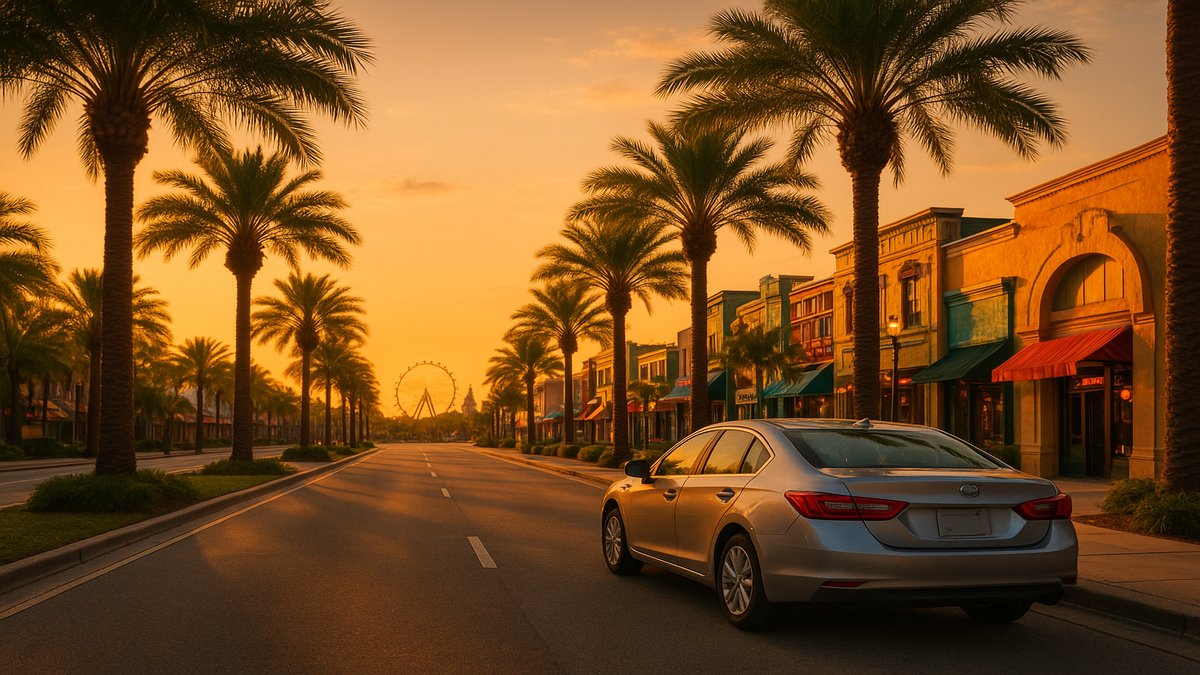
Orlando is a weird and wonderful market for rideshare rentals. The volume is enormous — 75 million tourists a year — but the rhythm is unlike most cities. Demand peaks at park opening, dies in the afternoon, surges again at park close, and shifts dramatically depending on convention schedules at the Orange County Convention Center.
A driver who learns the Orlando pattern can do very well. A driver who treats it like Atlanta or Dallas burns out fast. Here's the real picture.
Orlando's rental market sits in the middle of the Florida price range — cheaper than Miami, similar to Tampa.
| Vehicle Class | Typical Weekly Rate | Mileage Cap |
|---|---|---|
| Compact (Corolla, Sentra, Versa) | $279–$319 | 1,800/week |
| Midsize Sedan (Camry, Accord, Altima) | $319–$369 | 1,800/week |
| Hybrid Sedan (Camry HV, Prius, Insight) | $339–$399 | 2,000/week |
| Compact SUV (RAV4, CR-V, Equinox) | $359–$429 | 1,800/week |
| Minivan (XL eligible — Pacifica, Sienna) | $479–$579 | 1,500/week |
Florida insurance is expensive — only NJ and NY beat it — so Orlando rates run $30–$60/week higher than Atlanta despite a similar cost of living. Hurricane season (June–November) doesn't change rental rates but does shift demand patterns dramatically.
A note on minivans: Orlando is the rare market where a minivan listing actually pays back the higher weekly rate, because Uber XL demand from families flying into MCO with three kids and four suitcases is constant. If you're cleared on Uber XL and willing to do family runs, look hard at minivan listings.
MCO requires drivers to be activated on Uber or Lyft and to follow the airport's TNC pickup procedure. There's no separate physical permit decal needed in 2026. Pickups happen at Terminal A and Terminal B level 1 / Ground Transportation. The Greater Orlando Aviation Authority charges Uber and Lyft a per-trip fee that the platforms pass through to passengers; drivers don't pay it directly but the fee shows on your trip receipt.
The TNC waiting lot at MCO is on Bear Road, about 8 minutes from terminal pickups. There's covered parking, restrooms, and snack vending. Average wait time at MCO ranges from 12 minutes (peak arrival hours) to 90+ minutes (mid-morning lull). Don't sit longer than 60 minutes — your hourly rate craters.
Sanford / Orlando Sanford International (SFB) is much smaller and serves Allegiant flights primarily. Easier pickups, less waiting, but lower volume. Worth driving to if you're already in north metro Orlando — not worth the trip from south Orlando.
This is where Orlando-specific knowledge matters most.
Disney property has dedicated TNC pickup zones at each park (Magic Kingdom, EPCOT, Hollywood Studios, Animal Kingdom) and at each Disney Springs pickup zone. The Magic Kingdom dropoff is the Transportation and Ticket Center, not the park entrance — passengers walk or take the monorail from there. Drivers who try to bypass this get warnings from cast members.
Universal Orlando has TNC pickup at the Universal CityWalk Hub. Easier in/out than Disney. Big surge windows after fireworks and at park close.
SeaWorld TNC pickups are on the parking lot's south side. Lower volume than Disney/Universal but consistent.
Disney Springs at night is one of the most reliable surge generators in Orlando. 9 PM–11 PM Friday and Saturday is a money window.
The Orange County Convention Center is the second largest convention venue in the US. The convention schedule literally dictates Orlando's weekly rideshare economics.
When OCCC is hosting a 30,000+ attendee event (HIMSS, IAAPA, the major medical and tech conferences), surge prices on International Drive run hot from 6 AM (hotel-to-convention) through 9 PM (convention-to-restaurant/hotel). When the convention center is dark, International Drive is dead.
Pull the OCCC public calendar at the start of each month and plan your work hours around it. Drivers who do this consistently outperform drivers who don't by 20–35%.
The Orlando workday runs differently than other US markets:
5:00–7:30 AM: MCO arrivals. Strong.
7:30–10:30 AM: Park-opening rush from hotels. Disney and Universal property hotels generate enormous volume here.
10:30 AM–2:30 PM: Dead zone outside of convention windows. Most full-time drivers take their break here. Lunch deliveries (if your listing covers it) are decent but rideshare is soft.
2:30–6:00 PM: Mid-afternoon convention release + park-to-hotel runs. Decent.
6:00 PM–11:00 PM: Dinner runs, Disney Springs, Universal CityWalk, downtown Orlando. The strongest evening window.
11:00 PM–2:00 AM: Bar close downtown and at International Drive nightlife venues. Surge-friendly.
Weather: Florida afternoon thunderstorms (basically every summer afternoon at 3 PM) trigger surge. Position near a park entrance just before the storm hits and you'll catch surge runs back to hotels.
42 hours/week, midsize hybrid sedan rental on RideshareRenter, last quarter:
Drivers grinding 50–55 hours weekly during convention-heavy weeks report netting $850–$1,050. Drivers doing 25 hours a week, focused only on park-close and bar-close windows, report $400–$520 net.
SunPass tolls — Critical. Get a SunPass transponder before you start driving Orlando. Without it, the toll roads (417, 429, 408) bill at 1.5x rate via toll-by-plate, and the rental owner will pass those bills (plus admin fee) to you. The transponder pays for itself in your first week.
Hurricane evacuations — Once or twice a year you'll get a hurricane warning. Surge prices spike but driving conditions get genuinely dangerous. Read the rental's policy on evacuation routes and whether you're allowed to leave the metro area without notifying the owner.
Parking — Mostly free. Avoid downtown event nights at the Amway Center.
Insurance specifics — Florida has unique no-fault PIP requirements. The rideshare-endorsed policy on a RideshareRenter listing covers this, but if you carry your own personal non-owner policy, make sure it includes Florida PIP.
Q: Can I rent a car for Uber in Orlando without owning one? Yes — that's exactly who RideshareRenter serves. You need a valid US driver's license, an active Uber or Lyft account in good standing, and a clean enough background to pass the rental owner's screening. Most Orlando approvals happen within 24 hours.
Q: Is Disney really worth driving to? For experienced drivers, yes. Park-open and park-close windows generate consistent volume. New drivers should learn MCO and downtown first because Disney property has its own etiquette (where to stage, what cast members enforce) that takes a week to internalize.
Q: Are tips good in Orlando? Above average. Tourists tip more than commuters. Convention attendees tip well. Theme park families tip fairly. Expect 18–25% of rides to tip, averaging $4–$7 per tip.
Q: How do hurricane and tropical-storm shutdowns work for renters? Most RideshareRenter Orlando listings have a force majeure clause that pauses the weekly rate during a declared evacuation. Read your specific listing — the language varies. Most drivers in named-storm scenarios drive home or to family inland and resume when the storm passes.
Q: Can I do XL on a smaller rental? No. Uber XL requires a vehicle that meets the platform's seating and cargo specs (typically 6+ passengers, 3 row). Filter for XL-eligible listings on RideshareRenter to qualify automatically.
Q: Is Orlando a year-round market or seasonal? Year-round. Demand is highest December–April (snowbird season + spring break) and lowest in September. Even September is solid by other-city standards because of conventions.
Drivers — Orlando has consistent year-round demand and strong tipping culture. Browse RideshareRenter Orlando listings and find a vehicle within your weekly budget. Filter for XL-eligible if you want minivan family-fare upside.
Vehicle owners — Orlando's tourist economy means high utilization rates. Orlando minivans and hybrid sedans typically rent 48–50 weeks a year on the platform. List your car on RideshareRenter and reach Orlando's full-time and part-time driver base today.




Comments