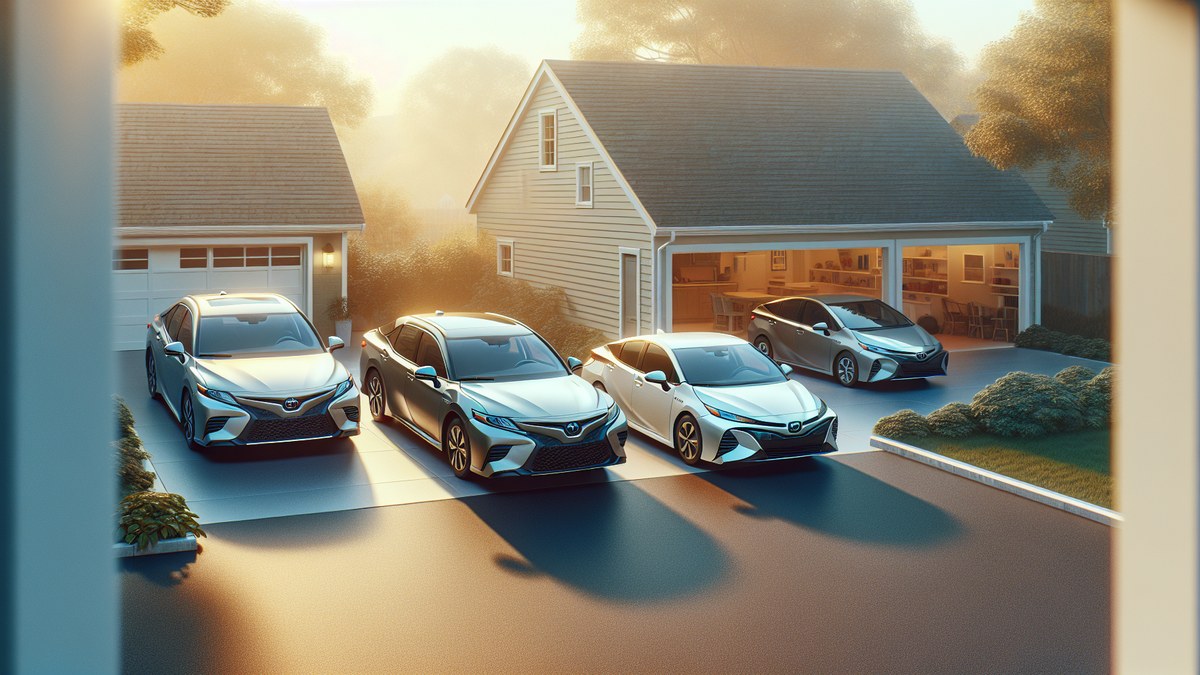
Going from one rental car to five is not five times harder. It's about twelve times harder. I learned that the slow way over 18 months and I want to save you some of the lessons that cost me money.
This is for owners who already have one car earning on RideshareRenter and are wondering whether scaling up makes sense. Short answer: yes, but only if you go in with cash reserves, paperwork discipline, and zero romance about "passive income."
One car at a healthy weekly rate of $295 grosses about $14,750 a year if it's rented 50 weeks. After insurance, maintenance, and a few bad weeks, you're netting $7,800 to $9,500 per car. That's real money, but it's not fund-your-life money on a single car.
Five cars at the same numbers grosses around $74,000 and nets $39,000 to $47,000 — assuming you don't blow the math on a single bad incident. The leverage is real. But so is the downside.
| Cars | Annual gross | Annual net | Hours/week of work |
|---|---|---|---|
| 1 | $14,750 | $8,500 | 2-3 |
| 3 | $44,250 | $24,000 | 6-9 |
| 5 | $73,750 | $42,000 | 12-15 |
| 10 | $147,500 | $78,000 | 25-30 (or hire help) |
Those net numbers assume you're picking the right cars, screening drivers carefully, and catching damage before it compounds. Skip any of those and the net drops fast.
If I had to start over with $50,000 to deploy across multiple vehicles, I'd build it like this:
Why hybrids? Drivers want them, gas prices stay scary, and the maintenance pattern is predictable. Toyota hybrids have aged better than almost anything else on the road. If you can find a clean Lexus ES Hybrid, even better — the brand premium pulls higher rates.
Skip German cars. Skip anything where a brake job costs $1,200. Skip exotic engines. Boring is profitable.
One bad driver across five cars wipes out a month. I had a renter put 4,800 miles on a Camry in two weeks, return it with a cracked windshield, and dispute the cleaning fee. The repair, the lost rental days, and the dispute resolution cost me roughly $1,900. He had a 4.91 Uber rating.
What I do now on RideshareRenter:
Single-car owners can usually get away with their personal auto carrier plus the rental marketplace's protection layer. At three or more vehicles, this stops working. Personal carriers will eventually catch on and either drop you or hike the rate dramatically.
What you actually want at scale: a commercial auto policy with TNC (transportation network company) endorsement, plus the marketplace's host protection on top. Yes, it's expensive — figure $2,400 to $3,800 per car per year for commercial, depending on state. But it's the only thing that holds up if a driver damages your car off-app or if you're hit with a liability claim.
Start the conversation with a commercial broker before you buy car #3, not after. Brokers in your state who write TNC policies are not common; ask other RideshareRenter hosts in your city for referrals.
Here's the schedule I run. Calendarize it and stick to it. The biggest threat to your margin is letting maintenance slip.
| Service | Interval | Cost per car/year |
|---|---|---|
| Oil change | Every 5,000 mi | $280-$360 |
| Tire rotation | Every 7,500 mi | $80-$120 |
| Brake pads | ~30k mi | $220-$340 |
| Cabin air filter | Every 6 months | $30-$50 |
| Detailing | Every other rental cycle | $240-$400 |
| Tire replacement | ~50k mi | $180-$300 (annual amortized) |
Build a relationship with one independent shop that knows your fleet. Stop bouncing between dealers and chains. The shop owner will start catching things before they become emergencies, and that's worth more than any discount.
What a typical week of running 5 cars looks like for me:
Total: 12-15 hours a week. Not passive. But also not full-time, and the per-hour math beats most W-2 work in my zip code.
Most owners I know hit a wall around 7-9 cars where they either need to hire help or stop scaling. The math of car #8 isn't different from car #3, but the time required scales linearly while your hours don't. If you're not willing to hire a part-time fleet manager at around $25/hour for 15-20 hours a week, cap yourself at 5-6 cars and run them well.
The owners I see fail are the ones who scaled to 12 cars solo and then watched maintenance and screening discipline collapse. Two bad drivers, a delayed brake job, and you're underwater on three cars at once.
Q: Can I scale this up while keeping a regular job?
Up to about 4 cars, yes, if your job is flexible enough to handle 30-minute pickup windows on weekday mornings. Past 4, you'll start missing or rushing things, and that's where money leaks.
Q: How do I finance a fleet of cars?
Most multi-car owners I know mix cash and credit union loans. Commercial vehicle loans are an option but rates are higher. Avoid dealer financing on used cars — the markup is brutal. Pay cash for the cars you can, finance the rest with the lowest-rate option.
Q: What's the biggest mistake new multi-car owners make?
Buying a car they personally like rather than a car drivers want. Your fleet isn't your collection. Drivers want hybrids, compact SUVs, and reliable mid-size sedans. They don't want your project Mustang.
Q: How does RideshareRenter handle damage across multiple listings?
Each rental is treated as a separate transaction. Damage protection applies per-rental, not per-host. So a bad outcome on one car doesn't affect coverage on the others. You do want to keep your driver screening tight — repeat damage claims can affect host trust scores.
Q: Should I form an LLC for a 5-car rental operation?
Talk to a CPA. For most multi-car owners, an LLC plus a clean accounting setup makes sense once you're past 2-3 cars, mostly for liability separation. Tax deductibility doesn't change much, but legal exposure does.
Q: What's the realistic timeline from 1 car to 5?
Plan on 12-18 months if you're disciplined. Faster if you have capital, slower if you're reinvesting profits. Don't rush. Each car teaches you something about screening, pricing, and maintenance.
Vehicle owners: Whether you're starting with one car or scaling to ten, list your vehicle on RideshareRenter. Driver demand for hybrids and compact SUVs is the highest it's been in two years. You set the rate, you screen the renters, we handle the marketplace and protection layer.
Drivers: Looking for a quality rental from owners who actually maintain their fleet? Search RideshareRenter listings in your city. Filter for owners with multiple cars and consistent reviews — they tend to keep their fleet in better shape than one-off listings.




Comments