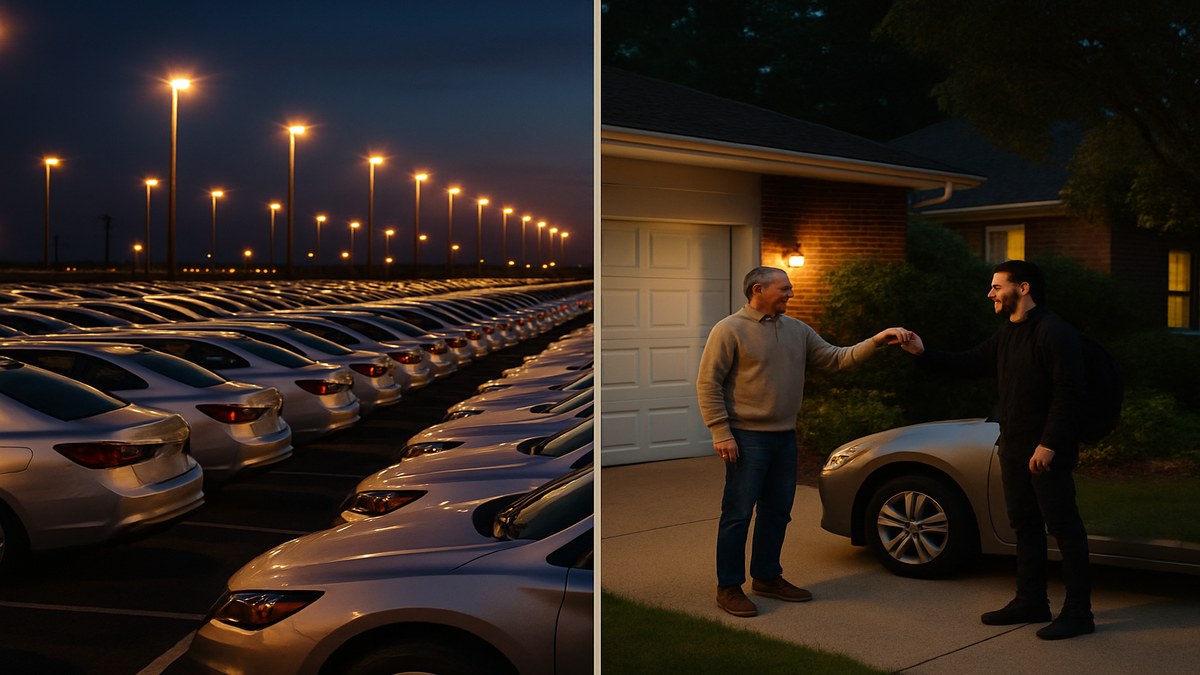
If you've Googled "rent a car for Uber" in the last year, Hertz comes up before almost anything else. They've got billboards, a tie-up with Uber itself, and a fleet that includes a chunk of Teslas. It looks like the obvious answer.
I rented from Hertz Uber for six weeks before I switched back to peer-to-peer on RideshareRenter. I'm going to tell you exactly what was good, what was annoying, and the math that pushed me out.
Hertz's Uber program is a corporate fleet rental aimed at active Uber drivers. You sign up through the Uber app, pick up the car at a participating Hertz location, and it's set up for rideshare with commercial insurance baked in. Pricing varies by city. In 2026 it ran roughly $260â$334 a week for a base Toyota Corolla and $339â$439 a week for a Tesla Model 3, plus a $200 refundable deposit and taxes.
Includes: full commercial coverage for rideshare, unlimited mileage on most plans, basic maintenance, and 24/7 roadside.
Doesn't include: any flexibility on vehicle make/model beyond what's at your specific Hertz lot, real driver-to-owner relationships, weekend or after-hours pickup at most non-airport locations, and (this is a big one) any ability to drive for Lyft, DoorDash, or Uber Eats without explicit approval.
RideshareRenter is a peer-to-peer marketplace. The owner of the car is another person who's decided to rent their personal vehicle to gig drivers. You see their profile, the specific car, the included insurance terms, and the weekly rate before you commit. Approval averages 24â48 hours; some listings are instant approve.
This is a fundamentally different model. Hertz is a fleet. RideshareRenter is a marketplace.
| Factor | Hertz Uber Program | RideshareRenter |
|---|---|---|
| Base weekly rate (Corolla-class) | $260â$334 | $235â$285 |
| Tesla Model 3 weekly | $339â$439 | $329â$395 |
| Deposit | $200 refundable | $200â$500 (set by owner) |
| Insurance | Commercial, included | Varies â many listings include rideshare-eligible coverage; some don't |
| Apps allowed | Uber only (sometimes Lyft, depends on market) | All â Uber, Lyft, DoorDash, Uber Eats, Instacart, Spark |
| Mileage cap | Unlimited on most plans | Varies by listing; many unlimited |
| Approval speed | Same day if Hertz has inventory | 2â48 hours; instant on some listings |
| Vehicle selection | Whatever the lot has | Browse and pick by year, model, fuel type |
| After-hours pickup | Limited at non-airport locations | Owner-dependent, often more flexible |
| Maintenance | Included | Owner handles; usually included in rent |
Two things I missed when I left:
The first is logistics. If something breaks, Hertz swaps the car. Period. I had a check-engine light come on during a Saturday surge and I drove the dead Corolla to a Hertz airport branch, signed two pages, and was in a different Corolla in 35 minutes. On a peer-to-peer rental, the same scenario would have meant calling the owner and probably losing the rest of the day.
The second is commercial insurance simplicity. The Hertz package covers rideshare without you doing any thinking. With RideshareRenter, you have to actually read the insurance section of the listing because some owners include rideshare-eligible coverage and some leave that to you. If you're newer and not comfortable reading insurance terms, Hertz removes a step.
Three reasons, in the order they hit me:
Multi-app driving was a fight. I make 22% of my weekly take on Uber Eats during slow rideshare hours. When I tried to log my Hertz Uber car onto DoorDash, the Hertz agreement technically didn't allow it. Their enforcement was inconsistent, but I didn't want to find out the hard way. On RideshareRenter, most listings allow all apps. That alone moved my weekly net up by $90â$140.
The rate climbed. My first six weeks ran $269 weekly. After that the rate jumped to $299 with a vague "market adjustment" email. I had no recourse. On RideshareRenter the rate is locked to the listing you booked, and if it changes, you've already returned the car. Competitive pressure between owners keeps the long-tail prices down.
The car wasn't mine to keep. Hertz reserves the right to swap your vehicle. I had two days where I got moved to a different car because mine was "due for service." A different car means resetting my phone mount, my dashcam, and the rear-seat tablet I used for tips. Lost 90 minutes both times. On RideshareRenter, the car is the car. Same plate every week.
Be honest with yourself if any of these are you:
If any of those describe you, Hertz is a legitimate option. I'd say it accounts for maybe 15% of drivers I talk to.
For everyone else, the marketplace model is just a better fit:
I went back through six months of receipts. Six weeks on Hertz, then four months on RideshareRenter, same city, same hours. Average weekly net (after rent, fuel, fees, and tax set-aside):
That's a $114/week swing, or about $5,900 a year. The bulk of it came from multi-app freedom. The rest came from a slightly cheaper weekly rent and the lack of mid-rental swap downtime.
Your numbers will be different. But run yours. Don't just look at the weekly rate.
Can I switch between Hertz and RideshareRenter mid-month?
Yes. Most Hertz Uber rentals are weekly with no long lock-in, and RideshareRenter listings are weekly too. I switched on a Monday after returning Hertz on the Sunday.
Is Hertz's insurance actually better than the average RideshareRenter listing?
On paper, similar. Hertz packages a known commercial policy. Many RideshareRenter owners provide rideshare-eligible coverage that meets state and platform minimums. The variance on RideshareRenter is wider, so read the listing.
Does Hertz check credit?
They run a soft check for the account but don't pull a hard FICO. Same general approach as RideshareRenter.
What about Teslas â is Hertz still pushing those?
Yes but the rate climbed in 2025. The economics of renting a Tesla from Hertz versus from a private owner on RideshareRenter usually favor the private owner now. Check both.
If I get into an accident, is it really easier on Hertz?
Yes, modestly. Hertz's claims process is centralized. A RideshareRenter accident loops the owner in too, which is a conversation, not a dealbreaker. The platform mediates.
Can I rent for a single weekend on either?
Hertz Uber is weekly minimum. Many RideshareRenter listings will do 2â3 day rentals at a daily rate. Filter for "flexible duration."
Hertz is the right move if you're new, scared of the insurance question, and don't drive anything besides Uber. RideshareRenter is the right move if you want flexibility, all-app freedom, the ability to pick your car, and a weekly rate set by real market competition between owners. Most drivers I talk to end up on RideshareRenter after a Hertz starter period. Some skip the starter entirely.
Drivers: Compare specific cars in your city on RideshareRenter against your local Hertz Uber pricing. Run the numbers including fuel and the apps you actually drive.
Owners: Hertz Uber doesn't compete for your fleet â you compete with Hertz for drivers. List your car on RideshareRenter and price below Hertz to fill it fast.




Comments