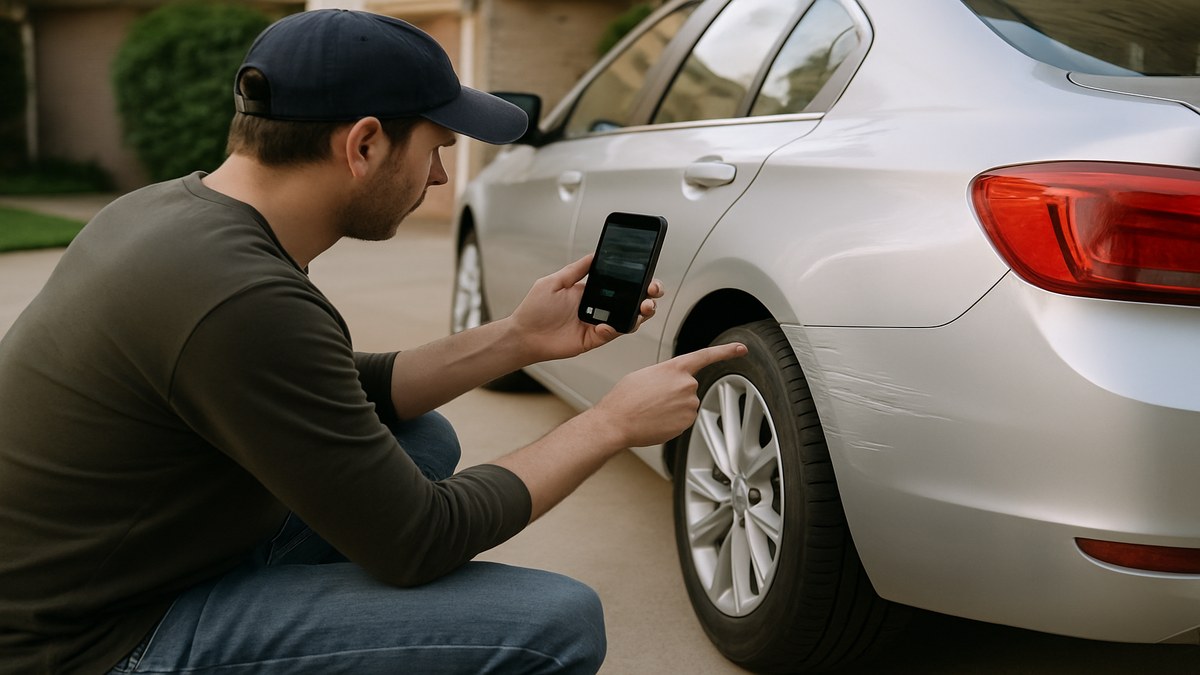
The text came at 2:14 a.m. on a Wednesday. My driver, a guy named D who'd rented my 2021 Camry for three weeks straight without issue, sent a single sentence: "Bro I'm so sorry, I clipped a pole, the rear quarter is messed up." Then a photo of a panel that looked like a closed Yelp review.
That was 18 months ago and I've handled four damage claims on RideshareRenter since. None of them went sideways. Most owners I talk to assume a damage claim means a lawyer, a fight, and a total loss. The reality is more boring, but only if you do the first six hours right.
Here's the playbook I wish someone had handed me before D's text.
Your first instinct will be to drive to wherever the car is, see the damage, and yell at someone. Don't.
The single most expensive thing you can do at this point is start the conversation with anger. Drivers who feel attacked stop responding. Drivers who feel respected give you full photos, timeline, location, and insurance info inside the hour. Guess which one leads to a faster claim payout.
What I do now, in this exact order:
That whole exchange takes 10 minutes. You haven't agreed to anything, you haven't made threats, and you've already documented more than most owners ever do.
This is non-negotiable. Every rental platform has a clock, and RideshareRenter's standard process expects damage reports inside 24 hours of the incident. Wait longer and you give the driver a foothold to dispute it.
To open a report, you log into your owner dashboard, find the active rental, and submit a damage incident. You'll be asked for:
If you don't have all of it, submit what you have. A report with 70% of the info filed in hour 6 is worth more than a perfect report filed in hour 48.
Here's the painful one. If you didn't take walk-around photos of the car when you handed it to the driver, you're starting at a disadvantage. Most damage disputes hinge on what the car looked like before pickup.
Going forward, every owner should be doing this:
If you didn't do this for the rental in question, see if you have any older photos from previous handoffs, service records, or even a recent oil change receipt with photos. Anything that shows the car's prior state helps.
Don't just call your usual body shop. Get two estimates from independent shops in your area. Different shops price differently. A $4,200 quote at one shop is a $2,650 quote at the shop on the next block. The driver and the platform are both going to look at your number, so a defensible average matters.
What I learned the hard way: dealership body shops almost always quote 30-50% higher than independent shops. That's not necessarily bad. But it can complicate negotiation. I get one dealership estimate and one independent estimate now.
Watch for the trap of accepting cash from a driver to "skip the platform." Some drivers will offer this. It can sound like a clean deal. It is not a clean deal. If you take cash and later find frame damage, hidden suspension issues, or transmission problems from the same accident, you have zero recourse. The platform's damage process exists for a reason. Use it.
This is where most first-time owners get tangled up. There are usually three potential payers on a damage claim:
| Source | What It Covers | Typical Limit |
|---|---|---|
| Driver's rideshare insurance (Uber/Lyft) â only if the damage happened during an active trip or app-on period | Collision damage to the rented vehicle during covered driving | $1,000-$2,500 deductible, then up to actual cash value |
| RideshareRenter protection plan â varies by listing tier | Damage during rental period that isn't covered by rideshare insurance | Subject to plan limits and deductible |
| Driver out of pocket | Anything the above doesn't cover (e.g., damage during off-app personal driving), plus deductibles | Up to total repair cost |
The first question to nail down: was the driver on-app at the time of the incident? On-app changes everything. Uber's contingent collision (when app is on but no rider) and full collision (when ride is accepted or in progress) coverage typically kicks in for the rental vehicle.
If the driver was off-app and just heading to the grocery store, none of that applies, and you're working with the driver's personal coverage (if any) plus the platform protection plan.
Even when the car gets fixed perfectly, a vehicle with a reported accident on its Carfax loses resale value. That's called diminished value. Insurance companies don't volunteer to pay it. You have to ask, with documentation.
For a 2021 Camry with one accident on record, I lost roughly $1,800 in resale value compared to clean comps when I sold the car 14 months later. That number is real. It's also recoverable if you push for it.
How to claim it: get a diminished value appraisal from an independent appraiser ($150-$300), submit it alongside your repair claim, and specifically request diminished value as a separate line item. Don't lump it into the repair cost.
Some drivers ghost. Out of four claims I've handled, one of them stopped responding to texts on day 3. Here's what worked.
I notified RideshareRenter immediately and provided every screenshot of the previous communication. I filed a police report for "failure to return rental property" since the car was still in the driver's possession past the end of the agreed rental period. I contacted the driver's emergency contact on file. The car turned up two days later in a parking lot 40 miles from where it was supposed to be.
Some takeaways:
I can't prevent every accident. But four practices have cut my damage incidents to roughly one per 14 rentals.
Vet driver history. Look at the driver's RideshareRenter rental history, their Uber rating, how long they've been driving. A driver with 3 weeks of Uber and zero rental history is a higher risk than a driver with 18 months and four 5-star rentals on the platform.
Walk through the car with them. Don't text the keys. Meet the driver, show them the car's quirks, point out the existing scuffs. Drivers who shook your hand are less likely to ghost you.
Set a clear deposit. RideshareRenter lets owners ask for a refundable deposit. I charge $300. It's not a real protection layer financially, but it's a behavioral filter. Drivers who can't put up $300 are drivers I can't take a risk on.
Don't list a car you'd cry over. If your car is your one and only daily driver and you'd be ruined if it got totaled tomorrow, rideshare rental isn't your business. The cars that work best on RideshareRenter are second cars, fleet cars, or vehicles where the loss-of-use scenario isn't catastrophic.
Q: What if the driver won't admit fault?
You don't need them to. The damage report goes through regardless. If there's a police report or third-party witness, that's documentation. If there's no other driver involved (single-vehicle accident in your rental), fault is less of an issue and more about coverage.
Q: Can I sue the driver personally?
You can. Most owners don't, because small claims caps in many states are $5K-$10K and lawyer fees eat the rest. I'd only consider it on a total loss where the platform and Uber coverage left a $4,000+ gap.
Q: How long do these claims usually take to resolve?
The four I've handled took 18 days, 26 days, 41 days, and 12 days respectively. Single-shop estimate plus clear coverage plus a cooperative driver = fast. Multiple shops plus disputed coverage plus a silent driver = slow.
Q: Should I rent the car out again while a claim is open?
Only after the repair is done and you've documented the post-repair condition. Renting a damaged car is a liability trap and most platforms (including RideshareRenter) won't honor coverage on undisclosed pre-existing damage.
Q: Does this hurt my listing's ranking on RideshareRenter?
A single claim, handled cleanly, doesn't tank you. Multiple claims, pattern of disputes, or owner-driver communication failures will. The platform rewards owners who resolve issues without drama.
Q: Can I just charge more weekly to "self-insure" against future damage?
That's how the smart owners I know do it. I price my Camry $30/week above the local average and treat that delta as my own damage reserve fund. After two years that fund has roughly $2,400 in it, which has covered three of my four claims out of pocket without me touching the platform process.
Damage on a rental car is not a question of if. It's a question of how often. The owners who lose sleep over it are the ones who never built a system. The owners who quietly clear $700-$1,400 monthly from RideshareRenter rentals built theirs after their first incident.
If you're already listing on RideshareRenter and you haven't done a 16-photo handoff in the last three rentals, do that today. If you're thinking about listing a car for the first time, the upside is real, but build the damage-handling muscle before you need it. You can list your car on RideshareRenter in about 20 minutes once your photos are ready.
And if you're a driver reading this and you've been wondering whether your rental is going to disappear after one ding â it's not. Honest drivers who report damage fast, file the police report, and stay in touch with their owner almost always keep their driving privileges. Pick a listing on RideshareRenter, communicate like a pro, and the system works for both sides.




Comments