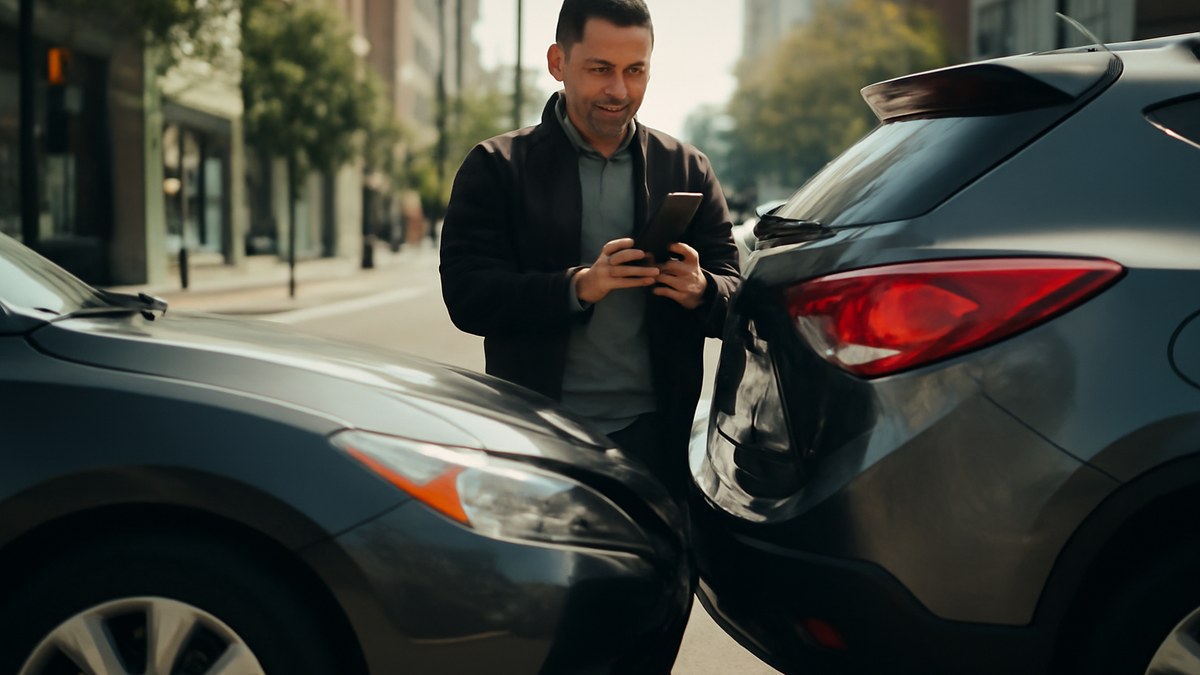
Insurance is the part of rideshare rentals where most drivers find out something they didn't want to know after a fender bender. The cop's gone, the other driver's gone, and now you're staring at a deductible page you never read.
I've had two real claims in three years of renting through RideshareRenter and similar platforms. Both taught me things the welcome email didn't. Here's the breakdown of what your rental insurance actually does — and the gaps where you're on the hook.
Any car you rent for Uber or Lyft is covered by three different policies, stacked on top of each other. They kick in at different times, and that's where most of the confusion lives.
| Layer | When it kicks in | Who pays |
|---|---|---|
| Rental platform insurance (commercial) | Whenever the rental is active and you're not on a trip | RideshareRenter / vehicle owner's commercial policy |
| Uber/Lyft Period 1 (app on, no ride) | App on, waiting for a request | Uber/Lyft contingent liability (limited) |
| Uber/Lyft Period 2 & 3 (en route + on trip) | From accepting a request through dropoff | Uber/Lyft full commercial policy ($1M liability) |
Sounds clean. It isn't.
Here's what each policy actually pays for in the most common situations a driver runs into:
You rear-end someone with no passenger, app off: The rental platform's commercial policy covers liability and damage to the other car. You pay your rental deductible — usually $1,000-$2,500 depending on the platform.
You rear-end someone with the app on, no passenger: Uber/Lyft Period 1 kicks in for liability up to their limits ($50k bodily injury per person on most state-required minimums). The rental's commercial coverage still handles damage to the rental car itself. You still pay your deductible.
You rear-end someone during a trip: Uber/Lyft's $1 million commercial policy covers liability. The rental platform's collision coverage handles the rental car. Deductible still applies, but you're protected for the catastrophic stuff.
Passenger trashes the back seat: Uber/Lyft cleaning fee program covers $20-$150 depending on the mess. Anything beyond that comes out of your pocket or the rental platform's incidentals deposit.
This is the part nobody tells you up front. Real gaps where you're personally exposed:
Off-platform usage. Drive the rental to pick up your kid from school with the app off and you get in a wreck? You're on the rental platform's commercial policy, which covers it — but if you used the car for something explicitly prohibited in your rental terms (like a road trip to another state, or a delivery gig the platform doesn't allow), the policy can be denied and you're personally liable.
The deductible itself. On RideshareRenter the standard collision deductible is $1,000. Other platforms run $2,500. That's money out of your pocket on any at-fault accident, no matter how minor.
Damage from negligence. Curb rash, parking lot scrapes, interior cigarette burns. These usually fall on the renter, not the policy. Document the car at pickup with timestamped photos. Always.
Medical for you, the driver. Liability policies cover the people you hit. Your own injuries are usually not covered unless you carry separate occupational accident insurance or you're in a state with PIP. About 30% of drivers I talk to don't carry any personal medical coverage during their shift, which is a real risk.
Lost income while the car's in the shop. If you wreck the rental, the policy might pay to fix it. It won't pay for your lost earnings during the two weeks you're without a car. This is the number one financial hit drivers don't see coming.
Here's how RideshareRenter's insurance stacks up compared to renting privately or going through other platforms:
| Coverage | RideshareRenter | Private Turo rental | HyreCar (before shutdown) |
|---|---|---|---|
| Commercial rideshare endorsement | Included | Not typically — must add | Was included |
| Collision deductible | $1,000 | $0-$3,000 depending on plan | $1,000-$2,500 |
| Liability while app off | Included | Limited / depends on plan | Was included |
| Roadside assistance | Included | Add-on | Add-on |
| Replacement vehicle if wrecked | Owner-dependent | No | Was case-by-case |
First mistake: assuming Uber/Lyft's insurance covers you whenever you're driving the rental. It doesn't. The Uber policy only kicks in when the app is on and properly accepting requests in your area. Driving home after a shift with the app off? You're on the rental's commercial coverage only.
Second mistake: not photo-documenting the car at pickup. Every dent. Every scratch. Inside and out. Timestamps matter. I had a $340 charge contested and removed because I had a photo of the pre-existing rear bumper scratch dated three days before the supposed incident. Without that photo, I would've paid.
If you're driving full-time, three optional coverages are worth the monthly cost:
Occupational accident insurance. Roughly $35-$60 a month. Covers your medical bills and lost wages if you're injured while driving. Real gap-filler.
Personal umbrella policy. $20-$30 a month for an extra $1M of liability above whatever Uber/Lyft covers. Cheap peace of mind if you ever cause a serious injury accident.
Gap insurance on the deductible. A few credit cards and ridehailing-specific products cover your rental deductible if you have a claim. Reads like a gimmick until the day you need it.
Do I need my own personal auto insurance to rent through RideshareRenter?
No. The rental's commercial policy is the primary coverage. Some drivers carry a non-owner liability policy ($15-$25 a month) for extra protection during personal use, but it's not required.
What happens if I'm in a hit-and-run?
File a police report immediately and notify RideshareRenter within 24 hours. Uninsured/underinsured motorist coverage is built into the commercial policy, but documentation is everything. No police report often means no coverage.
Is the deductible the same for every claim?
Pretty much. $1,000 on most RideshareRenter listings whether the damage is $1,200 or $12,000. The exception is comprehensive (theft, weather) which sometimes runs a lower deductible.
Can I be dropped from the platform after a claim?
Yes — for at-fault claims involving significant payout, or multiple claims in a short window. One small fender bender usually won't get you removed, but a pattern will.
Does insurance cover me if I'm doing Uber Eats in a rideshare rental?
Generally yes on RideshareRenter — Eats is treated like rideshare. Always confirm in your rental agreement. DoorDash and Instacart are sometimes treated differently and might require an additional rider.
What if the car is stolen?
Comprehensive coverage kicks in. You'll typically owe the comprehensive deductible ($500-$1,000) and need to provide a police report. The owner is made whole by the policy; you aren't on the hook for the full vehicle value.
Rideshare rental insurance is more comprehensive than people think — and more limited than the marketing makes it sound. The big risks (a $200k liability suit, a totaled vehicle) are covered. The small-to-medium risks (your deductible, your lost income during repair, your own medical bills) are mostly on you. Knowing the gaps before you rent is the difference between a small headache and a months-long financial mess.
For drivers: Find a rideshare rental with built-in commercial insurance on RideshareRenter — most listings include the rideshare endorsement at no extra cost.
For vehicle owners: Worried about putting your car on a rental platform? RideshareRenter's owner protection covers your vehicle with commercial-grade insurance from day one.




Comments