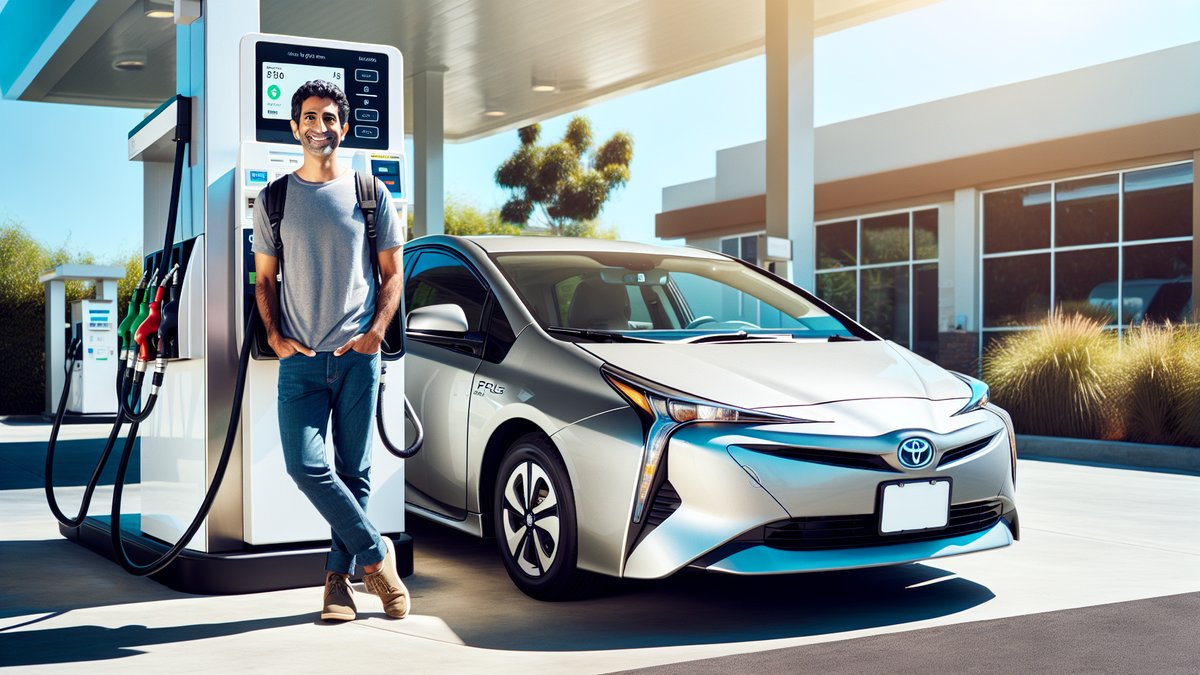
Every rideshare driver I know has done the napkin math on hybrids at least once. You see a Toyota Camry Hybrid getting 51 MPG city, compare it to the regular Camry at 28 MPG, and think: "I'd save a fortune on gas." And you're right — partially. But the full picture has more moving parts than most people realize.
I drove a regular Honda Accord for my first year on Uber. Spent about $280/week on gas driving 1,200 miles. When I switched to a Prius rental, my gas bill dropped to $140/week. That's $140 in savings, which sounds incredible until you factor in the rental price difference. The Prius cost $50/week more than the Accord. So my actual savings were closer to $90/week. Still good. But not the $140 the MPG numbers promised.
Let's lay this out with current 2026 numbers. Gas prices vary by city, but I'll use the national average of $3.45/gallon as of April 2026.
| Factor | Standard Sedan (30 MPG) | Hybrid (50 MPG) |
|---|---|---|
| Weekly miles (full-time) | 1,100 | 1,100 |
| Gallons used/week | 36.7 | 22.0 |
| Gas cost/week ($3.45/gal) | $126.50 | $75.90 |
| Typical rental on RideshareRenter | $210/week | $255/week |
| Total weekly cost (rental + gas) | $336.50 | $330.90 |
| Monthly savings with hybrid | — | $22.40 |
Yeah. Twenty-two bucks a month. That's the honest answer for an average full-time driver at current gas prices. Not nothing, but not the game-changer people imagine either.
Now here's where it gets interesting: that math changes dramatically based on two variables. Gas prices and how many miles you actually drive.
If gas hits $4.50/gallon — which it absolutely did in parts of California and Nevada last summer — the weekly gas savings jump from $50 to about $67. Combined with the rental premium, you're saving $70/month instead of $22. Still not huge, but over a year that's $840.
The bigger factor is miles driven. Part-time drivers doing 600 miles/week barely notice the difference. But heavy grinders pushing 1,500+ miles? Their gas savings dwarf the rental premium. At 1,500 miles/week with $3.45 gas, a hybrid saves you $170/month after accounting for the higher rental cost.
So the rule of thumb I tell people: if you drive over 1,200 miles/week OR you're in a market where gas regularly tops $4.00/gallon, a hybrid rental is the smarter financial move. Below those thresholds, it's more about comfort and preference than pure economics.
Gas savings get all the attention, but there are other reasons hybrid rentals work well for rideshare that don't show up in MPG calculators.
Passenger ratings. Seriously. I've talked to dozens of drivers who switched to hybrids, and almost all of them saw their passenger ratings tick up. Hybrids are quieter at low speeds, the ride is smoother in stop-and-go traffic, and passengers notice. One driver in Atlanta told me his average went from 4.91 to 4.96 after switching to a Prius. That might sound tiny, but if you're hovering near the deactivation threshold, every tenth of a point matters.
Comfort during long shifts. This is personal, but after 8-10 hours in a car, the smoothness of a hybrid drivetrain and the reduced engine noise make a difference. Less fatigue means you can drive longer safely. An extra hour of driving per day, even at average earnings, adds up to $150-$200/week.
Uber Green and Lyft Green bonuses. Both platforms offer premium tiers for hybrid and electric vehicles. Uber Green pays drivers an extra $0.50-$1.00 per trip in most markets. If you're completing 30 trips/day, that's an extra $15-$30 daily just for driving a qualifying vehicle. Over a month, that's $300-$600 in bonus earnings that completely flips the rental math in the hybrid's favor.
The peer-to-peer model on RideshareRenter means you get access to hybrids that corporate rental programs don't typically offer. Here's what you'll commonly find:
Toyota Prius (2020-2025) — The rideshare workhorse. 50-57 MPG combined, seats 4 comfortably (5 in a pinch), huge trunk for airport runs. Rental prices on RideshareRenter typically run $240-$280/week depending on your city and the vehicle's year.
Toyota Camry Hybrid — If you want something that doesn't scream "rideshare driver" and gives passengers a more premium feel. 51 MPG city, roomier back seat than the Prius. Usually $250-$300/week.
Honda Accord Hybrid — Similar to the Camry Hybrid in price and fuel economy. Some drivers prefer Honda's driving dynamics. Typically $245-$290/week.
Hyundai Sonata Hybrid — The value play. Slightly lower MPG (47-50) but often $20-$30/week cheaper than Toyota hybrids. Good option if you're optimizing for total cost rather than pure fuel efficiency.
Toyota RAV4 Hybrid — For drivers who want to do Uber XL or need the space for airport luggage runs. 40 MPG is worse than a sedan hybrid, but you're qualifying for higher-paying ride tiers. Usually $280-$330/week.
EVs are tempting on paper. Zero gas costs. Uber Green eligibility. Quiet ride. But the charging logistics for full-time rideshare are still rough in most markets.
If you have home charging, an EV rental can absolutely work. Your "fuel" cost drops to about $30-$40/week in electricity. But if you're relying on public chargers, you're spending 30-45 minutes per charge session, plus paying $0.35-$0.50/kWh at DC fast chargers. That eats into both your time and your savings.
We've already covered the EV question in detail — check out our article on electric car rideshare rentals if you want the full breakdown. For most drivers in 2026, hybrids hit the sweet spot of fuel savings without the charging headaches.
Browse available vehicles in your city on RideshareRenter.com. Most listings include the vehicle make, model, year, and fuel type. Look for listings that specifically mention "hybrid" in the title or description. You can also message owners to ask about fuel economy specifics — things like real-world MPG, whether the hybrid battery has been serviced, and how the car performs in city driving vs. highway.
If you're a vehicle owner with a hybrid sitting in your driveway, this is your sign to list it. Hybrid listings on RideshareRenter rent faster than standard vehicles — drivers actively seek them out. And because you can charge a premium ($30-$50/week more than a comparable non-hybrid), your passive income per vehicle is higher. List your hybrid on RideshareRenter today and start earning.
It depends on your mileage and local gas prices. A full-time driver doing 1,100 miles/week at $3.45/gallon saves about $50/week on gas with a hybrid vs. a standard sedan. After accounting for the $30-$50/week rental premium, net savings are typically $0-$90/month. High-mileage drivers and those in expensive-gas markets save the most.
Yes, if your market has Uber Green. Passengers who select Uber Green are specifically requesting hybrid or electric vehicles, which means you get access to a ride pool that standard vehicles can't touch. You also earn a per-trip bonus ($0.50-$1.00) on Green rides.
The Toyota Prius is still the top pick for pure fuel efficiency and reliability. If passenger comfort and a more premium feel matter to you, the Toyota Camry Hybrid or Honda Accord Hybrid are excellent choices. For Uber XL eligibility, the Toyota RAV4 Hybrid is your best bet.
Hybrid listings do rent quickly because demand is high. In major markets (LA, Houston, Atlanta, Chicago), you'll usually find several available at any time. In smaller markets, you might need to check back regularly or set up an alert. New hybrid listings go up every day as more owners recognize the demand.
Uber Comfort requires specific vehicle models regardless of fuel type — the car needs to meet Uber's year, legroom, and model requirements. Some hybrids like the Camry Hybrid qualify for Comfort. Uber Black has much stricter requirements (luxury vehicles, commercial insurance) that most hybrid rentals won't meet. Check Uber's vehicle requirements page for your specific market.




Comments