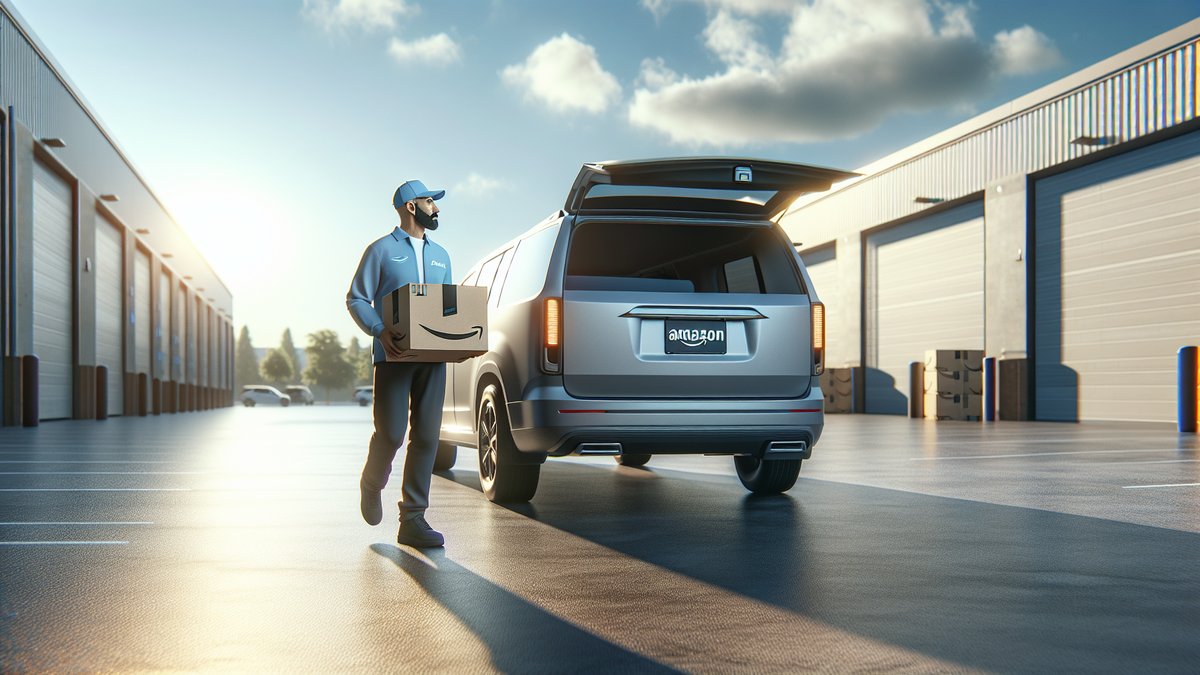
I've done over 2,000 Amazon Flex blocks in three years. The first hundred, I used my own car and watched it fall apart under the weight of constant loading and unloading. The thousand after that, I tested different rental strategies. This is what I learned about matching the right vehicle to the job.
Delivery gigs aren't rideshare. You're not hauling passengers who complain about air freshener choices. You're moving packages—sometimes hundreds of them per block—into tight parking spaces and up apartment stairs. Your vehicle needs to handle that abuse while staying under control economically. A fancy sedan might get you Uber Platinum status, but it'll cost you money on Amazon Flex.
Let's start with the hard requirements, because Amazon doesn't mess around with this stuff. Your vehicle needs to be:
That's the baseline. Pretty straightforward. Where most people mess up is thinking rideshare and delivery are the same vehicle problem. They're not.
Here's the physical reality nobody talks about until it's too late. Rideshare passengers are light and numerous but quick. A driver might do 20 trips a day, and passengers spend maybe two hours total in the car.
Amazon Flex blocks are different. A typical 3-4 hour block means loading 150-350 packages (depending on your region and time of year). That weight is concentrated in one spot—usually the back seat, trunk, and every available interior space. You're hauling anywhere from 2,000 to 4,000 pounds of cargo per block.
What does that do to a vehicle?
This is why buying a used personal car for Flex usually doesn't pencil out. The wear is specialized. And it's why the right rental strategy matters.
Not all rental options are created equal for delivery work. Let me break down what actually moves the needle.
The sweet spot for Amazon Flex. An RAV4, CX-5, or CR-V gives you 35-40 cubic feet of cargo space. You can stack packages to the roof, which means fewer trips to organize your load mid-block. The ride height helps—less bending to load. And when you're negotiating tight apartment complex parking, that slightly higher clearance matters.
Rental cost: $40-65 per day from most platforms. Weekly rates push it to $35-45 daily.
A Honda Odyssey or Pacifica gives you 50+ cubic feet of space, sliding doors on both sides, and low loading height. In dense areas where you're making lots of stops, that extra access point saves time. Minivans are also cheap to rent because most people think they're uncool. Rental cost: $35-50 per day.
Downside: they're slow, and they're huge. Tight parking lots become a game of geometric patience.
If you're in a suburban area doing mostly residential deliveries, a pickup's open bed is genuinely faster. You don't reorganize packages—you just load the bed and go. But in cities? Forget it. You're paying $55-75 daily for a vehicle that doesn't fit anywhere and turns every parking lot into an adventure. Plus fuel costs kill your margin on Flex blocks.
If you're thinking about a Honda Civic or Toyota Corolla to save money on rental, the math doesn't work. You're fitting maybe 20-30 packages in the passenger area where a crossover fits 100. You'll do more blocks to move the same volume, meaning more wear on your body, more fuel burned, and the rental "savings" evaporates. Skip it.
Amazon Flex earnings aren't stable, but here's what's realistic for 2024-2025:
Those numbers assume normal demand. Black Friday through New Year, you're seeing 4-hour blocks at $130-160. Summer? Might drop to $70-85 because volume is lighter.
Now subtract vehicle costs.
A 4-hour block at $100, renting a crossover at $45/day: you're out $11.25 in rental cost plus fuel. A standard Flex block runs 50-60 miles round trip. At $0.58/mile fuel cost (current EPA estimates), that's $29-35 in gas. Add the rental. You're at $40-46 total vehicle cost per block.
So you clear $54-60 per block. That's $13.50-15 per hour after vehicle expenses. Not great, but workable if you're doing 3-4 blocks per week and stacking apps.
The key is volume. One block per week doesn't work. The rental stays constant, so your margin only improves at scale.
This is where rental strategy gets real. Most successful gig drivers don't do just Amazon Flex. They mix it with DoorDash, Uber Eats, and occasionally Instacart.
Here's why: Amazon Flex blocks drop at specific times (usually 7am, 10am, 1pm, 4pm), and you can't cherry-pick small ones without losing your acceptance rate. But you have gaps between acceptance windows and driving time. That's where food delivery slots in.
A vehicle that works for Flex also works for DoorDash and Uber Eats. You're covering the same daily rental cost across multiple income streams. Do one 4-hour Flex block and two hours of dinner delivery on the same day, same rental: your cost-per-dollar earned drops significantly.
The vehicle choice matters here too. You don't want to load a trunk full of Amazon packages, then spend an evening making food deliveries with a dirty, damaged interior. A crossover or SUV compartmentalizes better than a sedan. Packages stay in the back, food deliveries happen in a cleaner space.
This is also why RideshareRenter works for delivery drivers. The platform rents specifically to gig workers who understand these economics. Weekly rates are optimized for people doing multiple blocks per week, not tourists renting for a day trip.
When you rent through RideshareRenter, the insurance structure is different than a regular car rental place. You need to understand your liability, because delivery gigs create specific damage patterns.
Expected damage that's typically covered under normal wear:
Damage you'll likely pay for:
The best practice: inspect the vehicle thoroughly before your first block. Take photos and video. Document existing damage. Be careful loading packages (use proper technique, don't let them slide around). Use a cargo barrier or blanket to protect the interior. It costs you time per block—maybe 30 seconds—but it saves you hundreds in damage claims.
| Vehicle Type | Cargo Space | Daily Rental | Packages Per Block | Best For |
|---|---|---|---|---|
| Compact Sedan (Civic, Corolla) | 15 cu ft | $30-40 | 40-60 | Not recommended for Flex |
| Hatchback (Civic Hatch, Corolla Cross) | 20-25 cu ft | $35-48 | 60-100 | Budget option, not ideal |
| Crossover (RAV4, CX-5, CR-V) | 35-40 cu ft | $40-65 | 120-200 | Best all-around choice |
| Minivan (Odyssey, Pacifica) | 50+ cu ft | $35-50 | 200-300 | High-volume delivery, cities |
| Pickup Truck (F-150, Silverado) | 45-60 cu ft | $55-75 | 200-300 | Suburban routes only |
| Full-Size SUV (Tahoe, Expedition) | 50+ cu ft | $70-90 | 250+ | High-volume, poor fuel efficiency |
There are platforms for renting to gig workers. Turo, traditional rental companies, and then RideshareRenter. Here's why RideshareRenter specifically works for delivery drivers:
Do the math on your expected weekly blocks. If you're planning 4-6 blocks per week with RideshareRenter, the math usually beats owning a car for this specifically, and it beats weekly rates at traditional companies.
No. Amazon Flex requires that you own the vehicle or have explicit written permission from the owner to use it for commercial delivery work. A traditional car rental company won't give you this permission—their contracts explicitly exclude commercial use. That's why RideshareRenter exists: it's designed for commercial gig work. Using a regular rental car for Flex technically violates the rental agreement and your insurance.
It depends on your market and the block drop patterns. In dense urban markets, 4-6 blocks per week is realistic. In suburban areas, 2-4. The economics only work if you're doing at least 3-4 blocks per week. Below that, your daily rental cost spreads too thin.
If it's normal wear from loading packages—minor scratches, dirt—RideshareRenter's policy covers it under expected use for gig drivers. Major damage, theft, or unreported issues? You're liable. Document the vehicle condition before you start, drive carefully, and load thoughtfully. This isn't a disposable car.
Yes. The vehicle works for all of them. The rental agreement covers commercial gig work generally. Just keep the vehicle reasonably clean between cargo types. Don't load a trunk full of greasy food delivery boxes on top of fresh Amazon packages. Use the trunk for one or the interior for the other.
RideshareRenter's insurance covers gig work. Your personal insurance doesn't. This is actually a major advantage of using a platform designed for gig workers—you're not in an insurance gray area.
It depends on volume. A minivan gives you more space per block, so you're loading and organizing faster. But they're slower, less fuel-efficient, and harder to park. If you're doing high-volume delivery (200+ packages per block), the time savings matter. If you're doing standard 100-150 package blocks, the crossover's efficiency and ease of use usually wins.
After three years and thousands of blocks, I can tell you this much: the drivers making real money on Amazon Flex aren't doing it with their personal cars. They're either renting long-term or have a specific vehicle purchased for the job. The math on wear and tear just doesn't favor personal ownership if you're serious about the volume.
A crossover or minivan through RideshareRenter, rented weekly, stays in predictable cost territory. You know exactly what you're spending. You're not guessing about transmission fluid or suspension damage. You do 4-5 blocks per week, stack in food delivery when you can, and you're clearing $600-900 per week after all vehicle costs. That's not a career, but it's real money for part-time work with flexibility.
The vehicle type matters more than people think. Your economy doesn't improve with a sedan. It doesn't improve much with a full-size SUV either—the fuel kills you. The crossover-to-minivan window is where the efficiency lives.
Pick based on your specific route type (dense city vs. sprawling suburbs), your target block volume, and whether you're stacking other gigs. Then rent something that fits that profile.
For Amazon Flex Drivers: RideshareRenter has crossovers and SUVs available weekly at rates that make the math work for delivery gigs. Start with a 1-week rental, track your actual costs against earnings, then scale from there. The platform is built specifically for gig workers who understand that delivery isn't rideshare.
Vehicle Owners with Spare Cars: If you have an extra crossover or SUV sitting around, you could be earning steady rental income from gig drivers through RideshareRenter. Weekly rental rates to delivery drivers average $240-350 per week—that's $12,000-18,000 annually from a vehicle you're not using. Join as a vehicle owner and let gig drivers cover your car's costs while you build equity.




Comments