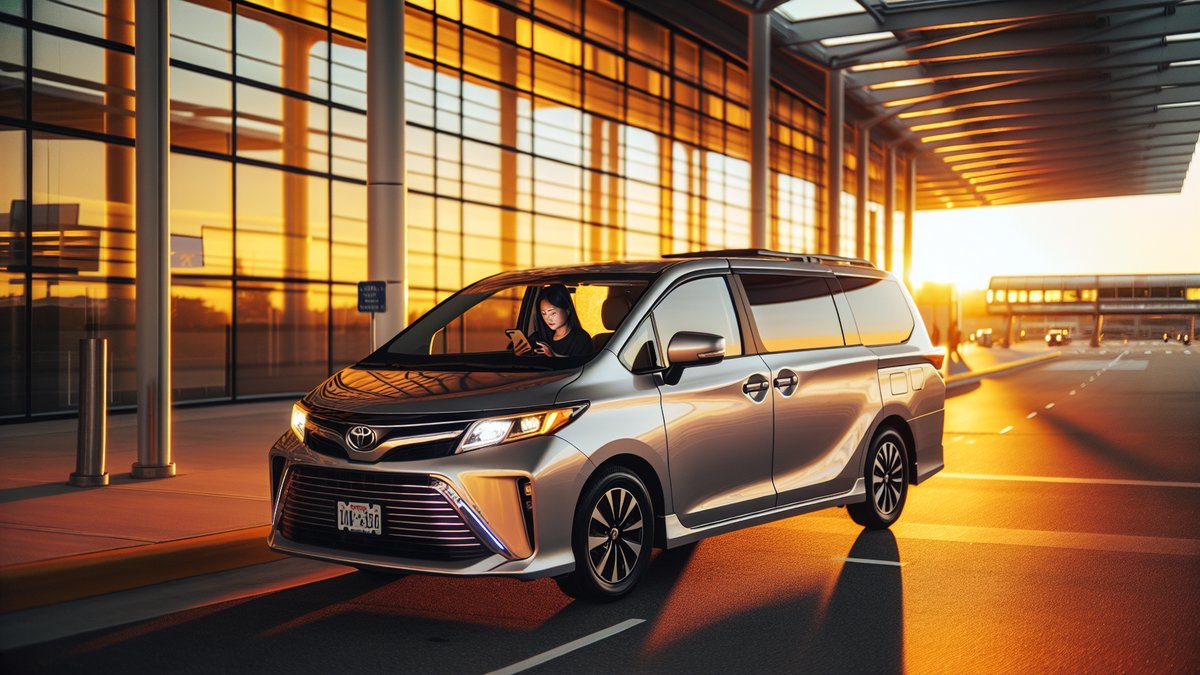
I've been driving for rideshare platforms for three years now, and I'll be straight with you: the moment I switched to Uber XL in a minivan, my per-hour earnings jumped 40%. Not because of some secret hack. Just math. Uber XL pays $1.50–$2.00 per mile in most markets, compared to $0.70–$1.00 for UberX. You're looking at nearly double the rate for fundamentally the same work.
The catch? You need the right vehicle. That's where the minivan comes in—and where renting through RideshareRenter becomes a strategic move you should understand before you decide.
Here's what I'm covering: why minivans actually crush SUVs for XL work, the real money breakdown, which models Uber certifies, and whether renting beats buying. No fluff. Just the numbers and the grind.
First, the legal stuff. Uber XL needs:
A lot of drivers rent SUVs or full-size trucks for XL work. I get it—they look impressive. But here's what minivans actually do for you:
Better fuel economy: A Toyota Sienna hybrid gets 34–36 MPG highway. A Ford Expedition? 20 MPG if you're lucky. On a 2,000-mile month (typical for XL drivers pulling 40–50 hours), that's roughly $120 in gas savings. Small per ride. Massive per year.
Easier passenger loading: The sliding doors on a Honda Odyssey or Chrysler Pacifica aren't a luxury—they're a workflow thing. No one's fighting a door in a tight parking lot. You get faster turnarounds. Passengers appreciate not banging a door into an adjacent car.
Cargo space: XL riders often have luggage. Airport runs, group trips, event travel. A minivan's interior is deeper and flatter than an SUV. More riders upgrade to XL when you can actually fit their bags without playing Tetris.
Maintenance costs: Minivans use less brake wear from lighter weight. Tire replacements cost less. Oil changes are cheaper and more frequent due to better access under the hood. Over a 12-month rental period, you're looking at real savings.
Not every minivan qualifies. Uber's vehicle approval list updates quarterly, but as of 2026, these are the reliable choices you'll find on RideshareRenter:
Toyota Sienna (2015–2025): The hybrid option. Costs more per day on RideshareRenter (usually $45–$65/day) but saves so much on fuel that many drivers net an extra $200–$300 per month after accounting for the higher rental fee. Reliability is bulletproof. Maintenance is predictable.
Honda Odyssey (2014–2024): The workhorse. You'll find these for $35–$55/day. Slightly thirstier on gas than the Sienna but bulletproof transmission and steering components. Passengers love it because the interior feels less van-like. Psychological edge.
Chrysler Pacifica (2017–2025): Modern, sleek, good interior tech. $40–$60/day depending on model year and condition. Plug-in hybrid versions exist on RideshareRenter but are rarer. The standard Pacifica is solid but watch transmission fluids on older models.
Kia Carnival (2022–2025): Newest player in the game. $50–$70/day on rental platforms. Very comfortable interior. Still less common on RideshareRenter because inventory is lower, but worth checking.
Avoid anything older than 2014. Uber's inspection gets tougher every year, and older models fail emissions or safety specs more often. You'll spend money on repairs that wipes out XL rate gains.
This is the decision that matters. Let's look at actual numbers for 2026.
Renting through RideshareRenter:
Uber XL earnings (realistic estimate, moderate market like Austin, Denver, or Portland):
Minus costs:
Net monthly earnings: ~$1,425–$1,925 for the month, or about $10–$13 per hour after all deductions.
That sounds fine until you compare it to buying. A used 2018 Honda Odyssey costs $18,000–$22,000 cash. Financed at $20,000 at 8% for 60 months: $489/month payment. Insurance: $120/month. Fuel: $200/month. Maintenance reserve (you handle it): $150/month. Total monthly: ~$960.
Own the vehicle after five years? You net $800–$1,400 more per month. That's the math.
So why rent? Three reasons:
You're testing the market. Not every driver can sustain 40 hours/week of XL driving. Demand fluctuates. Renting costs less upfront than a down payment and months of payments before you realize the strategy isn't working for you.
You have irregular income. Some months you drive heavy, some months light. Rentals through RideshareRenter often offer weekly rates if you don't need a full month. That flexibility prevents you from financing a car you're not using.
You avoid ownership headaches. Major transmission repairs. Timing belts. Frame rust in snow states. You don't deal with any of it. The landlord handles it. Peace of mind is worth money.
This is the part where drivers get careless, and it costs them.
Your personal auto insurance does not cover commercial rideshare use. Full stop. Uber's insurance covers you during active rides, but there's a gap: when you're logged into the app but don't have a passenger yet. Most drivers aren't aware of this gap.
When you rent through RideshareRenter, you've got three insurance paths:
Platform insurance (included in rental): Some RideshareRenter listings include commercial rideshare coverage in the daily rate. This covers the gap between your personal policy and Uber's. Ask the landlord directly. "Is your rental rate commercial-use insured?" If yes, you're covered. If no, move to option two.
Separate commercial rideshare policy: You buy a dedicated policy from companies like James River or Arity. Costs $200–$350/month. Covers you 24/7 during any rideshare work. Gives you the most protection.
Landlord's commercial policy (your liability): If RideshareRenter landlords carry their own commercial coverage, you're protected for liability. But ask: are you, as the renter, listed on that policy? Many aren't. This is a gap. You could be financially liable for an accident. Get clarity in writing before you sign a rental agreement.
Real talk: I spend $280/month on a dedicated rideshare policy. It protects my assets. On an average month, I net $1,600 from XL driving. The insurance is 17.5% of my earnings. That's a cost I accept because one accident without proper coverage could wipe out my entire year.
The process is straightforward, but there are moves that save you money and time.
Step 1: Know your price ceiling. Decide whether you're burning $35, $50, or $65 per day. Work backward from your Uber XL earnings goal. If you want to net $1,500/month and can drive 20 days a month, you can afford $40/day. That's your search filter.
Step 2: Search by vehicle model and year. Use RideshareRenter's filters to sort by Honda Odyssey, Toyota Sienna, or Chrysler Pacifica. Stick to 2016 or newer. Check the landlord's ratings. New drivers often overlook this—ratings predict your experience.
Step 3: Read the fine print. Does the rental include insurance? What's the fuel policy (you refill, or does the landlord)? What happens if you get a flat tire? What are the excess mileage charges? These details kill your profit margin if you don't understand them upfront.
Step 4: Message the landlord. Don't just book. Ask specific questions. "How many XL drivers currently use this vehicle? What's the downtime per month?" If a minivan's booked out because of multiple drivers, you won't have it when you need it.
Step 5: Book a short rental first. Rent for a week before committing to 30 days. Drive it hard. Does it perform? Are the brakes responsive? Is the AC cold? Does the landlord respond fast when something breaks? One week of testing saves you from a bad 30-day commitment.
| Factor | Minivan (Honda Odyssey) | Full-Size SUV (Ford Expedition) |
|---|---|---|
| Daily rental on RideshareRenter | $45–$55 | $60–$75 |
| MPG (highway) | 28–32 | 18–22 |
| Monthly fuel cost (2,000 mi/mo) | ~$225 | ~$340 |
| Passenger comfort | 8.5/10 (spacious, smooth) | 7.5/10 (tight 3rd row) |
| Cargo space (airport runs) | 9/10 (flat, wide) | 7/10 (higher floor) |
| Tire replacement (set of 4) | $500–$650 | $650–$900 |
| Annual maintenance reserve | $1,200 | $1,800 |
| Net monthly (after all costs) | $1,600–$2,000 | $1,200–$1,500 |
The minivan wins on every financial metric. The only place an SUV wins is curb appeal—some passengers think SUVs are more prestigious. But Uber XL doesn't pay more for prestige. It pays for capacity and comfort. Minivans deliver both at lower cost.
Q: Will Uber deactivate me for having a rented minivan instead of owning it?
A: No. Uber doesn't care if you own or rent as long as the vehicle meets their specs and is registered with valid insurance. When you rent through RideshareRenter, the vehicle is registered to the landlord but insured under your commercial policy. Uber doesn't check ownership documents during standard operation.
Q: What happens if I get into an accident while renting a minivan on RideshareRenter?
A: This depends on your insurance setup. If you've purchased a separate commercial rideshare policy, you file with them first. RideshareRenter landlords typically carry their own coverage for the vehicle's physical damage. Read your rental agreement—some landlords exclude accidents from coverage if you violated their driving terms.
Q: Can I rent a minivan monthly or do I need a 30-day commitment?
A: RideshareRenter landlords offer both weekly and monthly terms. Weekly rates are typically 10–15% higher per day than monthly (so $50/day monthly becomes $58/day weekly). If you're testing the XL strategy, start with a week.
Q: I live in a snowy state. Which minivan handles winter best for XL driving?
A: The Toyota Sienna with winter tires. Lower center of gravity than SUVs, more predictable braking in slippery conditions. In winter markets, Sienna rentals through RideshareRenter may cost $5–$10 more per day, but you'll recover that in fewer accidents and better passenger ratings.
Q: If I rent a minivan, can I do UberX and UberXL, or just XL?
A: You can do both. Your minivan will pass UberX inspection, but you'd be leaving money on the table. UberX is $0.70–$1.00 per mile; XL is $1.50–$2.00. Focus on 6-passenger requests for maximum earnings per hour.
Q: Do I need a Commercial Driver's License (CDL) to drive a minivan for Uber XL?
A: No. CDLs are required for vehicles over 26,001 GVWR. Minivans are well under that threshold. Your regular driver's license is sufficient.
I want to give you a realistic month instead of just theory.
Last month, I rented a 2021 Honda Odyssey through RideshareRenter for $48/day. Drove it 22 out of 30 days (bad weather, family stuff, burnout—real life). Completed 342 XL rides.
That's not amazing. But it beat every W-2 job I've worked. No boss. No commute. Flexible schedule. If I'd rented a full-size SUV instead (average $65/day), I'd have paid an extra $374 for the month and earned nothing extra.
If you're a driver ready to book: Find a minivan to rent on RideshareRenter today. Filter by your local area, model preference (Odyssey, Sienna, Pacifica), and daily budget. Message landlords. Ask about their downtime and insurance terms. Book a week before committing to a month. You'll have your XL vehicle in 48 hours.
If you're a vehicle owner thinking about extra income: minivans are the highest-demand rental vehicles for rideshare work. An unused 2018 Honda Odyssey or Toyota Sienna is earning you zero dollars every day. List your minivan on RideshareRenter and earn $1,200+/month with minimal effort. RideshareRenter handles insurance, booking, and driver vetting. You set the rate. Most owners rent out 20–25 days per month and pocket $1,200–$1,600 in revenue.
Minivans aren't glamorous. Nobody dreams of driving one. But they're the mechanical equivalent of a high-percentage play. Better fuel economy. Lower maintenance. More cargo space. Higher XL earnings per dollar spent. Less financial risk than buying. The vehicles that make money aren't always the ones that look good. They're the ones that pencil out.




Comments