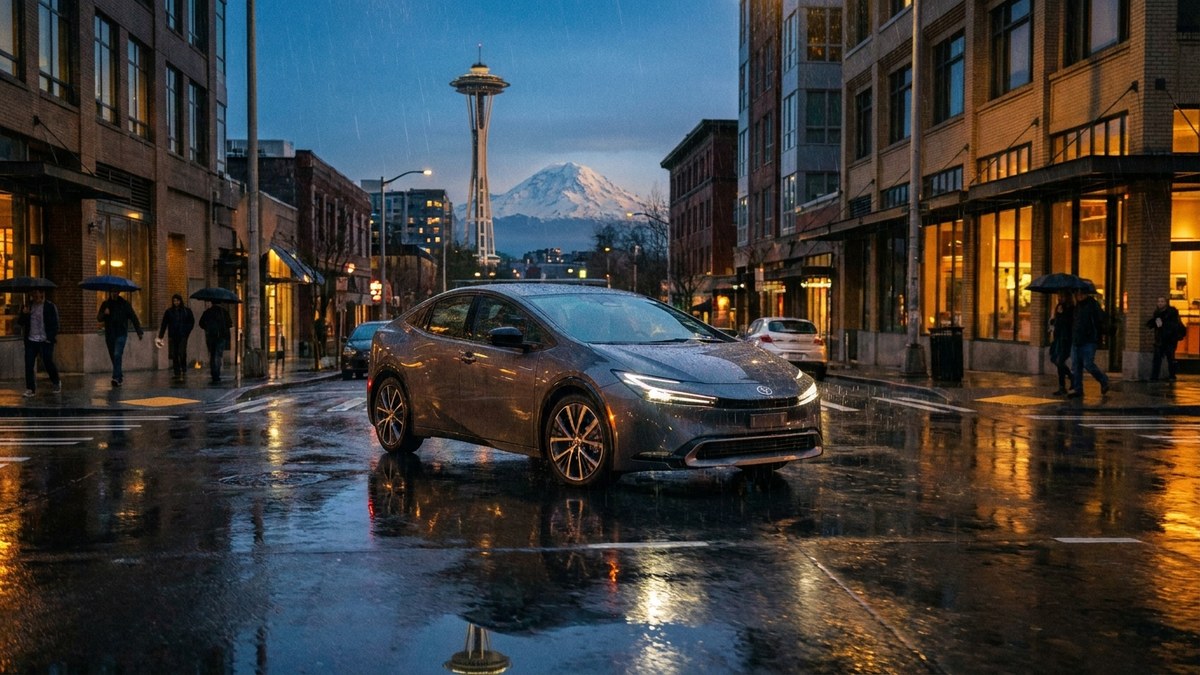
Seattle is one of the most underrated rideshare markets in the country. The pay is solid, the demand is steady, and Sea-Tac alone can carry a driver's weekend. But the rules are stricter here than in most cities. Get them wrong and you'll sit at home for a month waiting on paperwork.
If you're trying to rent a car for Uber or Lyft in Seattle in 2026, here's what actually matters.
Seattle pays better than most West Coast markets. There's a minimum per-mile and per-minute rate enforced by the city, which sets a floor on what you make. That's the good news.
The bad news is everything else. King County's TNC rules, the Seattle business license, the city's pay floor only applying inside city limits, the Sea-Tac airport queue rules that change quarterly. There's more to track here than in Phoenix or Houston.
Most drivers who quit Seattle don't quit because the money was bad. They quit because they got hit with a $250 fine they didn't see coming, or they spent four hours waiting at the airport because they used the wrong staging lot.
To drive Uber or Lyft in Seattle in 2026, you need a stack of paperwork that's deeper than most cities. Here's the short version:
| Requirement | What It Is |
|---|---|
| Washington driver's license | Must be valid; out-of-state allowed for new arrivals up to 30 days, then convert |
| For-hire driver permit (City of Seattle) | Issued by Seattle Dept. of Finance & Admin Services; background check + fee |
| Seattle business license | Required for TNC drivers operating in city limits |
| Uber/Lyft platform approval | Background check, driving record, vehicle inspection |
| Car that meets year/condition rules | Most TNC programs require 2014+ for X, newer for Comfort/XL |
The for-hire permit and business license are the parts most out-of-state drivers don't know about. They are not optional.
Seattle isn't the cheapest market. The cars are well-maintained and the standards are high, so weekly rates run a bit above the national average.
| Car Type | Typical Weekly Rate (Seattle) |
|---|---|
| Older sedan (2017-2019) | $240-275 |
| Newer sedan (2020+) | $270-310 |
| Hybrid sedan (Camry Hybrid, Prius) | $290-340 |
| Compact SUV (RAV4, CR-V) | $315-360 |
| Tesla Model 3 / Model Y | $340-410 |
Hybrids and EVs are the smart pick here. Seattle gas runs $0.40-0.70 above the national average most weeks. A Prius or Camry Hybrid can save you $40-60/week in gas vs a standard gas sedan.
Drivers I know who run Seattle full-time at 45-50 hours a week typically clear $1,300-1,650 gross before rental and gas in 2026. That's after the city's per-mile/per-minute pay rules kick in.
Net after a $300/week hybrid rental, $90 in gas, $50 in tolls and parking, and small expenses: roughly $850-1,200/week take-home. Part-time at 25 hours: $400-600 net.
Compared to most West Coast markets, that's strong. LA pays similarly per hour but has worse traffic. Portland is softer on demand. SF Bay Area sees stricter rules and tighter supply.
Sea-Tac (SEA) is the goldmine for Seattle rideshare drivers but the rules are real:
If you can swing one airport run with a long surge return into Bellevue or Redmond on a Friday evening, you're talking $80-130 on a single trip. That's why people drive Seattle.
Where you drive matters as much as when.
Capitol Hill, Belltown, Pioneer Square: The nightlife triangle. Friday and Saturday after 10pm is reliable surge. Short rides but volume.
Bellevue, Redmond, Kirkland: Tech employee rides. Better-paying, longer, calmer. Mornings and evenings on weekdays.
SoDo, Stadium District: Mariners and Seahawks games are predictable big-money windows. Check the home schedule.
South Lake Union: Tech corridor; commute rides during the week.
U-District: University of Washington. High volume in the school year, lots of short rides.
Seattle gets rain, not snow. October through April you're driving wet roads constantly. A car with decent tires and working wipers isn't optional. When you pick up your RideshareRenter rental, check the tread on all four tires and run the wipers. Cars that pass spec in July fail in November.
Real snow events do happen a couple times a year, usually in January or February. AWD is nice to have but not required. Most Seattle drivers run FWD with all-season tires and stay home for the 2-3 actual snow days.
Q: How long does it take to get the Seattle for-hire permit?
Usually 2-4 weeks once you submit a complete application. Plan for it before you rent a car, not after.
Q: Can I drive in Bellevue and Redmond without the Seattle permit?
You still need a Washington TNC driver permit for the state, but the Seattle for-hire permit is specifically for the City of Seattle. Bellevue and Redmond have their own rules. Most full-time drivers carry both.
Q: Is renting from RideshareRenter cheaper than Hertz or Lyft Express Drive in Seattle?
Usually yes, by $30-60/week. RideshareRenter owners are local people, not corporate fleets. Cars also tend to be newer because they're often someone's personal weekend car.
Q: Is Uber or Lyft better in Seattle?
Volume favors Uber. Lyft historically pays slightly higher per ride in Seattle. Most full-timers run both apps and switch between based on surge and queue.
Q: What's the slow season for rideshare in Seattle?
Late August into early September has a small dip after summer tourism ends and before fall conferences start. January is the slowest month overall.
Q: Do I need to pay Seattle income tax driving for Uber?
Washington has no state income tax. But Seattle has a B&O (business and occupations) tax. Most rideshare drivers fall under exemption thresholds, but check with a tax pro for your situation.
If you're a driver: Get your for-hire permit started today. While that's processing, browse RideshareRenter for a Seattle-ready hybrid sedan or EV. The cars closer to Capitol Hill and SoDo rent fastest. Find a rideshare car in Seattle on RideshareRenter →
If you own a car in the Seattle metro: Demand is steady, drivers respect the cars, and a clean hybrid sedan in Seattle clears $260-300/week consistently. List your car for Seattle drivers on RideshareRenter →




Comments