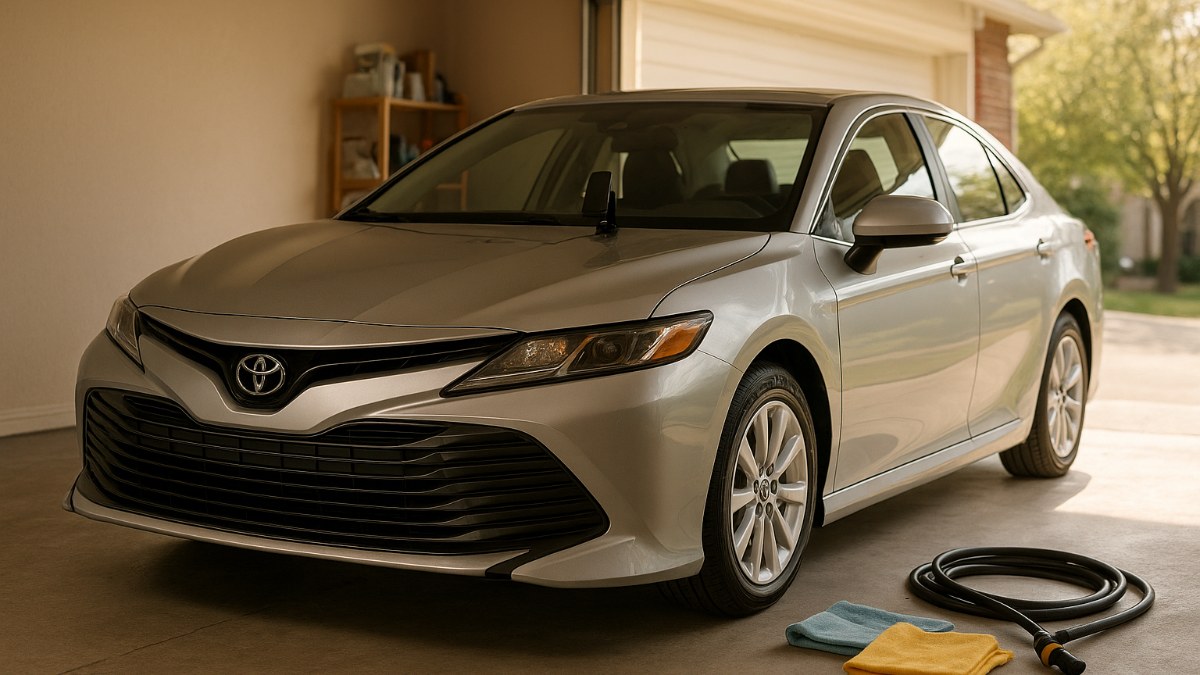
Listing a car on RideshareRenter for the first time is a lot like renting out your spare bedroom — except the bedroom drives 1,200 miles a week and parks in strangers' driveways. The owners who do well are the ones who treat the first seven days like setup, not like a sprint to revenue.
This is the actual checklist I'd give a friend who just bought a second car and asked me, "How do I make money with this thing?"
Not every car earns. Before you do anything else, run your specific vehicle through this filter:
If your car clears all four, you're in. If it doesn't, it might still rent — but for less, and the gross-to-net gap will hurt.
A car that looks tired rents for $50–$80 less per week than the same model that looks fresh. The work to fix that is one afternoon:
Total spend: usually $250–$350. It's the single highest-ROI investment in the whole 7-day plan.
Listing photos are the only thing that determines whether anyone messages you. Don't skip this.
Shoot at golden hour. Park somewhere clean — not your cluttered driveway. Take at least 10 photos: front three-quarter, rear three-quarter, both side profiles, driver's seat, passenger seat, back seat, dashboard, odometer reading, and a wide interior shot showing legroom. Wipe the windows. Open the trunk. Take that photo too.
Don't use the manufacturer's stock photo. Drivers can spot it from a mile away, and it's the number-one reason listings get scrolled past.
Three things every good listing has:
One thing I'd add: be specific about insurance. "Commercial rideshare coverage active during app-on trips. Driver responsible for app-off / personal use coverage." That sentence alone filters out a lot of confusion before it happens.
Look at the 5 closest comps on RideshareRenter for the same vehicle class. Price within $10–$20 of the median for the first month. You can raise rates later once you have a few completed rentals and reviews.
| Class | Typical weekly rate (2026) | Typical deposit |
|---|---|---|
| Compact hybrid (Prius, Niro) | $255–$310 | $300 |
| Mid-size sedan (Camry, Accord) | $265–$320 | $300 |
| Compact SUV (RAV4, CR-V) | $295–$365 | $400 |
| 3-row SUV (XL, Highlander) | $345–$425 | $500 |
| Tesla Model 3 / Y | $385–$475 | $500 |
Set your mileage cap at 1,400 miles per week. Charge $0.15 per mile over that. Most rideshare drivers run 1,000–1,300 miles, so the cap rarely triggers, but it covers you against the outlier driver running 1,800 miles.
Here's where most first-time owners get the math wrong. They take the weekly rate, multiply by 52, and call that revenue. It isn't.
Real-world annual income on a single Camry-class listing, assuming a 2022 paid-off vehicle:
| Line item | Annual figure |
|---|---|
| Gross rental revenue (44 weeks rented at $285) | $12,540 |
| Less: platform fee (~15%) | ($1,881) |
| Less: rideshare insurance (~$3,400/yr) | ($3,400) |
| Less: maintenance reserve (~$0.08/mi × 60,000 mi) | ($4,800) |
| Less: 2 tires, alignment, brake job | ($1,100) |
| Less: 1 minor cosmetic repair (bumper, mirror) | ($600) |
| Net cash before depreciation | $759 |
That's the honest version. Sub-$1,000 net on year one is normal on a single vehicle. The reason fleet owners do this is that once you're at three to five cars, the per-car overhead drops and the net per vehicle starts climbing into the $3,500–$6,000 range.
If your car is financed, subtract your annual payment too. If the result is negative, this listing isn't going to make sense as a standalone — you'd be subsidizing the renter.
The first 48 hours after a listing goes live are where you'll get the most inbound. Whatever you do, respond within an hour during daytime. The renters who message at 9am and get a reply at 9pm have usually moved on by then.
Your first rental will probably feel slightly scary. That's normal. Use the time to:
That 15-minute handoff is your insurance policy when something goes sideways three weeks in.
Do I need an LLC to list a car?
Not on RideshareRenter, no. Many owners list under their personal name. An LLC becomes useful around the 2–3 car mark for liability and tax separation, but it's not required to start.
How much insurance do I need?
RideshareRenter requires commercial rideshare coverage. Your personal auto policy won't extend to a paying renter. Premiums in 2026 typically run $2,800–$3,800 per year per vehicle depending on state.
What happens if the renter gets in an accident?
The commercial policy on the listing covers the trip if it happened during an active Uber/Lyft ride. Deductibles apply. Off-app accidents are handled per the renter agreement and the specific policy you carry.
Can I list more than one car?
Yes. Most owners I know who are profitable run 2–8 cars. Each gets its own listing.
How long should my first rental be?
Two weeks is a good starting term. Long enough to test the renter; short enough to bail if it's not working.
What's the platform fee?
RideshareRenter takes a percentage of the weekly rent. It's listed on the owner dashboard when you create the listing.
For vehicle owners: Start your listing on RideshareRenter. Use this checklist as your week-one plan and you'll be earning by day eight.
For drivers: If you're not ready to commit to a car yet, browse what's already listed at RideshareRenter.com and message the owners directly.




Comments